

Global Cybersecurity Salary Trends in 2025
Cybersecurity salaries in 2025 are at an all-time high. Salaries are driven by the rapid expansion of the digital economy and the growing sophistication of cyber threats. Further, the increasing reliance on AI-powered defenses impacts the salary raise. Across industries and regions, compensation packages are evolving to attract and retain scarce talent. In high-demand markets like the United States, Singapore, and parts of Europe. Certain roles surpass the $200,000 annual mark.
Post-Pandemic Impact on Cybersecurity Salaries
(Post-pandemic cybersecurity job market)
The COVID-19 pandemic fundamentally reshaped the cybersecurity labor market. The global shift to remote and hybrid work exposed critical vulnerabilities in corporate networks. Those critical vulnerabilities are pushing organizations to rapidly expand their cybersecurity teams. Even in 2025, this momentum has not slowed. Instead, it has become a baseline expectation for businesses to maintain strong cyber defenses.
Key Post-Pandemic Salary Trends (Cybersecurity pay growth after COVID):
- Remote Work Premiums – Many companies now pay higher salaries to attract top talent regardless of location. That is especially true for specialized roles like cloud security architects and incident response leads.
- Increased Demand Across All Sectors – Industries like finance, healthcare, and e-commerce have seen a 20–30% salary hike compared to pre-pandemic levels (source: ISC² 2025 workforce report).
- Global Hiring Competition – Since companies can hire internationally, professionals with multilingual skills are in high demand.
- Those with experience in cross-border compliance (such as GDPR, CCPA, and ISO 27001) often earn 15–25% more.
AI & Automation Driving New Cybersecurity Roles
(AI impact on cybersecurity careers)
Artificial Intelligence (AI) and automation are no longer “future trends” in 2025. They are central pillars of cybersecurity strategy. AI-powered threat detection, automated incident response, and predictive risk modeling create entirely new categories of high-paying jobs.
Examples of Emerging AI-Driven Cybersecurity Roles:
- AI Security Engineer – Develops and secures AI algorithms used in threat analysis. The average salary for an AI Security Engineer is $145,000–$175,000/year.
- AI Auditor – Ensures AI systems in security tools are transparent, ethical, and compliant. Salary of an AI Auditor ranges: $130,000–$160,000/year.
- Automated Threat Intelligence Analyst – Manages AI-powered SOC (Security Operations Center) systems. Salary of Automated Threat Intelligence Analyst ranges: $120,000–$150,000/year.
Impact on Salaries:
- Professionals with AI + cybersecurity hybrid skillsets are earning 25–35% above the industry median.
- Certifications in AI security (like MIT AI & Cybersecurity programs or vendor-specific AI security certs) significantly boost pay prospects.
- Organizations are willing to offer equity and sign-on bonuses to attract top AI-cyber talent.
Cybersecurity Talent Shortage and Salary Growth (Cybersecurity pay rise 2025)
The global cybersecurity talent gap remains the single biggest driver of salary inflation in 2025. According to the ISC² Cybersecurity Workforce Study 2025, the industry is short 4 million skilled professionals worldwide. This is a gap that is widening as cyber threats grow more sophisticated.
Salary Growth Drivers in 2025:
- High Competition – Companies are engaging in salary bidding wars for niche talent in OT/ICS security, quantum-resistant cryptography, and DevSecOps.
- Retention Bonuses – Organizations now offer 10–20% annual retention bonuses to keep experienced staff from moving to competitors.
- Government & Defense Premiums – Critical infrastructure and defense roles often pay 30–50% above market rates. That is especially true in regions with heightened geopolitical tensions.
Notable Salary Projections (2025):
- Average Global Salary Growth – 8–12% YoY increase across most roles.
- High-Demand Regions – North America, Singapore, UAE, and Australia lead with the steepest salary hikes.
- Niche Specialists – OT/ICS security experts and Zero Trust architects can command $180K–$220K in top markets.
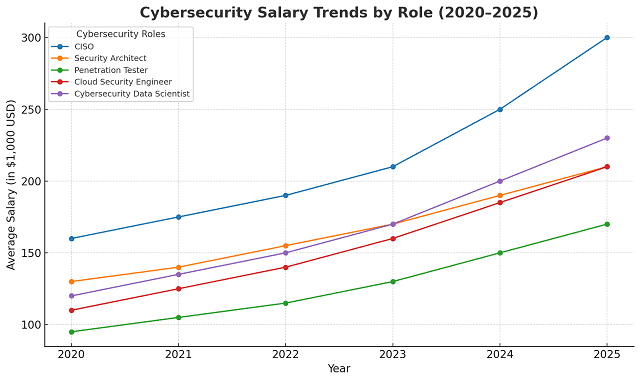
Global Cybersecurity Salary Trends Comparison (2025)
| Category | Pre-Pandemic Avg. Salary (2019) | Post-Pandemic Avg. Salary (2025) | % Increase | Notes |
| General Cybersecurity Roles | $92,000 | $118,000 | +28% | Driven by remote work and increased threat volume. |
| Cloud Security Architect | $115,000 | $150,000 | +30% | Critical for securing hybrid/multi-cloud environments. |
| Incident Response Lead | $105,000 | $140,000 | +33% | Incident volumes surged post-pandemic. |
| AI Security Engineer (new role) | N/A | $160,000 | N/A | High-demand AI + security hybrid skill set. |
| AI Auditor (new role) | N/A | $145,000 | N/A | Ensures compliance and ethics in AI-driven security. |
| OT/ICS Security Specialist | $110,000 | $185,000 | +68% | Shortage of experts in industrial control systems. |
| Zero Trust Architect | $120,000 | $200,000 | +67% | Adopted rapidly for enterprise and government security. |
| Government/Defense Cyber Roles | $100,000 | $150,000–$180,000 | +50–80% | Premiums are due to national security priorities. |
| Average Global Salary Growth (All Roles) | — | — | +8–12% YoY | Based on the ISC² 2025 workforce report. |
Key Takeaways from the Data:
- AI-driven and specialist roles are commanding the biggest pay jumps.
- OT/ICS and Zero Trust security have the steepest increases due to skill shortages.
- Government and defense salaries surged the most in geopolitical hotspots.
- Even entry-to-mid-level roles saw double-digit growth compared to 2019.
In 2025, global cybersecurity salaries have risen 28–80% since 2019. AI Security Engineers ($160K), Zero Trust Architects ($200K), and OT/ICS Security Specialists ($185K) are leading the pack. Post-pandemic demand, AI adoption, and talent shortages are driving record pay growth across all regions.
Role-Wise Cybersecurity Salary Comparison (2025)
The cybersecurity job market in 2025 is more dynamic than ever. The salaries reflect not only the technical demands of the role but also specialization, certifications, and industry sector. Fresh graduates entering entry-level SOC positions and seasoned CISOs managing global security strategies. However, their pay scales vary dramatically. Below is a detailed, role-wise breakdown for 2025 based on aggregated data from (ISC)², Glassdoor, Payscale, and CyberSeek.
Entry-Level Cybersecurity Salary in 2025 (entry-level cybersecurity salary)
In 2025, entry-level cybersecurity salaries range from $70,000 to $95,000 annually. Entry-level cybersecurity salary depends on certifications, location, and role type.
Entry-level roles in cybersecurity remain highly competitive due to the ongoing shortage of skilled talent. Fresh graduates who combine a computer science or IT degree with industry certifications like CompTIA Security+, Certified Ethical Hacker (CEH), or Cisco’s CCNA Cyber Ops can command higher starting pay.
Common Entry-Level Roles in 2025:
| Role | Typical Salary Range (USD) | Key Skills & Certifications |
| Security Analyst (SOC Tier 1) | $70K – $85K | SIEM tools, log analysis, Security+ |
| Junior Penetration Tester | $75K – $90K | Kali Linux, Burp Suite, CEH |
| Incident Response Associate | $72K – $88K | Digital forensics, malware analysis |
| Cloud Security Associate | $78K – $95K | AWS/Azure fundamentals, Cloud+ |
Tip: In 2025, candidates can demonstrate hands-on experience through internships, hackathons, or bug bounty programs. Those participations can help them to secure salaries at the higher end of the range.
Mid-Level Cybersecurity Salary Trends (mid-level cybersecurity salary trends)
In 2025, mid-level cybersecurity professionals earn between $95,000 and $145,000. Salaries increase sharply for cloud, AI, and incident response specialists.
By the mid-career stage (3–7 years of experience), cybersecurity professionals typically manage more complex systems. In addition, they lead small teams and specialize in specific security domains. The adoption of AI-driven threat detection and DevSecOps workflows is creating new salary premiums.
Key Mid-Level Roles & Salaries (2025):
| Role | Typical Salary Range (USD) | In-Demand Skills |
| Cybersecurity Engineer | $100K – $130K | Network defense, automation, CISSP |
| Threat Intelligence Analyst | $105K – $135K | OSINT, MITRE ATT&CK, malware reverse engineering |
| DevSecOps Engineer | $110K – $140K | CI/CD security, Kubernetes, IaC security |
| Cloud Security Engineer | $115K – $145K | AWS/Azure/GCP security, zero trust |
Trend Watch: Employers in finance and healthcare are offering sign-on bonuses of up to $20,000 for mid-level hires due to sector-specific compliance pressures.
Senior & Executive Cybersecurity Salaries (CISO salary 2025, highest paying cybersecurity jobs)
In 2025, CISO salaries range from $180,000 to over $350,000. That range makes the CISO salaries one of the highest-paying roles in IT.Senior cybersecurity professionals and executives (8+ years of experience) are not only technologists, they are strategic experts. They are strategic leaders overseeing budgets, compliance, and organizational resilience. The rise of ransomware-as-a-service (RaaS) and geopolitical cyber risks has elevated these positions’ importance with due compensation.
Top Senior/Executive Roles & 2025 Salaries:
| Role | Typical Salary Range (USD) | Industry Premium |
| Chief Information Security Officer (CISO) | $180K – $350K+ | Finance, defense |
| Director of Security Operations | $160K – $220K | Energy, telecom |
| Head of Threat Intelligence | $150K – $210K | Government, defense contractors |
| Senior Penetration Testing Lead | $145K – $200K | Tech consultancies |
Note: CISO salaries in high-risk sectors like defense or critical infrastructure can exceed $400,000 with performance bonuses and equity.
Cloud Security Architect & DevSecOps Pay Scale (cloud security architect salary, DevSecOps salary trends)
In 2025, Cloud Security Architects earn $150,000–$200,000. Whereas, DevSecOps leads average $145,000–$190,000 annually. Their pay scale is driven by cloud adoption and automation needs.
The explosion of multi-cloud environments and the shift to infrastructure as code (IaC) have made these two roles among the most lucrative in the mid-senior range. Companies are paying premiums for professionals who can secure workloads from development to production without slowing down deployments.
| Role | Salary Range (USD) | Key Skills | Industry Premium |
| Cloud Security Architect | $150K – $200K | Cloud-native security, zero trust, CASB | Finance, SaaS |
| DevSecOps Lead | $145K – $190K | CI/CD security, IaC scanning, Kubernetes hardening | E-commerce, tech startups |
Salary Boost Factors:
- Multi-cloud certifications (AWS Certified Security – Specialty, Google Professional Cloud Security Engineer)
- Experience with AI-powered DevSecOps pipelines
- Compliance expertise (ISO 27017, SOC 2, FedRAMP for cloud systems)
Role-Wise Cybersecurity Salary Comparison (2025)
In 2025, cybersecurity salaries vary significantly depending on experience level, job function, and technical specialization. The rise in AI-driven threats, cloud adoption, and regulatory compliance requirements has made certain cybersecurity roles far more lucrative than others. Below is a breakdown of salaries from entry-level analysts to top-tier executives.
Entry-Level Cybersecurity Salary in 2025 (entry-level cybersecurity salary)
Entry-level roles are perfect for recent graduates or career changers entering cybersecurity for the first time. These positions often require foundational security certifications like CompTIA Security+ or Certified Cybersecurity Entry-Level Technician (CCET).
Key Entry-Level Roles & Average 2025 Salaries:
| Role | Average Annual Salary (USD) | Required Skills/Certifications | Common Employers |
| Security Operations Center (SOC) Analyst I | $70,000 – $90,000 | SIEM tools, log analysis, Security+ | MSSPs, Banks, IT Services |
| IT Security Administrator (Junior) | $65,000 – $85,000 | Network fundamentals, firewall rules | SMEs, Healthcare, Education |
| Cybersecurity Analyst (Entry) | $72,000 – $92,000 | Incident triage, vulnerability scanning | Finance, E-commerce, SaaS |
| Compliance & Risk Associate | $68,000 – $88,000 | GDPR, ISO 27001 basics | Insurance, Government |
Salary Growth Tip: Entry-level professionals who earn Certified Ethical Hacker (CEH) or GIAC Security Essentials (GSEC) within 18 months can see a 20–30% pay jump.
Mid-Level Cybersecurity Salary Trends (mid-level cybersecurity salary trends)
Mid-level professionals typically have 3–7 years of experience. They are trusted with incident response, architecture reviews, and compliance oversight. They often supervise juniors and lead specialized projects.
Key Mid-Level Roles & Average 2025 Salaries:
| Role | Average Annual Salary (USD) | Notable Skills/Certifications |
| Incident Response Specialist | $105,000 – $130,000 | DFIR, malware analysis, GIAC GCFA |
| Security Engineer | $110,000 – $140,000 | Penetration testing, cloud hardening |
| Risk & Compliance Manager | $100,000 – $135,000 | CISA, CISSP, regulatory frameworks |
| Cloud Security Engineer | $115,000 – $145,000 | AWS/Azure security, Kubernetes |
Trend Insight: Mid-level salaries are seeing 15–20% annual growth due to the surge in ransomware attacks and multi-cloud adoption.
Senior & Executive Cybersecurity Salaries (CISO salary 2025, highest paying cybersecurity jobs)
At the top tier, senior managers, directors, and executives are not only technical experts. They influence business strategy, compliance, and digital risk management.
Key Senior/Executive Roles & Average 2025 Salaries:
| Role | Average Annual Salary (USD) | Key Responsibilities |
| Chief Information Security Officer (CISO) | $180,000 – $350,000 | Cyber strategy, board reporting, crisis management |
| Director of Security Operations | $150,000 – $220,000 | SOC leadership, resource allocation |
| Lead Security Architect | $140,000 – $200,000 | Enterprise-wide security design |
| Threat Intelligence Manager | $135,000 – $185,000 | Threat hunting, geopolitical analysis |
Note: The CISO salary in 2025 is among the highest in IT, with financial services and defense sectors paying above $300K.
Cloud Security Architect & DevSecOps Pay Scale (cloud security architect salary, DevSecOps salary trends)
Cloud adoption is exceeding 90% in enterprises and DevOps. It is now standard practice. These roles, cloud security architect and DevSecOps, are commanding premium pay due to their specialized hybrid skills.
Key Roles & Average 2025 Salaries:
| Role | Average Annual Salary (USD) | In-Demand Skills |
| Cloud Security Architect | $145,000 – $200,000 | AWS/Azure/GCP, zero-trust cloud models |
| DevSecOps Lead | $135,000 – $190,000 | CI/CD security integration, IaC scanning |
| Kubernetes Security Engineer | $130,000 – $185,000 | Container security, policy enforcement |
Market Insight: The DevSecOps salary trend in 2025 shows double-digit annual growth. That is because more organizations embed security earlier in the software lifecycle.
Cybersecurity Salary Matrix 2025: Role + Region Comparison
This table compares average annual salaries (in USD) for key cybersecurity roles across major global markets in 2025. It is based on compiled data from ISC², Glassdoor, CyberSeek, and regional labor reports.
| Role | USA | UK | Canada | Australia | India |
| Entry-Level SOC Analyst | $80K – $90K | £38K – £45K | C$78K – C$88K | A$90K – A$105K | ₹6L – ₹9L |
| Cybersecurity Analyst (Mid-Level) | $115K – $130K | £50K – £65K | C$95K – C$110K | A$115K – A$130K | ₹12L – ₹18L |
| Incident Response Specialist | $120K – $135K | £55K – £70K | C$98K – C$115K | A$118K – A$135K | ₹14L – ₹20L |
| Cloud Security Engineer | $125K – $145K | £60K – £75K | C$102K – C$120K | A$125K – A$140K | ₹15L – ₹22L |
| DevSecOps Lead | $140K – $165K | £68K – £85K | C$110K – C$130K | A$135K – A$150K | ₹18L – ₹25L |
| Lead Security Architect | $150K – $180K | £75K – £90K | C$120K – C$140K | A$145K – A$165K | ₹20L – ₹28L |
| Threat Intelligence Manager | $145K – $175K | £72K – £88K | C$118K – C$135K | A$140K – A$160K | ₹19L – ₹27L |
| Chief Information Security Officer (CISO) | $220K – $350K | £110K – £160K | C$200K – C$260K | A$210K – A$280K | ₹40L – ₹70L |
Key Observations for 2025
- Highest-Paying Role Globally: Chief Information Security Officer (CISO). The Chief Information Security Officer is topping $300K+ in the US and ₹70 lakh in India for multinational corporations.
- Fastest-Growing Pay Trend: DevSecOps Lead a double-digit growth due to security-by-design adoption in DevOps pipelines.
- Regional Premium: USA and Australia consistently lead in absolute salaries. However, India offers the fastest relative career growth, with some mid-level roles doubling pay in 3–5 years.
- Cloud Specialization Boost: Cloud Security Engineers and Cloud Architects see ~20% higher pay than equivalent on-premise roles across all regions.
Region-Wise Cybersecurity Salary Comparison (2025)
Cybersecurity salaries in 2025 vary significantly across regions. That is due to factors like cost of living, local demand for skilled professionals, and the maturity of the technology sector. The United States continues to lead in compensation packages. However, the emerging markets in Asia-Pacific and the Middle East are rapidly catching up by offering competitive pay to attract global talent. This section explores country-wise and region-specific salary data, with insights into the roles that command the highest salaries.
USA Cybersecurity Salaries by Role (cybersecurity salaries USA 2025)
The United States remains the global leader in cybersecurity compensation in 2025. It is driven by its mature tech ecosystem, presence of global cybersecurity vendors, and high regulatory requirements in industries like finance, healthcare, and defense.
Key Insights:
- CISOs in the U.S. command the highest salaries globally. It is often exceeding $250,000–$350,000 with bonuses.
- Specialized roles in cloud security, DevSecOps, and AI-driven threat intelligence are seeing double-digit salary growth due to a shortage of experts.
- Remote work flexibility allows companies to recruit nationwide. However, salaries in Silicon Valley, New York, and Washington D.C. remain the highest due to talent competition.
Table – Average USA Cybersecurity Salaries by Role (2025)
| Role | Average Salary (USD) | High Range (USD) | Growth vs 2024 |
| Chief Information Security Officer | $275,000 | $350,000+ | +8% |
| Cloud Security Architect | $180,000 | $220,000 | +10% |
| DevSecOps Engineer | $150,000 | $180,000 | +9% |
| Application Security Engineer | $140,000 | $170,000 | +7% |
| Penetration Tester | $120,000 | $145,000 | +6% |
UK & Europe Cybersecurity Salary Guide (Europe cybersecurity job salaries)
In Europe, salaries vary widely between countries. The UK, Germany, Switzerland, and the Netherlands offer the highest pay, particularly in finance, energy, and defense sectors.
- London-based CISOs can earn £160,000–£200,000, while technical specialists in AI security or OT (Operational Technology) security can command premium rates.
- EU-wide cybersecurity laws like the NIS2 Directive are driving demand for compliance and incident response experts.
Table – Average Cybersecurity Salaries in the UK & Europe (2025)
| Country / Role | Average Salary (Local) | USD Equivalent | High Range (USD) |
| UK – CISO | £180,000 | $228,000 | $250,000 |
| Germany – Cloud Security Architect | €140,000 | $154,000 | $170,000 |
| Switzerland – Pen Tester | CHF 150,000 | $165,000 | $180,000 |
| Netherlands – DevSecOps Lead | €130,000 | $143,000 | $155,000 |
Asia-Pacific Cybersecurity Salary Insights (Asia-Pacific cybersecurity salary comparison)
The Asia-Pacific region is a rapidly growing cybersecurity hub, with Singapore, Australia, Japan, and India emerging as major players.
- Singapore offers salaries comparable to Europe for senior specialists due to its position as a global financial hub.
- India offers lower base pay in USD terms. However, it is experiencing 20–30% annual salary hikes for top cybersecurity engineers.
- Japan and South Korea have a strong demand for IoT, OT, and critical infrastructure security specialists.
Table – Average Asia-Pacific Cybersecurity Salaries (2025)
| Country | Role | Average Salary (Local) | USD Equivalent | High Range (USD) |
| Singapore | Cloud Security Architect | SGD 220,000 | $162,000 | $180,000 |
| Australia | DevSecOps Lead | AUD 190,000 | $125,000 | $140,000 |
| Japan | CISO | ¥22,000,000 | $155,000 | $175,000 |
| India | Application Security Eng. | ₹2,500,000 | $30,000 | $40,000 |
Middle East & Australia Cybersecurity Pay Scale
(Middle East cybersecurity pay scale, Australia cybersecurity salaries)
The Middle East (particularly UAE, Saudi Arabia, and Qatar) is investing heavily in cybersecurity to protect financial systems, oil & gas infrastructure, and smart city projects.
- CISOs in the UAE can earn AED 900,000–1,200,000 ($245,000–$327,000) annually.
- Saudi Arabia is offering tax-free salaries to attract top-tier cybersecurity professionals from Europe and North America.
Australia continues to see strong salary growth due to government-led cyber resilience initiatives and a shortage of experienced cloud security engineers.
Table – Average Middle East & Australia Cybersecurity Salaries (2025)
| Country/Region | Role | Average Salary (Local) | USD Equivalent | High Range (USD) |
| UAE | CISO | AED 1,000,000 | $272,000 | $327,000 |
| Saudi Arabia | Threat Intelligence Lead | SAR 850,000 | $227,000 | $250,000 |
| Qatar | Cloud Security Architect | QAR 850,000 | $233,000 | $245,000 |
| Australia | Application Security Eng. | AUD 160,000 | $105,000 | $115,000 |
Cybersecurity Salary by Experience Level
Cybersecurity pay in 2025 is heavily influenced by experience level. It reflects not only the number of years in the field but also the complexity of projects handled, leadership responsibilities, and niche expertise. Entry-level analysts start their journey, and their experience takes them to executive-level leaders. The executive-level leaders are shaping global cyber defense strategies; salary growth potential in this domain remains one of the most attractive in the IT sector.
How Experience Impacts Cybersecurity Pay
(cybersecurity salary by experience level)
Experience remains the single most significant factor in determining cybersecurity compensation. The certifications and skills open the door. However, proven hands-on experience drives the largest salary jumps.
- Entry-Level (0–2 years): These roles typically involve security monitoring, basic incident response, and vulnerability scanning under senior supervision. Employers expect foundational knowledge in tools like SIEM, firewalls, and basic scripting.
- Pay range: $60,000–$85,000 in the U.S. However, it is lower in developing regions but is growing fast due to the global talent shortage.
- Mid-Level (3–7 years): Professionals in this bracket handle incident response leadership, security architecture planning, and compliance management. Specializing in areas like cloud security, application security, or threat hunting significantly boosts salaries.
- Pay range: $90,000–$130,000 in the U.S., with certain high-demand niches crossing $150,000.
- Senior & Executive (8+ years): Includes CISOs, Security Directors, and Principal Security Architects responsible for strategic security planning, board-level reporting, and managing multi-million-dollar cyber budgets.
- Pay range: $150,000–$350,000+, with finance, defense, and healthcare often offering the highest packages.
Key Insight: The jump from mid-level to senior-level pay can be over 50%. That is especially true for professionals with leadership experience and in-demand certifications like CISSP, CISM, and CCSP.
Career Stage Salary Table: Entry, Mid, Senior
(cybersecurity pay scale growth)
| Experience Level | Typical Roles | Global Average Salary (USD) | USA Salary Range | UK Salary Range (GBP) | APAC Salary Range (USD) | Middle East Salary Range (USD) |
| Entry-Level (0–2 yrs) | Security Analyst, SOC Analyst, Junior Pen Tester | $45,000 – $70,000 | $60,000 – $85,000 | £35,000 – £50,000 | $30,000 – $50,000 | $35,000 – $55,000 |
| Mid-Level (3–7 yrs) | Security Engineer, Incident Response Lead, Cloud Security Specialist | $70,000 – $120,000 | $90,000 – $130,000 | £55,000 – £80,000 | $50,000 – $85,000 | $60,000 – $95,000 |
| Senior-Level (8–12 yrs) | Security Architect, Threat Intelligence Manager, DevSecOps Lead | $120,000 – $180,000 | $150,000 – $200,000 | £85,000 – £120,000 | $80,000 – $120,000 | $90,000 – $140,000 |
| Executive (12+ yrs) | CISO, Head of Cybersecurity, Security Director | $180,000 – $350,000+ | $200,000 – $350,000+ | £120,000 – £200,000+ | $120,000 – $180,000+ | $140,000 – $220,000+ |
Notes:
- Salaries are higher in regulated industries like finance, defense, and healthcare. That is due to compliance and data protection demands.
- Remote-first policies in 2025 have allowed some professionals in lower-cost regions to earn near U.S.-equivalent pay if working for global companies.
Cybersecurity Salary by Experience Level
Cybersecurity salaries in 2025 vary widely based on experience level. However, the growth curve is among the steepest in the technology sector. Organizations face increasingly sophisticated cyber threats. Therefore, they are willing to pay a premium for professionals who can protect digital assets, ensure regulatory compliance, and respond to security incidents effectively.
If you are starting as a junior security analyst or leading as a Chief Information Security Officer (CISO), your earning potential in cybersecurity grows significantly with experience, specialized skills, and leadership responsibilities.
How Experience Impacts Cybersecurity Pay
(cybersecurity salary by experience level)
Experience is the single most influential factor in determining cybersecurity compensation in 2025. Employers measure experience not just in years but in technical mastery, incident response success, and contributions to risk reduction.
- Entry-Level (0–2 Years of Experience)
- Typical Roles: SOC Analyst, Junior Penetration Tester, Security Support Engineer
- Skills Needed: Basic threat detection, SIEM monitoring, vulnerability scanning, familiarity with compliance standards (ISO 27001, GDPR basics)
- Salary Insights:
- USA: $60,000 – $85,000
- UK: £35,000 – £50,000
- Asia-Pacific: $30,000 – $50,000
- Growth Tip: Obtaining certifications like CompTIA Security+, Certified Ethical Hacker (CEH), or GIAC Security Essentials (GSEC) can accelerate promotion to mid-level roles.
- Mid-Level (3–7 Years of Experience)
- Typical Roles: Security Engineer, Incident Response Lead, Cloud Security Specialist, Application Security Analyst
- Skills Needed: Threat intelligence, secure architecture design, advanced incident handling, DevSecOps integration, cloud platform security (AWS, Azure, GCP)
- Salary Insights:
- USA: $90,000 – $130,000
- UK: £55,000 – £80,000
- Asia-Pacific: $50,000 – $85,000
- Growth Tip: Specializing in high-demand areas like cloud security, application security, or threat hunting can push salaries toward the upper range.
- Senior & Executive-Level (8+ Years of Experience)
- Typical Roles: Security Architect, Threat Intelligence Manager, CISO, Head of Cybersecurity
- Skills Needed: Strategic security leadership, budget management, regulatory compliance strategy, enterprise-wide risk assessment, board-level communication
- Salary Insights:
- USA: $150,000 – $350,000+
- UK: £85,000 – £200,000+
- Asia-Pacific: $80,000 – $180,000+
- Growth Tip: Leadership-focused certifications like CISSP, CISM, or CCISO can significantly enhance executive salary offers.
Key Insight: Salary jumps are most significant between mid-level and senior roles. It is often exceeding 50%. It is especially true for those with specialized expertise and leadership skills.
Career Stage Salary Table: Entry, Mid, Senior
(cybersecurity pay scale growth)
| Experience Level | Common Roles | Global Average Salary (USD) | USA Salary Range | UK Salary Range (GBP) | Asia-Pacific Salary Range (USD) |
| Entry-Level (0–2 yrs) | SOC Analyst, Junior Pen Tester, Security Support Engineer | $45,000 – $70,000 | $60,000 – $85,000 | £35,000 – £50,000 | $30,000 – $50,000 |
| Mid-Level (3–7 yrs) | Security Engineer, Incident Response Lead, Cloud Security Specialist | $70,000 – $120,000 | $90,000 – $130,000 | £55,000 – £80,000 | $50,000 – $85,000 |
| Senior-Level (8–12 yrs) | Security Architect, Threat Intelligence Manager, DevSecOps Lead | $120,000 – $180,000 | $150,000 – $200,000 | £85,000 – £120,000 | $80,000 – $120,000 |
| Executive (12+ yrs) | CISO, Head of Cybersecurity, Security Director | $180,000 – $350,000+ | $200,000 – $350,000+ | £120,000 – £200,000+ | $120,000 – $180,000+ |
Notes:
- Industry Impact: Salaries in finance, defense, and healthcare can be 15–25% higher than the industry average.
- Remote Advantage: Global companies hiring remote talent in 2025 sometimes match U.S.-level pay for skilled professionals in lower-cost regions.
- Skill-Based Boost: Adding cloud security, AI-driven threat detection, or zero-trust architecture expertise can fast-track salary growth regardless of years worked.
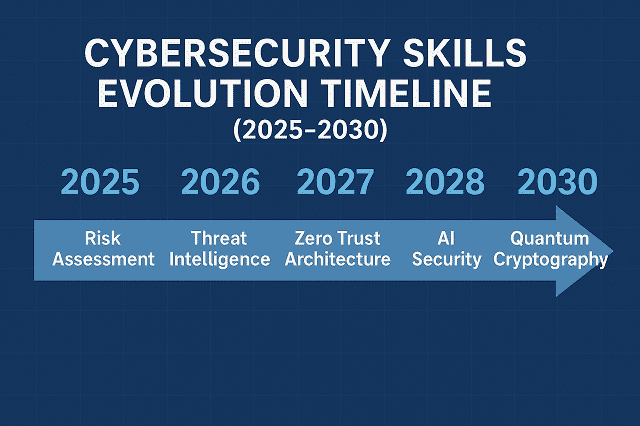
Cybersecurity Skills and Certifications That Boost Salary at Each Experience Level
In cybersecurity, skills translate directly into earning power. That is often more than years of service alone. Recruiters in 2025 prioritize candidates who combine technical expertise, industry-recognized certifications, and hands-on incident response experience. The recruiters are targeting high-demand skill sets. Therefore, professionals at any career stage can command salaries at the top end of the range for their role.
-
Entry-Level: Skills That Open the Door
(Best cybersecurity skills for beginners to increase pay)
Entry-level roles require a solid foundation in security fundamentals. Further, they need proof that they can quickly adapt to new threats. Employers also value candidates who can hit the ground running with the most widely used security tools.
High-Value Skills:
- SIEM platforms (Splunk, IBM QRadar)
- Network security basics (firewalls, IDS/IPS)
- Vulnerability scanning (Nessus, OpenVAS)
- Security fundamentals (CIA Triad, OWASP Top 10)
- Scripting basics (Python, PowerShell) for automation
Certifications That Boost Pay Early On:
- CompTIA Security+ – A global standard for entry-level security roles
- Certified Ethical Hacker (CEH) – Recognized by employers hiring penetration testers
- GIAC Security Essentials (GSEC) – Validates hands-on security knowledge
Salary Impact: Entry-level professionals with Security+ or CEH typically earn 10–15% more than uncertified peers.
-
Mid-Level: Specialization Drives Pay Growth
(Skills and certs that boost cybersecurity pay mid-career)
At this stage, specialization is the key to escaping salary plateaus. Employers pay a premium for cloud security experts, incident responders, and DevSecOps professionals who can bridge the gap between development and security.
High-Value Skills:
- Cloud security (AWS Security Hub, Azure Security Center, GCP Security Command Center)
- Advanced penetration testing & exploit development
- Security automation with SOAR platforms
- Threat intelligence and adversary emulation
- Secure coding practices for application security
Certifications That Boost Mid-Level Salaries:
- Certified Information Systems Security Professional (CISSP) – It is often a gatekeeper for senior positions
- AWS Certified Security – Specialty / Azure Security Engineer Associate – Cloud-focused credentials with high demand
- GIAC Certified Incident Handler (GCIH) – Validates advanced incident response skills
- Offensive Security Certified Professional (OSCP) – Highly respected for penetration testers
Salary Impact: Mid-level pros with CISSP or cloud security certifications can earn 20–30% more than peers without them. That is especially true in regulated industries.
-
Senior-Level: Leadership & Strategic Skills Command Premium Pay
(Executive cybersecurity skills that push salaries over $200k)
Senior cybersecurity professionals are expected to lead teams, manage budgets, and shape organizational security strategy. At this level, pay increases come from combining leadership skills with deep technical credibility.
High-Value Skills:
- Security governance & compliance strategy (ISO 27001, NIST, PCI-DSS)
- Enterprise risk management and resilience planning
- Zero Trust architecture design
- Regulatory navigation (GDPR, HIPAA, CCPA)
- Vendor risk management and third-party security
Certifications That Boost Executive Pay:
- Certified Information Security Manager (CISM) – Focuses on governance and leadership
- Certified Chief Information Security Officer (CCISO) – Tailored for executive-level roles
- SANS Cybersecurity Leadership Certificate – Bridges technical leadership and strategy
- CISA (Certified Information Systems Auditor) – Especially valuable in compliance-heavy sectors
Salary Impact: Executives with CISM or CCISO credentials often secure $30,000–$50,000 higher base salaries compared to equally experienced but uncertified peers.
ProDigitalWeb Tip for All Levels: Stack Skills for Maximum ROI
The highest-paid cybersecurity professionals in 2025 stack complementary skills and certifications (for example, pairing OSCP (technical) with CISM (management) or combining cloud security expertise with threat intelligence specialization). This combination makes you invaluable in both technical defense and strategic decision-making. That allows you to negotiate from a position of strength.
Cybersecurity Skills & Certifications Salary Boost Table (2025)
| Career Stage | High-Value Skills | Top Certifications | Avg. Salary Boost |
| Entry-Level (0–2 years) | SIEM tools (Splunk, QRadar), vulnerability scanning (Nessus), Python scripting, network security basics | CompTIA Security+, CEH, GSEC | +10–15% |
| Mid-Level (3–7 years) | Cloud security (AWS/Azure/GCP), SOAR automation, advanced pentesting, secure coding, threat intelligence | CISSP, AWS Security Specialty, GCIH, OSCP | +20–30% |
| Senior-Level (8+ years) | Governance (ISO 27001, NIST), Zero Trust architecture, enterprise risk management, compliance (GDPR/HIPAA) | CISM, CCISO, SANS Leadership, CISA | +30–40% |
Legend: Salary boost is compared to professionals at the same career stage without the listed skills/certifications.
Highest Paying Cybersecurity Jobs in 2025
Cybersecurity has transformed from a niche IT discipline to a core business function that directly impacts revenue, customer trust, and regulatory compliance. In 2025, the highest-paying cybersecurity jobs command six-figure salaries globally. It is driven by board-level visibility, talent shortages, and complex threat landscapes. Below, we explore the top-paying roles, their salary ranges, and what makes them so valuable in today’s market.
CISO – Chief Information Security Officer Salary (CISO salary in 2025)
The Chief Information Security Officer (CISO) is the executive-level guardian of an organization’s digital assets, risk posture, and security strategy. In 2025, with increasing regulatory scrutiny (SEC cybersecurity disclosure rules, GDPR enforcement), CISOs are not just tech leaders but business risk managers.
Key Responsibilities
- Defining enterprise-wide cybersecurity strategies
- Overseeing incident response and disaster recovery
- Communicating cyber risks to the board and C-suite
- Ensuring compliance with global regulations (GDPR, HIPAA, ISO 27001)
Salary Insights (2025)
- USA: $210,000 – $420,000+
- UK & Europe: £160,000 – £280,000 (€185,000 – €325,000)
- Asia-Pacific: $180,000 – $300,000
- Middle East & Australia: $190,000 – $320,000
Salary boosters: Experience managing security budgets >$10M. It needs a proven track record in breach prevention and holding executive-level certifications like CCISO or CISM.
Cloud Security Architect Salary Insights (cloud security architect salary 2025)
Cloud adoption surpasses 90% in enterprise IT. Therefore, Cloud Security Architects have become indispensable. They design, implement, and monitor secure cloud infrastructures across AWS, Azure, and Google Cloud. With multi-cloud environments and Zero Trust becoming the standard, their expertise is in high demand and short supply.
Key Responsibilities
- Designing secure cloud infrastructure and identity access models
- Implementing cloud-native security controls
- Overseeing compliance for cloud workloads (SOC 2, FedRAMP)
- Threat modeling for hybrid and multi-cloud deployments
Salary Insights (2025)
- USA: $160,000 – $230,000
- UK & Europe: £110,000 – £160,000 (€125,000 – €185,000)
- Asia-Pacific: $120,000 – $180,000
- Middle East & Australia: $130,000 – $200,000
Salary boosters: AWS Certified Security Specialty, Azure Security Engineer Associate. Further, it needs proven experience in multi-cloud IAM and container security (Kubernetes, Docker).
Application Security Engineer Earnings (application security engineer earnings)
Cyberattacks are shifting toward the software supply chain and vulnerabilities in custom applications. Therefore, demand for Application Security Engineers is among the fastest-growing. And it is one of the best-paid cybersecurity specialists in 2025.
Key Responsibilities
- Conducting secure code reviews and penetration testing for applications
- Integrating security into DevOps (DevSecOps principles)
- Managing vulnerability disclosure and patch processes
- Advising developers on secure coding best practices
Salary Insights (2025)
- USA: $130,000 – $190,000
- UK & Europe: £90,000 – £140,000 (€100,000 – €160,000)
- Asia-Pacific: $95,000 – $145,000
- Middle East & Australia: $105,000 – $150,000
Salary boosters: Certifications like CSSLP, OSWE, or GWAPT, plus experience with SAST/DAST tools and API security.
DevSecOps Lead Compensation Trends (DevSecOps salary trends 2025)
Today, software deployment cycles shrink to hours instead of weeks. Therefore, it needs DevSecOps Leads to ensure security, as it is embedded at every stage of CI/CD pipelines. In 2025, demand for DevSecOps leaders has surged in fintech, healthcare, and SaaS sectors.
Key Responsibilities
- Embedding automated security testing in CI/CD pipelines
- Building security guardrails for developers
- Implementing Infrastructure as Code (IaC) security checks
- Driving cultural change towards “security as code”
Salary Insights (2025)
- USA: $140,000 – $200,000
- UK & Europe: £95,000 – £145,000 (€110,000 – €165,000)
- Asia-Pacific: $100,000 – $150,000
- Middle East & Australia: $110,000 – $160,000
Salary boosters: Kubernetes security expertise, Terraform security scanning, and certifications like DevSecOps Professional or GIAC Cloud Security Automation.
Threat Intelligence Manager Pay Scale (highest paying cybersecurity jobs 2025)
Threat Intelligence Managers lead teams that track, analyze, and predict cyber threats from nation-state actors, ransomware groups, and insider threats. In 2025, they will play a critical role in proactive defense. They are highly valued in defense contractors, finance, and critical infrastructure sectors.
Key Responsibilities
- Leading threat hunting and intelligence analysis
- Overseeing OSINT, HUMINT, and technical intelligence collection
- Producing threat reports for executives and incident response teams
- Collaborating with law enforcement and industry peers
Salary Insights (2025)
- USA: $135,000 – $195,000
- UK & Europe: £90,000 – £140,000 (€105,000 – €160,000)
- Asia-Pacific: $95,000 – $145,000
- Middle East & Australia: $105,000 – $155,000
Salary boosters: GIAC Cyber Threat Intelligence (GCTI), multilingual capabilities, and experience with dark web monitoring platforms.
At a Glance: Top 5 Highest Paying Cybersecurity Jobs in 2025
Thinking about a career in cybersecurity? In 2025, some roles will pay more than senior doctors and lawyers. The demand is only climbing. From CISOs leading enterprise defense to DevSecOps experts building secure pipelines. These jobs not only pay well, but they also offer global mobility, leadership prestige, and long-term career security. Here is a breakdown of the top 5 highest-paying cybersecurity jobs and what you need to land them.
| Rank | Job Title | Average Annual Salary (USD) | Key Skills & Expertise | Top-Paying Industries |
| 1 | Chief Information Security Officer (CISO) | $185,000 – $300,000+ | Executive leadership, risk management, compliance strategy, and incident response oversight | Finance, Government, Defense, Tech Giants |
| 2 | Cloud Security Architect | $160,000 – $230,000 | Multi-cloud security, zero trust architecture, identity management, DevSecOps integration | Cloud Service Providers, FinTech, Healthcare |
| 3 | DevSecOps Lead | $150,000 – $210,000 | Secure CI/CD pipelines, container security, automation frameworks, and threat modeling | SaaS, E-commerce, Critical Infrastructure |
| 4 | Threat Intelligence Manager | $145,000 – $200,000 | Threat hunting, malware analysis, dark web monitoring, and geopolitical cyber risk | Defense, Banking, Cybersecurity Firms |
| 5 | Application Security Engineer | $130,000 – $180,000 | Secure coding, penetration testing, vulnerability management, OWASP standards | Software Development, FinTech, Healthcare |
The top 5 highest-paying cybersecurity jobs in 2025 include the Chief Information Security Officer (CISO), earning $180,000–$350,000. It is followed by Cloud Security Architects at $150,000–$250,000. DevSecOps Leads command $140,000–$220,000, while Threat Intelligence Managers earn $135,000–$210,000. Application Security Engineers round out the list with salaries between $120,000–$200,000. These roles demand advanced certifications like CISSP, CCSP, and OWASP expertise, with skills in cloud security, DevSecOps, and threat intelligence driving premium pay.
Factors That Influence Cybersecurity Salaries
Cybersecurity salaries in 2025 are shaped by multiple, interconnected variables, from certifications and industry type to geographic location and niche specializations. The market is hypercompetitive. But they are also highly rewarding for those who align their skills with the sectors and roles offering the best return on investment.
Understanding these influencing factors is essential for career strategists, salary negotiators, and aspiring security leaders. Let us break them down in detail.
Impact of Certifications on Cybersecurity Pay
(Cybersecurity certification impact on salary)
Certifications are more than just résumé badges. They are market validators. Employers often view them as proof that you can apply complex concepts under real-world constraints.
How much can they add?
- Entry-level professionals can see a 10–20% pay boost from certifications like CompTIA Security+ or GIAC Security Essentials (GSEC).
- Mid-career experts often see 25–35% higher salaries when holding certifications like CISSP or CISM.
- Specialists in cloud, penetration testing, or industrial control security can push their earning potential beyond $200K in certain markets.
High-ROI Cybersecurity Certifications in 2025:
- CISSP – The industry’s gold standard for security leadership roles. Employers often list it as a mandatory qualification for senior jobs.
- CISM – Focuses on risk management and governance. That is making it ideal for management-track positions.
- CEH – Provides ethical hacking skills that are in demand for red teaming and incident response.
- CCSP – A top choice for cloud-focused professionals as cloud adoption accelerates.
- OSCP – Valued for its hands-on penetration testing rigor. It is setting candidates apart in offensive security roles.
Pro Career Insight: The compounding effect of multiple certifications is real. For example, pairing CISSP + CCSP positions you as both a strategic leader and a cloud expert. That is attracting higher salaries and executive offers.
Role of Industry & Organization Size
(Finance cybersecurity salary, Healthcare cybersecurity salary)
Not all industries value cybersecurity expertise equally. High-regulation and high-risk industries consistently pay more due to legal liability, compliance requirements, and brand risk.
Top-Paying Industries in 2025
- Finance & Banking
- Rationale: Must protect sensitive data, prevent fraud, and meet strict regulations (PCI DSS, GDPR, SOC 2).
- Pay Range: Senior Security Architects $180K–$220K, CISOs $250K+.
- Example: A threat intelligence lead at a Wall Street bank can earn 30% more than the same role in a manufacturing firm.
- Healthcare & Pharmaceuticals
- Rationale: HIPAA compliance, medical IoT device security, and ransomware mitigation.
- Pay Range: Security directors $150K–$190K. That is especially true in large hospital networks.
- Example: Hospitals adopting IoMT security frameworks are willing to pay top dollar for talent.
- Defense & Government Contracting
- Rationale: Critical infrastructure security, cyber warfare defense, and classified projects.
- Pay Range: Often 15–20% higher than equivalent commercial roles, plus clearance stipends.
- Tech & SaaS
- Rationale: Cloud-first companies integrate security into development cycles (DevSecOps).
- Pay Range: Senior cloud security engineers can hit $200K+ at major SaaS firms.
Organization Size Impact
- Large Enterprises: Offer higher salaries, bonuses, and resources. Example: A Fortune 100 CISO may earn a base $300K + stock options.
- Startups: Often trade salary for equity—risky. But potentially life-changing if the company exits successfully.
How Location & Remote Work Affect Earnings
(Remote cybersecurity salary trends)
Location still plays a critical role in cybersecurity compensation. However, remote work is shifting salary norms.
High-Paying Cybersecurity Hubs in 2025
- United States: San Francisco, New York, Washington D.C., Austin.
- United Kingdom: London and Cambridge.
- Asia-Pacific: Singapore, Sydney, Hong Kong.
Salary Geography Effect:
- In high-cost cities like San Francisco, salaries for senior engineers can be 20–40% higher than the national average.
- Remote work is creating two competing trends:
- Salary Normalization – Some companies adjust pay downward for employees living in lower-cost regions.
- Global Talent Premium – Specialist roles (like cloud security architects) maintain high pay regardless of location.
Example: A remote incident response specialist in Eastern Europe earning $120K for a US employer is now common. That is something almost unheard of five years ago.
Niche Domains: OT/ICS Security & Quantum-Resistant Cryptography
(Niche cybersecurity jobs)
Cybersecurity niches with limited talent pools can dramatically out-earn generalist roles. Two standouts in 2025 are OT/ICS Security and Quantum-Resistant Cryptography.
- OT/ICS Security (Operational Technology / Industrial Control Systems)
- Focus: Securing critical infrastructure like power plants, oil pipelines, and transportation systems.
- Threat Landscape: State-sponsored attacks, ransomware, and sabotage targeting SCADA systems.
- Pay Premium: Senior ICS security engineers can command $180K–$210K, plus hazard pay in high-risk deployments.
- Quantum-Resistant Cryptography
- Focus: Designing encryption that withstands quantum computing attacks.
- Market Demand: Governments, defense contractors, and Fintech are investing early.
- Pay Premium: Specialists can earn $200K+. That too, even without managing teams, due to the rarity of expertise.
Career Forecast: As quantum computing approaches cryptographic breakpoints (predicted mid-2030s), salaries for this niche will skyrocket.
Cybersecurity Salary Influencing Factors Table – 2025
Cybersecurity salaries in 2025 are influenced by certifications. Further, they are very much influenced by industry sector, organization size, location, remote work policies, niche expertise, and professional experience. On average, top factors like certifications and niche skills can boost pay by 25–60%.”
| Factor | Impact on Salary | Examples | Salary Influence Range (2025) |
| Certifications | Higher pay due to validated expertise and industry recognition | CISSP, CISM, CEH, CompTIA Security+, AWS Security Specialty | +10% to +35% depending on certification level |
| Industry Sector | Regulated or high-risk sectors pay more due to compliance and threat exposure | Finance, Healthcare, Defense, Energy | +15% to +40% vs. general IT security roles |
| Organization Size | Larger enterprises often have bigger budgets for security roles | Fortune 500 companies, Multinationals, Government agencies | +10% to +25% compared to SMEs |
| Geographic Location | High cost-of-living and tech hubs offer premium salaries | USA (SF, NYC), UK (London), UAE (Dubai) | +20% to +50% over the global average |
| Remote Work Opportunities | Can equalize pay across locations or reduce the gap for global talent | Fully remote SOC analyst, Cloud security engineer | Varies: equal pay for top skills, slight cuts for low-cost regions |
| Niche Expertise | Specialized skills command premium rates due to scarcity | OT/ICS Security, Quantum-Resistant Cryptography, AI Security | +25% to +60% over standard cybersecurity roles |
| Experience Level | Seniority directly correlates with salary growth | Entry, Mid, Senior, CISO level | +50% to +300% from entry to executive roles |
How to Increase Your Cybersecurity Salary in 2025
In 2025, the cybersecurity job market will remain highly competitive. However, professionals who actively invest in skill growth, niche specialization, and personal branding can significantly boost their earning potential. Salaries are no longer determined by experience alone. Employers now value measurable expertise, global exposure, and tangible contributions to the security community. If you are an entry-level analyst or a seasoned security architect, strategic career moves can help you climb the pay scale faster than the industry average.
Obtain Industry-Recognized Certifications (how to increase cybersecurity salary)
Certifications remain one of the fastest ways to prove competence and command higher pay in cybersecurity.
Employers use them as benchmarks for technical ability, compliance requirements, and risk management readiness. In 2025, certain certifications are directly linked to salary increases because they validate mastery of high-demand skill sets.
Top Certifications That Boost Pay in 2025:
- CISSP (Certified Information Systems Security Professional) – Often required for senior and managerial roles. It boosts credibility.
- CISM (Certified Information Security Manager) – Ideal for leadership and governance. It focused on roles.
- CEH (Certified Ethical Hacker) – Highly valued in penetration testing and vulnerability assessment.
- AWS Certified Security – Specialty – For cloud security experts working on AWS infrastructures.
- GIAC Security Expert (GSE) – Recognized globally for advanced, hands-on security skills.
ProDigitalWeb Tip: Combine a foundational certification like CompTIA Security+ with a specialized one (cloud or incident response). That will demonstrate both breadth and depth of expertise. In addition, this combination can lead to 15–35% higher pay compared to uncertified peers.
Specializing in High-Demand Domains (cloud security, AI security, incident response)
Generalists are valuable. However, specialists in high-demand areas can negotiate salaries 20–60% above the median. Cybersecurity threats evolve; hence, companies are prioritizing niche skill sets that protect against the latest attack vectors.
High-Paying Specialization Tracks for 2025:
- Cloud Security – With the explosion of AWS, Azure, and Google Cloud, cloud security architects are among the highest earners.
- AI & Machine Learning Security – Protecting AI models from adversarial attacks and data poisoning.
- Incident Response & Digital Forensics – Rapid containment and forensic investigation skills are critical for breach recovery.
- OT/ICS Security – Safeguarding industrial control systems in manufacturing and energy sectors.
- Zero Trust Architecture Implementation – Designing and Deploying Modern Identity. It is focused on security frameworks.
ProDigitalWeb Tip: Use a “T-shaped” skill strategy. That gives a broad understanding of all security domains, with deep mastery in one lucrative specialty.
Participate in Open Source & Bug Bounties (bug bounty cybersecurity income)
Earning potential in cybersecurity does not have to come solely from a day job. Many skilled professionals increase their income by contributing to open-source security projects and participating in bug bounty programs.
Benefits of Open Source Contributions:
- Builds a public portfolio that employers and clients can review.
- Demonstrates collaborative, community-focused skills.
- May lead to paid consulting or speaking opportunities.
Benefits of Bug Bounty Hunting:
- Platforms like HackerOne, Bugcrowd, and Synack pay rewards for finding vulnerabilities.
- Skilled bug bounty hunters can earn anywhere from $5,000 to $100,000+ annually on top of their salary.
- Strengthens practical, real-world hacking skills.
ProDigital Tip: Focus on high-value targets like fintech apps, critical infrastructure platforms, and healthcare systems to maximize payouts.
Networking at Global Cybersecurity Conferences (Black Hat, RSA)
Networking is often underestimated as a salary growth strategy. However, it can open doors to high-paying offers that never make it to job boards.
Must-Attend Cybersecurity Conferences in 2025:
- Black Hat USA & Europe – Premier events for advanced security research and vendor networking.
- RSA Conference – Industry-leading gathering for cybersecurity innovation and partnerships.
- DEF CON – Hands-on hacking culture. It can make with strong connections to ethical hacking employers.
- Gartner Security & Risk Management Summit – Focused on security leadership trends.
Why Conferences Matter for Salary Growth:
- Direct contact with decision-makers who influence hiring and salary budgets.
- Exposure to cutting-edge tools and case studies can increase your market value.
- Opportunities for public speaking. Public Speaking builds authority and attracts better offers.
ProDigitalWeb Tip: Do not just attend, present a talk or workshop. Public speaking at major conferences positions you as an authority and can boost your salary prospects significantly.
Freelancing & Consulting for Additional Income (freelance cybersecurity work)
Freelancing and consulting allow cybersecurity professionals to tap into the booming demand for short-term, high-impact expertise.
Many specialists are earning $50–$300+ per hour consulting for small businesses, startups, and even Fortune 500 firms.
Popular Freelance Cybersecurity Services:
- Security audits & penetration testing.
- Cloud security configuration reviews.
- Compliance readiness (GDPR, HIPAA, ISO 27001).
- Incident response planning.
Best Platforms to Find Freelance Work:
- Upwork & Toptal – For remote, contract-based roles.
- LinkedIn – Networking-driven client acquisition.
- Direct Referrals – From conference networking and open-source visibility.
ProDigitalweb Tip: Position yourself as a specialist consultant rather than a generic freelancer. This allows you to charge premium rates and attract clients with urgent, high-budget needs.
Cybersecurity Job Market Outlook Beyond 2025
The global cybersecurity industry is entering a transformative era. 2025 already sees cybersecurity as one of the most in-demand technology sectors. The period leading up to 2030 will be marked by unprecedented shifts in job roles, salary structures, and skill requirements.
Factors like AI adoption, quantum computing, evolving cyber regulations, and cross-industry digital transformation will fundamentally change both the supply and demand dynamics of the cybersecurity workforce.
In the next decade, cybersecurity professionals will no longer be defined solely by network defense expertise. They will be multidisciplinary problem solvers blending data science, AI ethics, cryptography, and regulatory compliance into their roles.
Cybersecurity Growth Projections Through 2030
(Cybersecurity career growth 2030)
- Market Size and Job Demand
- According to Cybersecurity Ventures, the global cybersecurity market is expected to exceed $400 billion by 2030. It is further driven by escalating cybercrime costs projected to hit $13 trillion annually.
- The Bureau of Labor Statistics (BLS) projects an 11–15% annual growth rate for core cybersecurity roles. That is far outpacing most technology jobs.
- APAC is projected to be the fastest-growing region due to rapid digitization in countries like India, Indonesia, and Vietnam.
- Sector-Specific Demand Drivers
- Healthcare: The Explosion of telemedicine and digital health records increases attack vectors.
- Finance & FinTech: Rise of blockchain, DeFi, and CBDCs demands stronger security protocols.
- Manufacturing: Industry 4.0 and smart factories require OT/ICS protection.
- Government: Heightened cyber defense budgets to counter geopolitical cyber threats.
- Salary Trends
- Entry-level analysts in 2030 could start at $85,000–$100,000/year in developed markets.
- Senior roles like Security Architects and AI Security Leads may exceed $250,000/year. That is especially true in the finance and defense sectors.
Emerging Cybersecurity Roles & Hybrid Skillsets
(Cybersecurity data scientist, AI auditor)
The next wave of cybersecurity careers will merge traditional infosec expertise with specialized domains such as machine learning, cloud architecture, and AI governance. Employers will seek professionals who can interpret data, secure AI pipelines, and navigate compliance frameworks simultaneously.
High-Growth Future Roles (2025–2030):
| Role | Primary Skills | Projected Demand Growth | 2030 Salary Range (Global Avg.) |
| Cybersecurity Data Scientist | ML algorithms, anomaly detection, Python/R, SOC integration | +70% | $150K–$220K |
| AI Security Specialist | Secure model deployment, adversarial AI defense, and prompt injection mitigation | +80% | $160K–$240K |
| AI Auditor & Compliance Officer | AI governance, GDPR/AI Act compliance, bias detection | +65% | $140K–$210K |
| Cloud Forensics Investigator | Multi-cloud forensics, evidence handling, and SaaS breach response | +75% | $130K–$200K |
| OT/ICS Security Engineer | Industrial protocols, SCADA defense, PLC hardening | +60% | $140K–$215K |
Why Hybrid Skills Matter:
- AI-powered attacks require defenders who understand both cyber defense and AI model mechanics.
- Data-first security strategies will dominate. That is making analytical and coding skills as valuable as firewalls and antivirus know-how.
- Regulatory complexity means that understanding compliance law will be almost as critical as understanding encryption.
Quantum Computing & Regulatory Impact on Cybersecurity Salaries
(Quantum computing cybersecurity jobs)
- The Quantum Threat Landscape
Quantum Computing’s computational power could break today’s encryption in minutes instead of centuries. That is making RSA, ECC, and other public-key systems obsolete. Organizations are already preparing for the Post-Quantum Cryptography (PQC) era.
Emerging Quantum-Related Roles by 2030:
- Post-Quantum Cryptography Engineer – Designs algorithms that can resist quantum attacks.
- Quantum Threat Analyst – Models potential vulnerabilities in cryptographic systems.
- Quantum-Safe Migration Specialist – Guides companies in transitioning to PQC-compliant systems.
- Regulatory Implications
- The U.S. Quantum Computing Cybersecurity Preparedness Act (already in motion) mandates federal agencies to adopt quantum-resistant cryptography.
- Similar mandates are expected globally. That is forcing private enterprises to comply or risk non-compliance fines.
- This urgency will create salary inflation for niche quantum-security skills. That is pushing some roles to $300,000+ annually in high-security sectors like defense, banking, and critical infrastructure.
- Salary Impact:
- Quantum security engineers will likely be among the highest-paid cybersecurity specialists between 2028 and 2030.
- Early adopters of quantum-safe cryptography expertise will enjoy first-mover salary premiums of 20–50% compared to traditional cryptography specialists.
Cybersecurity Career Roadmap: 2025–2030
The next five years will be transformative for cybersecurity professionals. That will be with AI-driven attacks, quantum computing threats, and industry-specific regulations reshaping the skills and certifications in demand. Building a well-structured career roadmap now will help you stay ahead of the curve. That will help you to maximize earning potential and secure leadership roles by 2030.
Skills to Build in the Next 5 Years (cybersecurity career path 2025–2030)
Between 2025 and 2030, cybersecurity professionals will need to blend technical expertise, business acumen, and adaptability to thrive in an evolving threat landscape.
- Advanced Technical Skills
- AI and Machine Learning Security – Ability to detect, defend, and audit AI-powered attacks. Need skills in adversarial machine learning. That will be critical.
- Cloud-Native Security – Mastering AWS, Azure, and GCP security frameworks as businesses fully adopt hybrid and multi-cloud environments.
- Zero Trust Architecture Implementation – Designing end-to-end zero trust policies with continuous verification models.
- Quantum-Resistant Cryptography – Understanding and deploying post-quantum encryption algorithms before large-scale quantum computing arrives.
- Industry-Specific Cybersecurity Knowledge
- OT/ICS Security – Securing operational technology in manufacturing, utilities, and transport.
- Healthcare Data Protection – Compliance with HIPAA, GDPR-H, and region-specific privacy laws.
- Finance and FinTech Security – Mastering fraud detection systems, blockchain security, and secure payment protocols.
- Soft Skills & Leadership Competencies
- Incident Response Leadership – Coordinating cross-functional teams under high-pressure breach scenarios.
- Cyber Risk Management – Communicating technical risks in business terms to C-level executives.
- Policy & Compliance Expertise – Interpreting evolving cybersecurity regulations at global and national levels.
ProDigitalWeb Tip: Employers are seeking professionals who combine deep technical specialization with policy awareness. That is true in industries where compliance fines can exceed millions.
Certification Pathway for Salary Growth (best cybersecurity certifications for salary increase)
Strategic certification planning between 2025 and 2030 can accelerate promotions and open doors to six-figure+ salaries.
- Early Career (0–3 Years)
Focus: Foundational knowledge and hands-on skills.
- CompTIA Security+ – Global entry-level standard for cybersecurity fundamentals.
- Cisco CCNA Security or CyberOps Associate – Network defense basics for enterprise security roles.
- Microsoft Security, Compliance, and Identity Fundamentals (SC-900) – For professionals in Microsoft-heavy environments.
- Mid-Career (3–7 Years)
Focus: Specialization in high-demand domains.
- Certified Ethical Hacker (CEH) – Offensive security skills to strengthen penetration testing expertise.
- GIAC Security Essentials (GSEC) – Advanced defensive strategies for enterprise environments.
- AWS Certified Security – Specialty – For cloud-native security mastery.
- Certified Cloud Security Professional (CCSP) – Multi-cloud expertise for high-paying cloud architect roles.
- Senior Level (7+ Years)
Focus: Strategic leadership and niche domain mastery.
- Certified Information Systems Security Professional (CISSP) – Often a prerequisite for CISO roles.
- Certified Information Security Manager (CISM) – Risk management and governance leadership.
- GIAC Defensible Security Architecture (GDSA) – Building advanced, scalable security infrastructures.
- Post-Quantum Cryptography Certifications (expected to emerge by 2027) – Future-proofing against quantum threats.
- Continuous Learning & Micro-Credentials
Between major certifications, micro-certifications in emerging tools like SIEM orchestration, SOAR platforms, blockchain forensics, and AI-powered security analytics will keep you competitive.
Salary Impact Insight:
Professionals with CISSP + Cloud Specialty + Leadership Certification are projected to earn 20–35% higher salaries by 2030 compared to peers without this stack.
5-Year Cybersecurity Career Roadmap Table
| Year | Career Focus | Skills to Acquire | Key Certifications | Salary Impact Potential |
| 2025–2026 | Core Competency Building | Network security, basic cloud security, vulnerability scanning | CompTIA Security+, CEH, AWS Security Specialty | +10–15% |
| 2026–2027 | Specialization & Cloud Mastery | Multi-cloud defense, identity & access management | CISSP, GIAC Cloud Security | +15–25% |
| 2027–2028 | Threat Intelligence Leadership | AI threat detection, SOC leadership | GCTI, CISM | +20–30% |
| 2028–2029 | Future-Tech Adaptation | Quantum-resistant cryptography, Zero Trust deployment | PQCP, OSCE | +25–35% |
| 2029–2030 | Executive/Strategic Role | Risk governance, global compliance | CISO Track, ISO 27001 Lead Auditor | +35–50% |
Cybersecurity Career Roadmap: 2025–2030
| Career Stage | Key Skills to Master | Recommended Certifications | High-Demand Domains | Average Salary Range (2025 USD) | Growth Potential by 2030 |
| Entry-Level (0–2 Years) | Network fundamentals, Linux basics, threat detection, SIEM tools, vulnerability scanning | CompTIA Security+, Cisco CCNA Security, Microsoft Security Operations Analyst | SOC operations, endpoint security | $60,000 – $85,000 | Highly Expected demand surge for SOC analysts and junior pen testers |
| Mid-Level (3–5 Years) | Penetration testing, incident response, threat hunting, and cloud security basics | Certified Ethical Hacker (CEH), CompTIA CySA+, AWS Security Specialty | Cloud security, DevSecOps, identity & access management | $85,000 – $120,000 | Very High – Cloud & AI-driven security roles expanding |
| Senior-Level (6–9 Years) | Advanced threat intelligence, red team/blue team leadership, risk assessment, secure architecture design | CISSP, GIAC Security Expert (GSE), CISM | Threat intelligence, OT/ICS security, AI security | $120,000 – $165,000 | Very High – Leadership roles in threat mitigation and compliance |
| Specialist/Expert (10+ Years) | Strategic risk management, quantum-resistant cryptography, regulatory compliance, and AI-driven security orchestration | CCISO, GIAC Quantum Security, CRISC | Quantum security, AI auditing, cross-industry CISO roles | $165,000 – $250,000+ | Extremely High – Executive & niche-specialist demand will peak |
| Future-Ready (By 2030) | AI governance, cross-domain threat modeling, zero-trust enterprise architecture | To be announced – likely AI Auditor, Quantum Security Architect certifications | Post-quantum cryptography, AI safety compliance | $200,000 – $300,000+ | Explosive – Early movers into quantum & AI oversight roles will dominate salary charts. |
Conclusion: Navigating the Cybersecurity Salary Landscape in 2025
Cybersecurity salaries in 2025 reflect a rapidly evolving digital threat environment. It further reflects the rising sophistication of cyberattacks and the urgent global demand for skilled talent. If you are aiming for an entry-level SOC role, a specialized penetration testing position, or an executive-level CISO post, the trends are clear: expertise, certifications, and niche skills directly influence earning potential.
Region-wise differences remain significant. North America and Western Europe are offering the highest pay scales. However, emerging markets in Asia-Pacific and the Middle East present rapid growth opportunities. Hybrid work models, cloud security expertise, and AI-driven threat analysis are emerging as major salary boosters in almost every region.
For professionals, these insights serve as both a career roadmap and a negotiation tool. For organizations, they are a reminder that competitive compensation packages are essential to attract and retain top talent in a tightening job market.
In short, 2025 is a year when cybersecurity is not just a career. It is a premium, future-proof investment. Those who align their skills with high-demand specializations and keep pace with emerging technologies will not just secure jobs but command top-tier salaries in this critical, fast-moving field.
Cybersecurity salaries in 2025 are reaching record highs, with Chief Information Security Officers (CISOs) earning between $180K–$420K, Cloud Security Architects and DevSecOps Leads exceeding $200K. In addition, AI-driven security specialists are seeing the fastest pay growth. North America leads global pay scales. Asia-Pacific and the Middle East offer rapid growth opportunities. Key skills boost salaries. That includes cloud security, zero-trust architecture, AI threat detection, and quantum-safe cryptography.
FAQs on Cybersecurity Salaries in 2025
Is cybersecurity a high-paying career in 2025?
Yes, cybersecurity remains one of the highest-paying tech careers in 2025.
Global cyber threats are increasing, and organizations are facing sophisticated attacks. So, as the demand for skilled cybersecurity professionals continues to outpace supply. Entry-level positions such as Cybersecurity Analysts often start at $70,000–$90,000 annually. The advanced roles like Chief Information Security Officer (CISO) can command $200,000–$400,000+ per year in large enterprises. High salaries are also driven by:
- Skills shortages across AI security, cloud security, and OT/ICS security.
- The high cost of cyber incidents is pushing companies to invest heavily in top talent.
- Specialized certifications such as CISSP, CISM, and OSCP.
Which cybersecurity job has the highest salary in 2025?
The Chief Information Security Officer (CISO) role consistently ranks as the highest-paying cybersecurity job in 2025. That comes with average salaries ranging from $220,000 to $420,000. That depends on company size and industry. Other top-paying roles include:
- Cloud Security Architect – $170,000–$250,000
- Threat Intelligence Manager – $150,000–$220,000
- DevSecOps Lead – $140,000–$210,000
- Application Security Engineer – $130,000–$200,000.
- These salaries are higher in finance, defense, and tech industries and major hubs like San Francisco, New York, and London.
Does location affect cybersecurity salaries in 2025?
Yes, location still significantly impacts pay. However, remote work is balancing salary differences across regions.
- High-cost cities (San Francisco, New York, London) offer 20–35% higher pay.
- Remote cybersecurity roles may offer competitive salaries regardless of location. That is especially true for niche expertise like cloud security or AI-powered threat detection.
- Global variations: The U.S. and Switzerland lead in salary averages. Whereas, countries like India and Brazil have growing but comparatively lower pay scales.
How much does an entry-level cybersecurity professional earn in 2025?
An entry-level cybersecurity analyst in 2025 earns between $70,000 and $90,000 annually in the U.S., with higher pay in finance, government, and technology sectors. Salaries can grow quickly with 2–3 years of experience, if it is paired with in-demand certifications like CompTIA Security+, Certified Ethical Hacker (CEH), or GIAC Security Essentials (GSEC).
Do cybersecurity certifications increase salary in 2025?
Absolutely – certifications are one of the fastest ways to increase earning potential.
Professionals with advanced certifications can earn 15–40% more than their uncertified peers.
High-paying certifications in 2025 include:
- CISSP is often required for senior leadership roles.
- CISM – ideal for security management positions.
- OSCP – valued for offensive security expertise.
- AWS Certified Security – Specialty – critical for cloud-focused roles.
What skills will boost my cybersecurity salary in 2025?
Key high-paying skills in 2025 include:
- Cloud Security (AWS, Azure, GCP)
- AI and Machine Learning Security
- Incident Response & Digital Forensics
- DevSecOps Automation
- Zero Trust Architecture Implementation.
- These skills are particularly valuable in industries such as finance, defense, and healthcare. Since these industries face stricter compliance and security demands.
Are remote cybersecurity jobs well-paid in 2025?
Yes — remote cybersecurity jobs in 2025 can pay equal to or higher than on-site roles in specialized domains.
Remote incident response experts, cloud security engineers, and threat analysts are in high demand. They are often earning $120K–$160K. Organizations save on office overhead by hiring remote talent. That is enabling them to allocate more budgets to competitive salaries. However, top remote salaries are often tied to experience, niche expertise, and the ability to work across time zones.
Which cybersecurity skills will earn the most by 2030?
By 2030, skills in AI security, quantum-resistant cryptography, and operational technology (OT/ICS) security will command the highest salaries.
AI-driven threat detection and post-quantum encryption are expected to become critical as cyberattacks evolve. Specialists in securing smart grids, manufacturing control systems, and autonomous vehicles will also see premium pay. Pairing these skills with certifications and leadership experience will maximize earning potential.
About the Author
Rajkumar is a tech, travel, health science, and history blogger, as well as a content creator, digital marketer, SEO expert, and teacher with a passion for making complex topics accessible to all readers. Through his platform ProDigitalWeb, he blends in-depth research with clear storytelling, helping audiences navigate emerging trends in technology, cybersecurity, and innovation. When not writing, he enjoys exploring new cultures, experimenting with digital tools, and mentoring aspiring content creators.
About the Editor
Dharini R R is an aspiring journalist and editor at ProDigitalWeb.com. She translates complex tech topics into clear, compelling content for real-world readers. With a keen eye for detail and a passion for accessible storytelling, she ensures that every article is informative and easy to understand.