
Last Updated: August 4, 2026
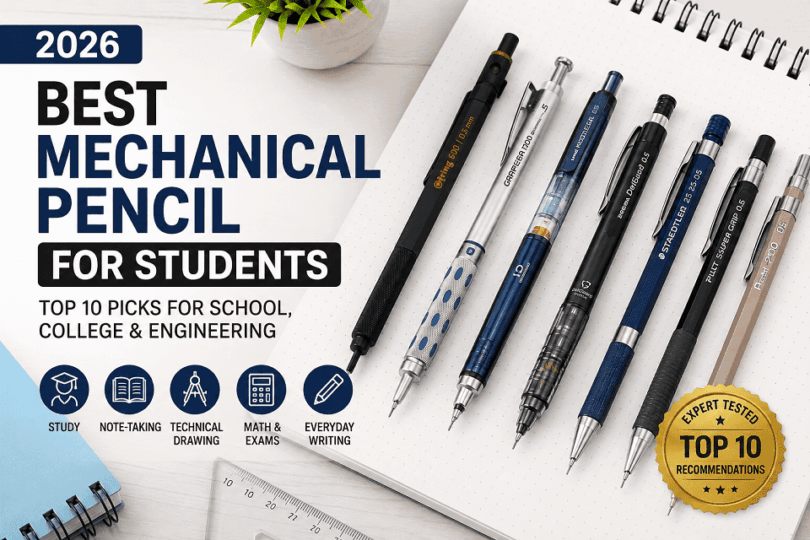
Choosing the best mechanical pencil for students is easier when you know what to look for. Explore our expert recommendations to find the perfect pencil for note-taking, exams, technical drawing, and everyday writing.
Introduction
A mechanical pencil is more than a writing tool. It helps students write neatly every day. You can solve math problems faster. You can sketch diagrams with better accuracy. It also lets you take notes without sharpening the tip.
Unlike wooden pencils, mechanical pencils maintain a consistent line width. They deliver better precision. They also provide a more comfortable writing experience.
Choosing the right mechanical pencil isn’t always easy. Students can choose from many brands. Lead sizes also vary. Grip designs and prices differ as well. A pencil for engineering may not suit classroom note-taking. Likewise, a lightweight model may not meet an architect’s needs.
This guide helps you find the best mechanical pencil for students. We compare the most popular models. We evaluate writing comfort, grip quality, lead durability, build quality, refill availability, and overall value.
Whether you are a school student, college student, engineering student, artist, or professional, you’ll find a suitable recommendation.
You’ll also learn how to choose the right lead size. We explain the differences between 0.3 mm, 0.5 mm, 0.7 mm, and 0.9 mm leads. You’ll compare leading brands. You’ll avoid common buying mistakes. You’ll also learn simple maintenance tips.
By the end of this guide, you’ll know exactly which mechanical pencil fits your needs. You’ll also know how to keep it working smoothly for years.
TL;DR
If you are short on time, start here. We have selected the best mechanical pencils for different needs. These recommendations suit school, college, engineering, and creative work. They also fit different budgets. Whether you take notes, solve math problems, create technical drawings, or prepare for exams, these pencils deliver excellent comfort, durability, and value.
| Student Need | Recommended Mechanical Pencil | Lead Size | Why We Recommend It |
| Best Overall | Uni Kuru Toga Advance | 0.5 mm | Rotating lead mechanism keeps the tip sharp for consistent writing. |
| Best Budget Pick | Pentel Sharp P200 Series | 0.5 mm | Affordable, reliable, and ideal for everyday school work. |
| Best for School Students | Pentel Twist-Erase III | 0.7 mm | Comfortable grip with a large replaceable eraser for daily use. |
| Best for College Students | Zebra DelGuard | 0.5 mm | Advanced lead protection reduces breakage during fast note-taking. |
| Best for Engineering Students | rOtring 600 | 0.5 mm | Metal body and precise tip make it excellent for technical drawing. |
| Best for Mathematics | Pentel GraphGear 1000 | 0.5 mm | Fine, accurate lines are perfect for equations, graphs, and geometry. |
| Best for Drawing & Sketching | Staedtler 925 Series | 0.5 mm / 0.7 mm | Excellent balance, precision, and control for artists and designers. |
| Best for Everyday Writing | Uni Kuru Toga Roulette | 0.5 mm | Produces smooth, uniform writing for long study sessions. |
| Best Lightweight Pencil | Pilot Super Grip G | 0.5 mm | Comfortable to hold and easy to use throughout the day. |
| Best Premium Choice | Pentel Orenz Nero | 0.3 mm / 0.5 mm | Automatic lead advancement and premium construction for serious users. |
Quick Recommendation: Want just one mechanical pencil? Choose the Uni Kuru Toga Advance. It offers excellent comfort and durability. It also delivers precise writing. Overall, it provides outstanding value. That is why it is our top choice for most students. On a tighter budget? Pick the Pentel Sharp P200 Series. It delivers reliable performance. It also offers excellent value for money.
Best Mechanical Pencil at a Glance
Choosing the right mechanical pencil depends on your needs. Some models suit everyday classroom writing. Others perform better for technical drawing. Some are ideal for engineering students. Others excel during long study sessions. The comparison table below highlights our top recommendations. It helps you compare features quickly. You can choose the best pencil for your writing style and budget.
| Mechanical Pencil | Best For | Lead Size | Body Material | Weight | Refillable | Key Feature | Price Range |
| Uni Kuru Toga Advance | Overall Best | 0.5 mm | Plastic | Lightweight | ✔ Yes | Rotating lead mechanism for consistently sharp writing | $$ |
| Pentel Sharp P200 Series | Budget Choice | 0.5 mm | Plastic | Lightweight | ✔ Yes | Durable design with reliable performance | $ |
| Zebra DelGuard | College Students | 0.5 mm | Plastic | Lightweight | ✔ Yes | Dual spring system minimizes lead breakage | $$ |
| rOtring 600 | Engineering & Technical Drawing | 0.5 mm | Metal | Heavy | ✔ Yes | Precision drafting with knurled metal grip | $$$ |
| Pentel GraphGear 1000 | Mathematics & Design | 0.5 mm | Metal & Plastic | Medium | ✔ Yes | Retractable tip and professional drafting features | $$$ |
| Pentel Twist-Erase III | School Students | 0.7 mm | Plastic | Lightweight | ✔ Yes | Large replaceable eraser with comfortable grip | $$ |
| Uni Kuru Toga Roulette | Everyday Writing | 0.5 mm | Metal & Plastic | Medium | ✔ Yes | Premium grip with rotating lead technology | $$$ |
| Pilot Super Grip G | Long Note-Taking | 0.5 mm | Plastic | Lightweight | ✔ Yes | Soft rubber grip for writing comfort | $ |
| Staedtler 925 Series | Artists & Architects | 0.5 / 0.7 mm | Metal | Medium | ✔ Yes | Excellent balance and precise lead guidance | $$$ |
| Pentel Orenz Nero | Premium Users | 0.3 / 0.5 mm | Metal & Resin | Medium | ✔ Yes | Automatic lead advancement with anti-break technology | $$$$ |
Quick Buying Tips
- Choose 0.5 mm for everyday writing, note-taking, and exams.
- Choose 0.7 mm if you prefer stronger leads with fewer breaks.
- Choose 0.3 mm for detailed sketches and precise technical work.
- Metal-bodied pencils offer better durability and balance, while plastic models are lighter and more comfortable for long writing sessions.
- If you are buying your first mechanical pencil, the Uni Kuru Toga Advance or Pentel Sharp P200 Series are excellent starting points thanks to their reliability, comfort, and value.
Why Students Are Switching to Mechanical Pencils
Many students now prefer mechanical pencils. They combine convenience, precision, and long-term value. Unlike wooden pencils, they never need sharpening. They also maintain a consistent line width. This improves writing quality. You can take lecture notes more easily. You can solve equations with greater accuracy. They also work well for diagrams and exams. A good mechanical pencil makes writing smoother and more comfortable.
Better Than Traditional Wooden Pencils
Wooden pencils become shorter with use. They also need frequent sharpening. This interrupts your writing. Mechanical pencils solve this problem. A simple click advances fresh lead. You can continue writing without stopping.
Mechanical pencils also deliver consistent results. The lead maintains the same thickness. Your notes look cleaner. Your diagrams appear more precise. You only replace the lead. This creates less waste than wooden pencils. It also saves money over time.
Ideal for School and College
Students write for several hours each day. They take notes and complete assignments. They also revise lessons regularly. A comfortable mechanical pencil reduces hand fatigue. It also delivers smooth, consistent writing.
Mechanical pencils suit many academic tasks. They work well for classroom notes. They are ideal for homework and mathematics. They also support science subjects and everyday writing. Many models feature ergonomic grips. Most are lightweight and easy to hold. Many also include large replaceable erasers. These features make them excellent study companions throughout the academic year.
Cost Savings Over Time
A mechanical pencil costs more initially. However, it saves money over time. You only replace the lead. You may also replace the eraser occasionally. The pencil body stays the same.
A quality mechanical pencil can last for years. Proper care extends its lifespan. Lead refills are inexpensive and widely available. Students who write daily often spend less overall. They also create less waste.
Precision for Technical Subjects
Mechanical pencils are popular in technical fields. Engineering students use them daily. Architecture students also rely on them. They are equally useful for mathematics and design.
Unlike wooden pencils, mechanical pencils keep a fine point. They produce clean, consistent lines. This improves technical drawings. It also helps with graphs, calculations, and detailed sketches.
The correct lead size improves accuracy further. A 0.5 mm pencil suits everyday writing. It is also ideal for note-taking. A 0.7 mm pencil resists breakage better. It suits heavy-handed writers. Choose 0.3 mm for detailed drafting. It delivers maximum precision.
Pro Tip: Buying your first mechanical pencil? Choose a 0.5 mm model. Pick one with an ergonomic grip. It offers excellent comfort and precision. It also provides long-lasting durability. Most school and college students will find it the best choice.
How We Selected the Best Mechanical Pencils
Not every mechanical pencil performs the same. Some suit everyday note-taking. Others are designed for drafting and technical work. To find the best mechanical pencils for students, we compared the features that matter most.
We looked beyond brand names and prices. We evaluated writing performance, comfort, durability, maintenance, and overall value. These factors shaped our final recommendations.
Writing Comfort
Students write for several hours each day. They take notes and complete assignments. They also prepare for exams. A comfortable pencil reduces hand fatigue. It also improves writing quality.
We selected pencils that write smoothly. They also feel balanced in the hand. Ergonomic grips received higher ratings. Lightweight models also performed well. Both features improve comfort during long writing sessions.
Grip Design
A good grip improves comfort and control. It also reduces finger fatigue. Smooth plastic barrels can become slippery. Rubber and knurled metal grips provide better stability.
We tested each pencil during normal writing. We focused on comfort and handling. We also evaluated overall control. Pencils with secure grips earned higher ratings.
Lead Break Resistance
Broken lead interrupts your work. It also slows your progress. Modern mechanical pencils use advanced protection systems. These reduce lead breakage during writing.
We evaluated each model under normal use. We also considered mathematics and technical drawing. Pencils with reliable lead protection ranked higher. They delivered a smoother writing experience.
Refill Availability
A quality mechanical pencil should last for years. Easy refills make that possible. We preferred models using standard lead sizes. We also considered replacement erasers.
Students should find refills easily. Widely available replacement parts improve long-term value. They also make daily use more convenient.
Durability
Students carry pencils everywhere. They travel in backpacks and pencil cases. Some also stay in pockets. A durable pencil should handle daily use.
We evaluated build quality carefully. We examined the materials and tip construction. We also considered long-term reliability. Every pencil was judged according to its intended purpose.
Overall Value
Price alone doesn’t determine value. The best pencil balances cost and performance. Comfort and durability also matter. Reliable features complete the package.
Our recommendations include affordable models. We also selected premium options. Every pencil offers excellent long-term value. Each one deserves its place in this guide.
Our Selection Process: We compared writing comfort, build quality, durability, refill availability, and overall value. We also considered everyday usability. Our recommendations are based on practical performance, not brand popularity.
Best Mechanical Pencil for Students
The best mechanical pencil for students depends on your needs. School students need comfort and reliability. Engineering students need greater precision. Artists often prefer finer lead sizes.
Our top pick is the Uni Kuru Toga Advance. Its rotating lead keeps the tip sharp. This produces cleaner handwriting. It also reduces interruptions while writing.
Looking for an affordable option? Choose the Pentel Sharp P200 Series. It is reliable and durable. It also offers excellent value for money.
Engineering and architecture students should consider the rOtring 600. Its solid metal body provides excellent balance. It also delivers outstanding precision. If you often break lead, choose the Zebra DelGuard. Its lead protection system reduces breakage significantly.
Don’t choose a pencil based only on the brand. Writing comfort matters. Grip quality is equally important. Lead size also affects performance. Durability and refill availability deserve attention too.
For most students, a 0.5 mm mechanical pencil is the best choice. It balances precision and durability. Prefer a 0.7 mm model if you write with heavy pressure. It also reduces lead breakage.
The detailed reviews below cover every recommendation. You’ll learn each pencil’s strengths. You’ll also understand its limitations. This makes choosing the right model much easier.
Quick Recommendation: Buying your first mechanical pencil? Choose the Uni Kuru Toga Advance. It writes smoothly. It keeps the lead sharp automatically. It offers excellent comfort and value. Most students will be happy with this choice.
Uni Kuru Toga Advance – Best Overall Mechanical Pencil for Students
The Uni Kuru Toga Advance is our top recommendation. It combines comfort, precision, and innovative technology. Students can rely on it every day.

Use it for lecture notes. It also works well for mathematics and essays. You can rely on it during exams. It delivers a smooth, consistent writing experience.
The lightweight body feels comfortable in the hand. The grip reduces hand fatigue. Students can write comfortably during long study sessions.
The Uni Kuru Toga Advance is the best overall mechanical pencil for most students. It offers excellent comfort, precise writing, and outstanding long-term value.
Specifications
| Feature | Details |
| Brand | Uni (Mitsubishi Pencil) |
| Model | Kuru Toga Advance |
| Lead Size | 0.5 mm |
| Body Material | High-quality plastic |
| Grip | Textured non-slip grip |
| Lead Advancement | Automatic rotating lead mechanism |
| Refillable | Yes |
| Eraser | Replaceable under the push button |
| Weight | Approximately 13 g |
Key Features
The Kuru Toga Advance uses a rotating lead mechanism. It keeps the writing tip consistently sharp. This produces darker, cleaner lines. It also improves writing accuracy.
Its upgraded lead system reduces breakage. Students can write with fewer interruptions. This makes it ideal for everyday classroom use.
The lightweight body feels well balanced. The comfortable grip improves control. It also reduces hand fatigue during long study sessions.
Standard 0.5 mm lead refills are easy to find. They are also affordable. Maintenance is simple and inexpensive.
Pros
- Automatically rotates the lead to maintain a sharp writing point.
- Produces neat and consistent handwriting.
- Lightweight and comfortable for extended use.
- Reduces lead breakage compared with standard mechanical pencils.
- Easy to refill and maintain.
Cons
- Available only in limited lead sizes.
- Plastic body may not appeal to users who prefer premium metal pencils.
- Slightly more expensive than basic student models.
Best For
The Uni Kuru Toga Advance is an excellent choice for school students, college students, competitive exam candidates, and anyone who spends several hours writing every day. It is especially well suited for note-taking, mathematics, science, and general classroom use.
Price Range
$$ (Mid-range)
It costs more than entry-level mechanical pencils but offers advanced writing technology and long-term value that justify the additional investment.
Our Verdict
If you are looking for the best mechanical pencil for students, the Uni Kuru Toga Advance is difficult to beat. Its automatic lead rotation, comfortable design, and dependable performance make it suitable for almost every academic task. While it isn’t the cheapest option available, its writing quality, durability, and ease of use make it an excellent investment for students who want a reliable mechanical pencil they can use throughout the school or college year.
Overall Rating: ⭐⭐⭐⭐⭐ 4.9/5
Why We Recommend It: The Uni Kuru Toga Advance offers the best combination of writing precision, comfort, durability, and value, making it our top overall pick for most students.
Pentel Sharp P200 Series – Best Budget Mechanical Pencil for Students

Its simple design focuses on performance. You don’t need an expensive pencil for smooth writing. The P200 Series proves that every day.
Unlike many budget pencils, it features a 4 mm fixed metal tip. This improves writing precision. It also works well with rulers and templates. The pencil is available in 0.3 mm, 0.5 mm, 0.7 mm, and 0.9 mm sizes. Students can choose the lead size that suits them best.
Specifications
| Feature | Details |
| Brand | Pentel |
| Model | Sharp P200 Series (P203, P205, P207, P209) |
| Lead Sizes | 0.3 mm, 0.5 mm, 0.7 mm, 0.9 mm |
| Body Material | Lightweight plastic with metal tip |
| Grip | Textured molded grip |
| Tip Type | Fixed 4 mm metal sleeve |
| Refillable | Yes |
| Eraser | Replaceable Z2-1N eraser |
| Weight | Approximately 9 g |
Key Features
The Pentel Sharp P200 Series is built for everyday writing. It also performs well for technical drawing. Drafting tasks become easier with its precise metal tip.
The lightweight body feels comfortable. It suits long study sessions. The fixed metal sleeve improves visibility. It also increases writing accuracy.
The pencil uses Pentel Super Hi-Polymer HB lead. Standard refill leads are widely available. Maintenance is simple and affordable.
Pros
- Excellent value for money.
- Available in four popular lead sizes.
- Lightweight and comfortable.
- Precise metal tip improves accuracy.
- Refills are easy to find.
Cons
- No automatic lead rotation.
- No built-in lead protection.
- Fixed tip needs careful storage.
Best For
The Pentel Sharp P200 Series suits many students. It is ideal for school and college. Engineering students also benefit from its precision. It performs well for note-taking, homework, mathematics, and technical drawing.
Price Range
$ (Budget-Friendly)
The P200 Series offers excellent value. It delivers dependable performance at an affordable price.
Our Verdict
Need an affordable mechanical pencil? The Pentel Sharp P200 Series is an excellent choice. It delivers reliable performance every day. The durable construction lasts for years. The precise tip improves writing accuracy.
It lacks premium features. However, its reliability and value are outstanding. Budget-conscious students will appreciate this pencil.
Overall Rating: ⭐⭐⭐⭐⭐ 4.8/5
Why We Recommend It: The Pentel Sharp P200 Series offers excellent value. It combines affordability, precision, and long-term reliability. It remains our top budget choice for students.
Zebra DelGuard – Best Mechanical Pencil for Students Who Break Lead Frequently

The pencil uses a dual-spring mechanism. It absorbs downward writing pressure. It also reduces sideways stress. Students can write naturally with fewer interruptions.
The Zebra DelGuard features a lightweight body. It also includes a comfortable ergonomic grip. The pencil writes smoothly every day. Choose from 0.3 mm, 0.5 mm, or 0.7 mm lead sizes.
Specifications
| Feature | Details |
| Brand | Zebra |
| Model | DelGuard Standard |
| Lead Sizes | 0.3 mm, 0.5 mm, 0.7 mm |
| Body Material | High-quality plastic with metal tip |
| Grip | Textured ergonomic grip |
| Lead Protection | DelGuard dual-spring anti-break mechanism |
| Refillable | Yes |
| Eraser | Replaceable under the push button |
| Weight | Approximately 10 g |
Key Features
The biggest highlight is the DelGuard anti-break system. It protects the lead from snapping. The mechanism works under downward pressure. It also reduces breakage from sideways force.
The lightweight body feels comfortable. The slim barrel improves control. Students can write longer with less fatigue. Standard lead refills make maintenance quick and affordable.
Pros
- Excellent lead break protection.
- Lightweight and comfortable.
- Smooth, consistent writing.
- Available in multiple lead sizes.
- Easy to refill.
Cons
- Plastic body feels less premium.
- Grip may feel smooth for some users.
- Fixed tip needs careful storage.
Best For
The Zebra DelGuard is ideal for school students. College students will also appreciate it. It is perfect for heavy-handed writers. It performs well during note-taking, homework, mathematics, and everyday classroom writing.
Price Range
$$ (Mid-range)
The DelGuard costs more than basic models. However, its anti-break technology justifies the price. It offers excellent long-term value.
Our Verdict
The Zebra DelGuard is built for reliability. Its innovative mechanism reduces broken lead. Students can focus on writing instead of constant refills.
The plastic body isn’t premium. However, the writing performance is excellent. It also delivers impressive comfort and durability. It remains one of the best mechanical pencils for everyday academic use.
Overall Rating: ⭐⭐⭐⭐⭐ 4.8/5
Why We Recommend It: The Zebra DelGuard offers outstanding lead protection. It combines comfort, reliability, and smooth writing. It is the best choice for students who frequently break pencil lead.
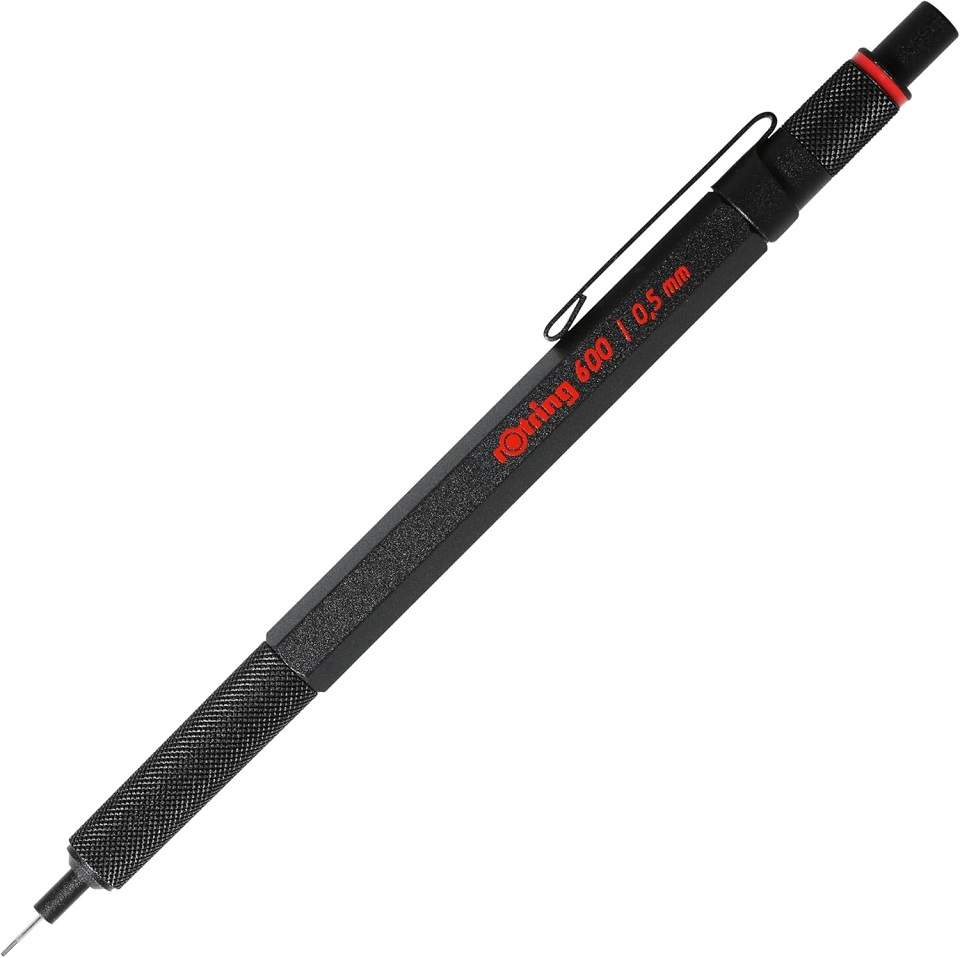

The rOtring 600 is an iconic mechanical pencil. Engineers trust it every day. Architects and designers also rely on it. It is built for precision.
Unlike lightweight student pencils, it features a full metal body. The brass mechanism advances the lead smoothly. A fixed lead sleeve improves accuracy. This makes technical work much easier.
The hexagonal barrel prevents rolling. The knurled metal grip improves control. It also reduces slipping during long writing sessions.
The rOtring 600 costs more than most student pencils. However, its premium construction justifies the price. It is built to last for years.
Specifications
| Feature | Details |
| Brand | rOtring |
| Model | 600 Mechanical Pencil |
| Lead Sizes | 0.5 mm, 0.7 mm |
| Body Material | Full metal body |
| Grip | Knurled non-slip metal grip |
| Lead Advancement | Precision brass mechanism |
| Tip Type | Fixed lead guidance sleeve |
| Refillable | Yes |
| Eraser | Replaceable under the push-button cap |
| Weight | Approximately 22 g |
Key Features
The rOtring 600 is engineered for precision. Its brass mechanism advances the lead smoothly. The fixed metal sleeve improves visibility. It works perfectly with rulers and templates.
A built-in lead hardness indicator adds convenience. You can identify the installed lead grade quickly. The balanced metal body feels solid. It also improves writing control.
Pros
- Exceptional full metal construction.
- Outstanding precision for drafting.
- Comfortable knurled grip.
- Excellent balance and control.
- Available in 5 mm and 0.7 mm.
Cons
- Costs more than student models.
- Heavier than plastic pencils.
- Fixed tip needs careful handling.
- Dropping the pencil may damage the sleeve.
Best For
The rOtring 600 is perfect for engineering students. It also suits architecture students and designers. Professionals appreciate its drafting accuracy. It performs exceptionally well for mathematics, technical drawing, and CAD sketching.
Price Range
$$$ (Premium)
The rOtring 600 is a premium investment. Its exceptional craftsmanship justifies the higher price. The pencil delivers years of reliable performance.
Our Verdict
Need maximum precision? Choose the rOtring 600. Its premium metal construction stands out. The balanced design improves control. It also delivers exceptional drafting accuracy.
This pencil isn’t necessary for every student. However, it is an excellent investment for engineering, architecture, and technical drawing.
Overall Rating: ⭐⭐⭐⭐⭐ 4.9/5
Why We Recommend It: The rOtring 600 delivers exceptional precision. It combines premium craftsmanship with outstanding durability. It is our top choice for engineering students and technical professionals.
Pentel GraphGear 1000 – Best Mechanical Pencil for Mathematics, Drafting, and Design Students
The Pentel GraphGear 1000 is a premium drafting mechanical pencil. It is built for precision. Engineering students trust it. Architects and designers also rely on it.

The GraphGear 1000 performs exceptionally well. It is ideal for technical drawings. It also suits graphs, calculations, and detailed illustrations.
One standout feature is the retractable tip. Press the clip to retract the lead sleeve. This protects the tip. It also prevents pocket damage.
The pencil includes a lead hardness indicator. Its brass clutch mechanism advances the lead smoothly. Together, these features deliver a premium writing experience.
Specifications
| Feature | Details |
| Brand | Pentel |
| Model | GraphGear 1000 |
| Lead Sizes | 0.3 mm, 0.5 mm, 0.7 mm, 0.9 mm |
| Body Material | Metal and resin |
| Grip | Knurled metal grip with soft latex-free pads |
| Tip Type | Retractable drafting tip |
| Lead Advancement | Precision brass clutch mechanism |
| Refillable | Yes |
| Eraser | Replaceable under the cap |
| Special Feature | Built-in lead hardness indicator |
Key Features
The GraphGear 1000 is engineered for precision. It is also built to last. The retractable tip protects the lead sleeve. This improves durability during transport.
The knurled metal grip improves control. Soft rubber pads increase comfort. Students can write longer with less fatigue.
A built-in lead hardness indicator adds convenience. Multiple lead sizes suit different writing styles. They also support various drafting tasks.
Pros
- Retractable tip protects the lead sleeve.
- Excellent precision for drafting.
- Comfortable metal grip with soft pads.
- Available in four lead sizes.
- Premium build quality.
- Easy to refill.
Cons
- Heavier than plastic pencils.
- Costs more than standard student models.
- Grip may feel firm during extended writing.
Best For
The Pentel GraphGear 1000 suits engineering students. It is also ideal for architecture and mathematics. Artists and designers will appreciate its precision. It excels in technical drawing and detailed drafting.
Price Range
$$$ (Premium)
The GraphGear 1000 is a premium investment. Its professional features justify the price. It offers excellent long-term value.
Our Verdict
Need drafting-level precision? Choose the Pentel GraphGear 1000. Its retractable tip adds protection. The ergonomic grip improves comfort. The writing performance is consistently excellent.
Most school students won’t need its advanced features. However, engineering and architecture students will appreciate its precision and durability.
Overall Rating: ⭐⭐⭐⭐⭐ 4.9/5
Why We Recommend It: The Pentel GraphGear 1000 combines drafting precision, Well-built, and excellent comfort. It is one of the best mechanical pencils for technical and academic work.
Pentel Twist-Erase III – Best Mechanical Pencil for Long Writing Sessions

Its soft, latex-free grip feels comfortable. The oversized twist-up eraser is another highlight. It makes correcting mistakes quick and easy.
Unlike many student pencils, it includes a large replaceable eraser. It lasts much longer than standard erasers. The balanced barrel improves control. The sturdy mechanism delivers reliable performance every day.
Specifications
| Feature | Details |
| Brand | Pentel |
| Model | Twist-Erase III |
| Lead Sizes | 0.5 mm, 0.7 mm, 0.9 mm |
| Body Material | Durable plastic |
| Grip | Extra-soft latex-free rubber grip |
| Lead Advancement | Push-button metal mechanism |
| Refillable | Yes |
| Eraser | Large replaceable twist-up eraser |
| Special Feature | Protective tip reduces lead breakage |
Key Features
The jumbo twist-up eraser is the biggest advantage. It lasts much longer than standard erasers. It also erases cleanly.
The ergonomic grip improves comfort. It reduces hand fatigue during long study sessions. The protective tip stabilizes the lead. This helps reduce breakage.
The pencil uses Pentel Super Hi-Polymer lead. It produces dark, clean lines. Writing feels smooth and consistent.
Pros
- Extremely comfortable grip.
- Large twist-up eraser lasts longer.
- Smooth and reliable lead advancement.
- Available in three lead sizes.
- Durable and refillable.
- Easy to maintain.
Cons
- Plastic body feels less sturdy than metal models.
- Slightly bulkier than slim pencils.
- Not intended for professional drafting.
Best For
The Pentel Twist-Erase III is ideal for school students. College students will also appreciate it. It suits competitive exam preparation. Teachers can also benefit from its comfort. It performs well for notes, homework, and classroom writing.
Price Range
$$ (Mid-range)
The Twist-Erase III offers excellent value. It combines comfort, durability, and dependable performance. The price remains reasonable.
Our Verdict
Need maximum writing comfort? Choose the Pentel Twist-Erase III. The soft grip reduces hand fatigue. The oversized eraser is extremely practical. It also delivers smooth, reliable writing.
It doesn’t include advanced technologies. However, it excels where students need it most. It provides comfort, reliability, and excellent everyday performance.
Overall Rating: ⭐⭐⭐⭐⭐ 4.8/5
Why We Recommend It: The Pentel Twist-Erase III delivers outstanding comfort. The large twist-up eraser adds convenience. It is the best choice for students who write for several hours every day.
Uni Kuru Toga Roulette – Best Premium Mechanical Pencil for Everyday Writing
The Uni Kuru Toga Roulette is a refined mechanical pencil. It combines precision with premium comfort. Students and professionals trust it for everyday writing.

The Roulette stands out with its knurled metal grip. It offers better control than the standard model. The balanced design also improves writing comfort.
Many users prefer the Roulette for long study sessions. The upgraded grip provides extra stability. It also reduces finger fatigue during extended writing.
Specifications
| Feature | Details |
| Brand | Uni (Mitsubishi Pencil) |
| Model | Kuru Toga Roulette |
| Lead Size | 0.5 mm |
| Body Material | Plastic body with metal grip |
| Grip | Knurled non-slip metal grip |
| Lead Advancement | Kuru Toga automatic rotating mechanism |
| Refillable | Yes |
| Eraser | Replaceable under the push button |
| Special Feature | Self-sharpening rotating lead technology |
Key Features
The automatic rotating mechanism is the biggest highlight. It keeps the lead evenly worn. The tip remains sharp throughout writing.
Sharper lead produces cleaner handwriting. It also reduces smudging. Lead breakage occurs less often.
The knurled metal grip improves stability. It feels secure during long writing sessions. The balanced body enhances overall control.
Pros
- Automatic lead rotation keeps the tip sharp.
- Knurled metal grip improves control.
- Produces clean, consistent handwriting.
- Comfortable for extended writing sessions.
- Durable and refillable.
- Easy to maintain.
Cons
- Costs more than the standard Kuru Toga.
- Available mainly in 5 mm.
- Lead rotates slower than the Kuru Toga Advance.
Best For
The Uni Kuru Toga Roulette suits college students. University students will also appreciate it. Professionals can rely on its precision. It performs well for note-taking, mathematics, journaling, and everyday writing.
Price Range
$$$ (Premium)
The Roulette costs more than entry-level models. The upgraded grip justifies the price. Frequent writers will appreciate the added comfort.
Our Verdict
The Uni Kuru Toga Roulette improves an already excellent design. The metal grip adds stability. The rotating lead keeps writing consistent. It feels comfortable throughout long study sessions.
Need the fastest rotating mechanism? Choose the Kuru Toga Advance. Prefer a premium grip? The Roulette is the better choice.
Overall Rating: ⭐⭐⭐⭐⭐ 4.9/5
Bottom Line: The Uni Kuru Toga Roulette combines excellent comfort, precise writing, and a premium grip. It is an outstanding choice for students and professionals who write every day.
Pilot Super Grip G – Best Lightweight Mechanical Pencil for Everyday Note-Taking
The Pilot Super Grip G is a dependable everyday mechanical pencil. It combines comfort, simplicity, and affordability. Students can rely on it every day.

The lightweight body is easy to carry. It fits neatly into a pocket or pencil case. Choose from 0.5 mm or 0.7 mm lead sizes.
The Super Grip G doesn’t include advanced features. However, it delivers smooth, consistent writing. That makes it an excellent entry-level mechanical pencil.
Specifications
| Feature | Details |
| Brand | Pilot |
| Model | Super Grip G |
| Lead Sizes | 0.5 mm, 0.7 mm |
| Body Material | Lightweight plastic |
| Grip | Ergonomic rubber grip |
| Lead Advancement | Push-button mechanism |
| Refillable | Yes |
| Eraser | Replaceable eraser under the cap |
| Pocket Clip | Yes |
Key Features
The Pilot Super Grip G focuses on writing comfort. The soft rubber grip feels secure. It also improves control.
The lightweight body reduces hand fatigue. Students can write comfortably for longer periods. The pencil also accepts standard lead refills. This keeps maintenance simple and affordable.
Multiple lead sizes suit different writing styles. Students can choose the option that fits their needs.
Pros
- Lightweight and comfortable.
- Ergonomic rubber grip improves control.
- Available in 5 mm and 0.7 mm.
- Easy to refill.
- Affordable for students.
Cons
- No automatic lead rotation.
- Plastic body is less durable than metal models.
- Not designed for professional drafting.
Best For
The Pilot Super Grip G is ideal for school students. It also suits college students. It performs well for note-taking, homework, journaling, and everyday office work.
Price Range
$ (Budget-Friendly)
The Super Grip G offers excellent value. It delivers dependable performance at an affordable price.
Our Verdict
Need a simple and reliable mechanical pencil? Choose the Pilot Super Grip G. The ergonomic grip feels comfortable. The lightweight body is easy to handle. It also delivers smooth, dependable writing.
It lacks advanced technologies. However, it excels at everyday writing. Budget-conscious students will appreciate its comfort and value.
Overall Rating: ⭐⭐⭐⭐☆ 4.7/5
Bottom Line: The Pilot Super Grip G offers excellent comfort, reliable performance, and outstanding value. It is one of the best budget-friendly mechanical pencils for school and college students.
Staedtler 925 Series – Best Mechanical Pencil for Drafting and Precision Sketching

Engineering students use it for technical work. Architects and designers also rely on it. Artists appreciate its consistent performance.
The aluminum body feels solid. Its low center of gravity improves balance. The knurled metal grip prevents slipping. It also provides excellent control.
The fixed 4 mm metal sleeve improves visibility. It works perfectly with rulers and templates. This makes detailed drafting much easier.
Specifications
| Feature | Details |
| Brand | Staedtler |
| Model | 925 Series (925 25) |
| Lead Sizes | 0.3 mm, 0.5 mm, 0.7 mm, 0.9 mm, 1.3 mm, 2.0 mm |
| Body Material | Aluminum |
| Grip | Knurled anti-slip metal grip |
| Tip Type | Fixed 4 mm metal lead sleeve |
| Lead Advancement | Precision push-button mechanism |
| Refillable | Yes |
| Eraser | PVC- and latex-free replaceable eraser |
| Special Feature | Adjustable lead hardness indicator |
Key Features
The Staedtler 925 Series focuses on precision. It avoids unnecessary features. Every component supports accurate writing and drafting.
The aluminum body feels sturdy. It remains comfortable during long sessions. The knurled grip improves stability. It also enhances writing control.
The lead hardness indicator adds convenience. The rigid lead sleeve improves visibility. It is especially useful for drafting and ruler work.
Pros
- Premium aluminum construction.
- Excellent balance and stability.
- Secure anti-slip metal grip.
- Available in multiple lead sizes.
- Ideal for drafting and precision work.
- Durable and refillable.
Cons
- Costs more than standard student pencils.
- Fixed tip needs careful handling.
- Metal grip may feel firm for some users.
Best For
The Staedtler 925 Series suits engineering students. It is also ideal for architecture students. Artists and designers will appreciate its precision. It performs exceptionally well for drafting, geometry, sketching, and technical drawing.
Price Range
$$$ (Premium)
The Staedtler 925 Series is a premium investment. Its durable construction justifies the price. Serious users will appreciate its long service life.
Our Verdict
Need exceptional drafting precision? Choose the Staedtler 925 Series. The balanced design improves control. The sturdy aluminum body lasts for years. It also delivers consistent writing accuracy.
This pencil targets technical users. Everyday students may not need its advanced precision. However, engineering and architecture students will find it an excellent investment.
Overall Rating: ⭐⭐⭐⭐⭐ 4.9/5
Bottom Line: The Staedtler 925 Series combines outstanding precision, excellent balance, and long-lasting durability. It is one of the best mechanical pencils for drafting, engineering, architecture, and precision sketching.
Pentel Orenz Nero – Best Premium Automatic Mechanical Pencil
The Pentel Orenz Nero is Pentel’s flagship mechanical pencil. It showcases the brand’s latest writing technology. It is built for precision and reliability.
The pencil combines two advanced systems. The Orenz System protects the lead from breaking. The automatic mechanism advances the lead while you write. After the first click, you can continue writing without repeated clicking.
The Orenz Nero features a matte-black finish. Its low center of gravity improves balance. The pencil feels stable and comfortable during detailed work.
It is one of the most expensive models in this guide. However, its advanced design justifies the price. Engineers, artists, and designers appreciate its performance.
Specifications
| Feature | Details |
| Brand | Pentel |
| Model | Orenz Nero |
| Lead Sizes | 0.2 mm, 0.3 mm, 0.5 mm |
| Body Material | Special resin and metal composite |
| Grip | Textured 12-sided ergonomic grip |
| Lead Advancement | Automatic lead advancement |
| Lead Protection | Orenz anti-break system |
| Refillable | Yes |
| Eraser | Replaceable eraser under the cap |
| Special Feature | Automatic lead feed with sliding protective sleeve |
Key Features
The Orenz Nero minimizes writing interruptions. Its sliding sleeve protects the lead. Even ultra-fine leads resist breakage.
The automatic mechanism advances the lead continuously. You don’t need frequent clicks. This creates a smooth writing experience.
The balanced body improves control. The matte finish gives the pencil a distinctive appearance. It also feels comfortable during long sessions.
Pros
- Automatic lead advancement.
- Excellent lead protection.
- Outstanding balance and control.
- Available in 2 mm, 0.3 mm, and 0.5 mm.
- Excellent for detailed writing and drafting.
- Durable and refillable.
Cons
- One of the most expensive models.
- Automatic mechanism needs a short learning period.
- Better suited for precision work.
- Performs best with a more upright writing angle.
Best For
The Pentel Orenz Nero is ideal for engineering students. It also suits architecture students and designers. Artists and professionals will appreciate its precision. It excels in technical drawing, detailed notes, and precision sketching.
Price Range
$$$$ (Premium / High-End)
The Orenz Nero costs more than standard models. Its advanced technology justifies the investment. Frequent users will appreciate its long-term performance.
Our Verdict
Looking for the most advanced mechanical pencil? The Pentel Orenz Nero is hard to beat. Its automatic lead system works exceptionally well. The anti-break technology improves reliability. It also delivers outstanding precision.
Most students won’t need its advanced features. However, demanding users will appreciate the innovation. It is an excellent choice for precision work.
Overall Rating: ⭐⭐⭐⭐⭐ 4.9/5
Bottom Line: The Pentel Orenz Nero combines automatic lead advancement, excellent lead protection, and exceptional precision. It is the best premium mechanical pencil for students and professionals who want cutting-edge writing technology.
Mechanical Pencil Comparison Table
Choosing the right mechanical pencil becomes much easier when you compare the most important features side by side. The table below summarizes our top recommendations based on weight, lead size, grip comfort, construction, portability, and price, helping you quickly find the model that best suits your writing style and budget.
| Mechanical Pencil | Weight | Lead Size | Grip | Retractable Tip | Material | Refillable | Best Use | Approx. Price (USD) |
| Uni Kuru Toga Advance | 13 g | 0.5 mm | Textured Grip | ❌ | Plastic | ✔ | Everyday writing, note-taking, exams | $10–$15 |
| Pentel Sharp P200 Series | 9 g | 0.3, 0.5, 0.7, 0.9 mm | Textured Plastic | ❌ | Plastic with Metal Tip | ✔ | Budget writing, school, drafting | $6–$8 |
| Zebra DelGuard | 10 g | 0.3, 0.5, 0.7 mm | Ergonomic Grip | ❌ | Plastic | ✔ | Heavy-handed writers, note-taking | $8–$12 |
| rOtring 600 | 22 g | 0.5, 0.7 mm | Knurled Metal | ❌ | Full Metal | ✔ | Engineering, architecture, drafting | $30–$40 |
| Pentel GraphGear 1000 | 20 g | 0.3, 0.5, 0.7, 0.9 mm | Metal Grip with Soft Pads | ✔ | Metal & Resin | ✔ | Mathematics, engineering, technical drawing | $20–$25 |
| Pentel Twist-Erase III | 16 g | 0.5, 0.7, 0.9 mm | Soft Rubber Grip | ❌ | Plastic | ✔ | Long writing sessions, school, exams | $5–$7 |
| Uni Kuru Toga Roulette | 15 g | 0.5 mm | Knurled Metal Grip | ❌ | Plastic & Metal | ✔ | Premium everyday writing | $18–$25 |
| Pilot Super Grip G | 10 g | 0.5, 0.7 mm | Rubber Grip | ❌ | Plastic | ✔ | Daily note-taking, homework | $4–$7 |
| Staedtler 925 Series | 17 g | 0.3, 0.5, 0.7, 0.9, 1.3, 2.0 mm | Knurled Metal | ❌ | Aluminum | ✔ | Drafting, sketching, precision work | $20–$30 |
| Pentel Orenz Nero | 18 g | 0.2, 0.3, 0.5 mm | Textured Grip | Sliding Protective Sleeve | Resin & Metal | ✔ | Premium writing, drafting, professionals | $30–$35 |
Quick Comparison
- Best Overall: Uni Kuru Toga Advance
- Best Budget: Pentel Sharp P200 Series
- Best for Heavy Writers: Zebra DelGuard
- Best for Engineering: rOtring 600
- Best for Drafting: Pentel GraphGear 1000
- Best for Long Writing Sessions: Pentel Twist-Erase III
- Best Premium Everyday Pencil: Uni Kuru Toga Roulette
- Best Lightweight Option: Pilot Super Grip G
- Best for Precision Sketching: Staedtler 925 Series
- Best High-End Mechanical Pencil: Pentel Orenz Nero
Buying Tip: If you are buying your first mechanical pencil, choose the Uni Kuru Toga Advance or Pentel Sharp P200 Series. They offer the best combination of comfort, reliability, writing quality, and value for most school and college students.
Best Mechanical Pencil by Use Case
The best mechanical pencil depends on your needs. Different students have different writing habits. Their academic requirements also vary.
School students need lightweight pencils. College students often prefer better comfort. Engineering students require greater precision. Exam candidates need reliable performance and durable lead.
The recommendations below simplify your decision. Choose the model that matches your writing style, study needs, and budget.
Best Mechanical Pencil for School Students
School students need a simple mechanical pencil. It should feel comfortable every day. Reliability also matters.
Most students use pencils for notes and homework. They also complete worksheets and exams. A good pencil should write smoothly. It should also resist lead breakage.
Our top recommendation is the Pentel Twist-Erase III. The soft grip improves comfort. The large twist-up eraser saves time. The sturdy design handles daily classroom use.
Need a lower-priced option? Choose the Pilot Super Grip G. It is lightweight and reliable. Students who often break lead should consider the Zebra DelGuard. Its lead protection system reduces breakage.
A 0.5 mm lead suits most school students. It produces neat handwriting. Choose 0.7 mm if you write with heavy pressure. The thicker lead breaks less often.
Best Pick: Pentel Twist-Erase III
Bottom Line: The comfortable grip, reliable mechanism, and large eraser make it an excellent school companion.
Best Mechanical Pencil for College Students
College students write for several hours daily. They attend lectures and complete assignments. Many also prepare research papers.
Comfort becomes more important. Durability also matters. The pencil should deliver consistent writing throughout the day.
Our top recommendation is the Uni Kuru Toga Advance. Its rotating lead stays sharp automatically. Your handwriting remains neat. You also spend less time rotating the pencil.
Want a more refined writing experience? Choose the Uni Kuru Toga Roulette. The knurled metal grip improves stability. It also offers excellent control during long lectures.
Looking for better value? The Pentel Sharp P200 Series is another excellent choice. It is reliable and affordable. Maintenance is also simple.
Most college students should choose a 0.5 mm model. It balances precision and durability. It also works well for mathematics, science, and everyday writing.
Best Pick: Uni Kuru Toga Advance
Bottom Line: The rotating lead, lightweight body, and excellent comfort make it the best choice for college students.
Best Mechanical Pencil for Engineering Students
Engineering students need a precise mechanical pencil. Accuracy matters in every project. Durability is equally important.
Students solve complex equations daily. They also create technical drawings. Many work with rulers and templates. A balanced pencil improves accuracy. It also reduces hand fatigue.
Our top recommendation is the rOtring 600. The full metal body feels solid. The brass mechanism advances the lead smoothly. The knurled grip improves control. The fixed sleeve works perfectly with rulers.
The Pentel GraphGear 1000 is another excellent choice. Its retractable tip protects the lead sleeve. The ergonomic grip improves comfort. Students can carry it safely between classes.
Most engineering students should choose 0.5 mm lead. It produces clean, accurate lines. Choose 0.7 mm if you apply heavy writing pressure. It resists breakage better.
Best Pick: rOtring 600
Bottom Line: The rOtring 600 delivers exceptional precision, excellent balance, and outstanding durability. It is our top choice for engineering students.
Best Mechanical Pencil for Architecture Students
Architecture students need exceptional precision. They also spend hours sketching and drafting. Comfort is equally important.
Every drawing demands accuracy. Floor plans require clean lines. Perspective sketches need consistent control. A quality drafting pencil makes every task easier.
Our top recommendation is the Staedtler 925 Series. Its aluminum body feels sturdy. The knurled grip improves stability. The fixed lead sleeve increases precision. Multiple lead sizes suit different drawing styles.
The Pentel GraphGear 1000 is another excellent option. The retractable tip protects the pencil. The ergonomic grip improves comfort. Long drafting sessions become much easier.
Need advanced writing technology? Consider the Pentel Orenz Nero. It performs exceptionally well with fine leads. It is ideal for detailed illustrations.
Most architecture students should choose 0.5 mm lead. It balances precision and durability. Choose 0.3 mm for intricate details. Use 0.7 mm for rough layouts and sketches.
Best Pick: Staedtler 925 Series
Bottom Line: The Staedtler 925 Series combines excellent balance, outstanding precision, and long-lasting durability. It is the ideal drafting pencil for architecture students.
Best Mechanical Pencil for Mathematics
Mathematics demands precision every day. Clear handwriting is equally important. Neat equations reduce mistakes. Accurate diagrams improve understanding.
Mechanical pencils maintain a consistent line width. Wooden pencils become blunt over time. Consistent lines make calculations easier to read.
Our top recommendation is the Pentel GraphGear 1000. The drafting tip delivers excellent precision. The balanced design improves control. The ergonomic grip reduces hand fatigue.
Prefer a lighter pencil? Choose the Uni Kuru Toga Advance. Its rotating lead stays sharp automatically. Your equations remain neat throughout the day.
Need a budget-friendly option? The Pentel Sharp P200 Series is a dependable choice. It offers excellent precision. It also provides outstanding value.
A 0.5 mm lead suits most mathematics students. It balances precision and durability. Choose 0.7 mm if you write with heavy pressure. It reduces lead breakage during long practice sessions.
Best Pick: Pentel GraphGear 1000
Bottom Line: The GraphGear 1000 delivers excellent precision, outstanding balance, and reliable performance. It is ideal for mathematics students.
Best Mechanical Pencil for Exams
Exams demand reliable writing tools. Every interruption wastes valuable time. A dependable mechanical pencil helps you stay focused.
The ideal exam pencil feels comfortable. It should also resist lead breakage. Smooth writing improves speed and accuracy.
Our top recommendation is the Zebra DelGuard. Its dual-spring mechanism protects the lead. Students can write longer without interruptions.
The Pentel Twist-Erase III is another excellent option. The soft grip reduces hand fatigue. The large eraser makes quick corrections easier.
Need consistently neat handwriting? Choose the Uni Kuru Toga Advance. Its rotating lead stays sharp automatically. Your writing remains clean throughout the exam.
Most students should choose 0.5 mm lead. It produces clear handwriting. Choose 0.7 mm if you press harder. The thicker lead breaks less often.
Always check the exam rules first. Some examinations specify approved writing instruments. Following the guidelines avoids unnecessary problems.
Top Recommendation: Zebra DelGuard
Bottom Line: The Zebra DelGuard minimizes lead breakage and writing interruptions. It is our top choice for examinations.
Best Mechanical Pencil for Everyday Writing
Many people write every day. They take notes and create to-do lists. Some also keep journals. Others write for work or study.
An everyday mechanical pencil should feel comfortable. It should produce consistent lines. Easy maintenance is also important.
Our top recommendation is the Uni Kuru Toga Roulette. Its rotating lead stays sharp automatically. Your handwriting remains neat. The knurled metal grip improves control. It also feels comfortable during long writing sessions.
Looking for a budget-friendly option? Choose the Pilot Super Grip G. Its lightweight body feels comfortable. The soft rubber grip reduces hand fatigue.
Need a more advanced pencil? Consider the Pentel GraphGear 1000. It offers excellent precision. The retractable tip adds protection. However, it feels heavier than everyday models.
A 0.5 mm lead suits most users. It produces neat, readable writing. Choose 0.7 mm if you prefer darker lines. It also resists breakage better.
Best Pick: Uni Kuru Toga Roulette
Bottom Line: The Kuru Toga Roulette combines excellent comfort, consistent writing, and superior control. It is our favorite everyday mechanical pencil.
Best Mechanical Pencil for Drawing
Drawing demands precision and control. Artists also need consistent line quality. A good mechanical pencil improves every sketch.
Mechanical pencils work well for detailed illustrations. They also suit technical drawings. Consistent lead thickness improves accuracy.
Our top recommendation is the Staedtler 925 Series. The balanced design improves control. The metal tip delivers excellent precision. Multiple lead sizes support different drawing styles.
The Pentel GraphGear 1000 is another outstanding choice. The retractable tip protects the lead sleeve. The comfortable grip supports long drawing sessions.
Need ultra-fine detail? Choose the Pentel Orenz Nero. Its automatic lead system works smoothly. The anti-break mechanism protects fine leads.
Most artists should choose 0.5 mm lead. It balances precision and durability. Use 0.3 mm for intricate details. Choose 0.7 mm or 0.9 mm for bold sketches and shading.
Best Pick: Staedtler 925 Series
Bottom Line: The Staedtler 925 Series delivers excellent balance, precise control, and reliable performance. It is our top choice for drawing and sketching.
Best Mechanical Pencil Buying Guide
The best mechanical pencil for students should match your writing style, study needs, and budget. Consider the lead size, grip, body material, weight, and refill availability before buying. For most students, a refillable 0.5 mm mechanical pencil offers the best balance of comfort, precision, and durability.
Comfort matters during long study sessions. Lead size also affects performance. Grip design improves control. Body material and weight influence everyday use.
Most students should choose a 0.5 mm refillable pencil. An ergonomic grip improves comfort. This combination offers excellent precision and value.
Engineering students may prefer drafting pencils. Younger students often benefit from lightweight models. Thicker lead also reduces breakage.
The following guide explains the most important features. It helps you choose the right mechanical pencil for school, college, exams, and professional work.
Choosing the Right Lead Size
Lead size affects writing quality. It also influences durability. Choosing the correct size improves comfort. It also reduces lead breakage.
A 0.5 mm lead is the best all-round choice. It produces neat, precise lines. It works well for notes, homework, mathematics, and everyday writing. Refills are also widely available.
Choose 0.7 mm if you write with heavy pressure. The thicker lead breaks less often. It also creates darker, bolder lines. Many students prefer it for exams.
Need maximum precision? Choose 0.3 mm lead. It is ideal for technical drawing. It also suits engineering and detailed illustrations.
Prefer thicker, stronger lines? Choose 0.9 mm lead. It works well for sketching. It also suits rough work and bold writing.
| Lead Size | Best For |
| 0.3 mm | Detailed drawings, drafting, and fine illustrations |
| 0.5 mm | Everyday writing, school, college, and mathematics |
| 0.7 mm | Exams, heavy-handed writers, and general writing |
| 0.9 mm | Sketching, bold writing, and rough work |
Recommendation: Buying your first mechanical pencil? Choose a 0.5 mm model. It offers the best balance of precision, durability, and versatility for most students.
Choosing the Right Grip
A comfortable grip improves your writing experience. It also reduces hand fatigue. Students benefit during long study sessions. The right grip also improves writing control.
Mechanical pencils use different grip styles. Each offers unique advantages. Choose one that matches your writing habits.
Rubber grips feel soft and comfortable. They reduce pressure on your fingers. They are ideal for note-taking, homework, and exams.
Knurled metal grips provide maximum control. They prevent slipping during writing. Engineering and architecture students often prefer them.
Textured plastic grips balance comfort and affordability. They work well for school and college students. They are also suitable for everyday writing.
Pencil weight also affects comfort. Lightweight plastic models suit long writing sessions. Heavier metal pencils improve stability. They perform better during technical drawing.
Whenever possible, hold the pencil before buying. Choose one that feels natural. A balanced pencil improves comfort. It also increases writing accuracy.
| Grip Type | Best For |
| Rubber Grip | Long writing sessions, note-taking, and exams |
| Knurled Metal Grip | Engineering, drafting, and technical drawing |
| Textured Plastic Grip | School, college, and everyday writing |
Recommendation: Write for several hours daily? Choose a rubber-grip model like the Pentel Twist-Erase III or Pilot Super Grip G. Need greater precision? The rOtring 600 and Staedtler 925 Series offer excellent control.
Plastic vs Metal Body
Body material affects writing comfort. It also influences weight and durability. Choose a material that matches your daily needs.
Plastic mechanical pencils are lightweight. They also cost less. Most students find them comfortable for long writing sessions. They are ideal for notes, homework, and exams.
Popular plastic models include the Pentel Twist-Erase III, Pilot Super Grip G, and Uni Kuru Toga Advance. They deliver excellent everyday performance.
Metal mechanical pencils focus on precision. Their extra weight improves balance. They also provide better stability. Technical users often prefer them.
Popular metal models include the rOtring 600, Staedtler 925 Series, and Pentel GraphGear 1000. They excel in drafting and technical drawing.
Choose a plastic body for comfort. It is also easier to carry every day. Select a metal body if precision matters most. It is the better option for technical work.
| Body Material | Advantages | Best For |
| Plastic | Lightweight, affordable, and comfortable | School, college, note-taking, and exams |
| Metal | Durable, balanced, and highly precise | Engineering, architecture, drafting, and design |
Recommendation: Most students should choose a lightweight plastic pencil. Select a metal model only if you need drafting precision or professional-level accuracy.
Pencil Weight
Pencil weight affects writing comfort. It also influences control. Many students overlook this feature. However, it matters during long study sessions.
Lightweight pencils usually weigh 9–15 grams. They feel comfortable for everyday writing. They also reduce strain on your fingers and wrist. These models suit lectures, homework, and exams.
Popular lightweight choices include the Pentel Sharp P200 Series, Pilot Super Grip G, and Uni Kuru Toga Advance.
Medium-weight pencils weigh 15–20 grams. They balance comfort and stability. Many students prefer this category for daily use.
The Uni Kuru Toga Roulette, Pentel Twist-Erase III, and Staedtler 925 Series are good examples.
Heavy mechanical pencils weigh 20 grams or more. Their extra weight improves stability. They also increase precision during technical work.
The rOtring 600 and Pentel GraphGear 1000 are excellent heavy models. Engineering and architecture students often choose them.
| Weight Category | Typical Weight | Best For |
| Lightweight | 9–15 g | School, college, note-taking, and exams |
| Medium Weight | 15–20 g | Everyday writing and mixed use |
| Heavy Weight | 20 g and above | Engineering, drafting, and architecture |
Quick Tip: Most students should choose a 10–15 gram mechanical pencil. Heavy models suit technical work. Lightweight models feel better during long writing sessions.
Lead Advancement Mechanism
The lead mechanism affects writing performance. It also influences convenience. Different pencils use different systems.
Most student pencils use a push-button mechanism. Press the top button to advance the lead. This design is simple and reliable. It is also easy to maintain.
Some pencils include advanced technology. The Uni Kuru Toga Advance rotates the lead automatically. This keeps the tip sharp. It also improves handwriting.
The Pentel Orenz Nero advances the lead automatically. You can write longer without clicking repeatedly.
The Zebra DelGuard uses an anti-break mechanism. It protects the lead from excess pressure. Heavy-handed students benefit the most.
These advanced features improve convenience. However, they are not essential for everyone. A quality push-button pencil still performs exceptionally well.
| Mechanism | How It Works | Best For |
| Push-Button | Press the top button to advance the lead | Everyday writing, school, and college |
| Rotating Lead | Rotates the lead while writing | Neat handwriting and note-taking |
| Automatic Lead Feed | Advances the lead automatically | Continuous writing and professional use |
| Lead Protection System | Reduces lead breakage | Heavy-handed writers and exams |
Our Advice: Most students should choose a push-button mechanical pencil. Need extra convenience? Consider rotating lead or lead protection technology. They reduce interruptions during long writing sessions.
Refillable vs Disposable
Most mechanical pencils are refillable. This is one of their biggest advantages. A quality pencil can last for years. You only replace the lead and eraser.
Refillable pencils reduce waste. They also lower long-term costs. You buy inexpensive refill packs instead of new pencils.
Nearly every pencil in this guide is refillable. Popular examples include the Uni Kuru Toga Advance, Pentel Sharp P200 Series, rOtring 600, and Staedtler 925 Series.
Disposable mechanical pencils are different. They are designed for short-term use. Once the lead or eraser runs out, you replace the entire pencil.
Disposable models cost less initially. However, they usually offer lower durability. They also create more waste over time.
| Type | Advantages | Limitations |
| Refillable | Long lifespan, lower costs, less waste, better quality | Higher initial price |
| Disposable | Lower purchase price, ready to use | Cannot be reused, creates more waste, lower durability |
Quick Tip: Choose a refillable mechanical pencil. It lasts longer, costs less over time, and produces less waste. Most students will benefit from a refillable model.
Pocket Safety
Many students carry pencils every day. They travel in pockets, backpacks, and laptop bags. Pocket safety deserves attention.
An exposed metal tip can bend easily. It may also damage clothing or bags. The right tip design prevents these problems.
Mechanical pencils use two main tip designs. They have either a fixed tip or a retractable tip.
Fixed tips improve visibility. They also increase precision. Engineering and drafting students often prefer them. However, they require careful handling.
Retractable tips slide inside the barrel. This protects the lead sleeve. They are safer for everyday carrying.
The Pentel GraphGear 1000 uses a retractable tip. It protects both the pencil and your pocket. The Pentel Orenz Nero uses a sliding protective sleeve. It adds extra protection during writing and transport.
Using a fixed-tip model? Store it in a pencil case. This protects the tip from accidental damage.
| Tip Design | Advantages | Best For |
| Retractable Tip | Safer to carry and protects the lead sleeve | School, college, and everyday use |
| Fixed Tip | Better precision and visibility | Engineering, architecture, and drafting |
Our Advice: Carry your pencil every day? Choose a retractable-tip model. If you prefer a fixed tip, store it in a protective pencil case.
Budget Considerations
Mechanical pencils fit every budget. Some cost only a few dollars. Others are designed for professional users. Choose a pencil that matches your needs.
A higher price doesn’t always mean better value. Many affordable pencils perform exceptionally well. Most students don’t need expensive drafting models.
Budget models usually cost under $10. They offer dependable performance and good comfort. The Pentel Sharp P200 Series and Pilot Super Grip G are excellent examples.
Mid-range pencils cost $10–$20. This price range offers the best overall value. Many models include advanced features. Better grips and lead protection improve everyday writing.
Popular mid-range choices include the Uni Kuru Toga Advance, Zebra DelGuard, and Pentel Twist-Erase III.
Premium pencils cost over $20. They are designed for precision work. Engineering and architecture students benefit the most.
Top premium models include the rOtring 600, Pentel GraphGear 1000, Staedtler 925 Series, and Pentel Orenz Nero.
| Budget | Recommended Models | Best For |
| Under $10 | Pentel Sharp P200 Series, Pilot Super Grip G | School, homework, and everyday writing |
| $10–$20 | Uni Kuru Toga Advance, Zebra DelGuard, Pentel Twist-Erase III | College, note-taking, and exams |
| Above $20 | rOtring 600, Pentel GraphGear 1000, Staedtler 925 Series, Pentel Orenz Nero | Engineering, architecture, drafting, and professional work |
Our Advice: Most students should choose a $10–$20 mechanical pencil. It offers the best balance of comfort, durability, writing quality, and value. Buy a premium model only if you need drafting precision or professional features.
Which Lead Size Is Best?
Choosing the right lead size is just as important as selecting the right mechanical pencil. The thickness of the lead affects writing precision, durability, and overall writing comfort. While finer leads produce cleaner, more detailed lines, thicker leads are stronger and less likely to break under pressure. The best lead size depends on how you plan to use your mechanical pencil, whether for everyday note-taking, mathematics, technical drawing, or sketching.
The sections below explain the advantages of each lead size and help you decide which one best suits your writing style and academic needs.
0.3 mm
A 0.3 mm lead is designed for maximum precision. Its ultra-fine point makes it ideal for detailed technical drawings, architectural sketches, engineering diagrams, and intricate illustrations. Students who need extremely fine lines often choose this lead size because it produces crisp, accurate results.
However, the thinner lead is more delicate and can break easily if excessive pressure is applied. It works best for users with a light writing hand and those who prioritize precision over durability.
Best For:
- Technical drawing
- Engineering diagrams
- Architecture
- Fine illustrations
- Detailed note annotations
Pros
- Produces extremely fine, precise lines.
- Excellent for detailed work.
- Ideal for professional drafting.
Cons
- Breaks more easily than thicker leads.
- Not recommended for heavy-handed writers.
0.5 mm
The 0.5 mm lead is the most popular choice among students because it offers an excellent balance between precision and durability. It produces neat handwriting, works well for mathematics and note-taking, and is widely available in different lead grades.
Most mechanical pencils recommended in this guide are available in 0.5 mm, making it the easiest size to find replacement leads for.
Best For:
- School and college students
- Everyday writing
- Mathematics
- Exams
- Note-taking
Pros
- Clean, consistent handwriting.
- Suitable for almost every writing task.
- Easily available refill leads.
- Good balance between strength and precision.
Cons
- Can still break if heavy pressure is applied.
0.7 mm
A 0.7 mm lead is thicker and more durable than 0.5 mm, making it a great choice for students who naturally write with more pressure. It produces darker, bolder lines and breaks less frequently, reducing interruptions during long writing sessions.
Many students preparing for lengthy examinations prefer 0.7 mm because it provides a smoother writing experience with fewer lead replacements.
Best For:
- Heavy-handed writers
- Exams
- Everyday writing
- Long study sessions
- Homework
Pros
- Stronger and more resistant to breakage.
- Produces darker, easier-to-read writing.
- Comfortable for extended writing.
Cons
- Slightly less precise than 0.5 mm.
- Not ideal for detailed technical drawings.
0.9 mm
A 0.9 mm lead is the thickest commonly available mechanical pencil lead. It is extremely durable and well suited for rough sketches, bold writing, and situations where lead breakage is a frequent problem.
Although it is less common in classrooms, many artists, carpenters, and designers appreciate its strength and darker writing lines.
Best For:
- Rough sketches
- Bold writing
- General marking
- Heavy-handed writers
- Creative drawing
Pros
- Highly resistant to breakage.
- Produces bold, visible lines.
- Excellent for sketching and rough work.
Cons
- Less suitable for detailed writing.
- Thicker lines may reduce writing precision.
Which Lead Size Should Students Buy?
For most students, 0.5 mm lead is the best choice. It balances precision, durability, and versatility. It works well for school, college, and exams. It also produces neat, professional-looking notes.
Choose 0.7 mm if you often break lead. The thicker lead is more durable. It also handles heavy writing pressure better.
Engineering and architecture students may prefer 0.3 mm lead. It delivers excellent precision for detailed work. Use 0.9 mm for sketching and bold writing. It is also a good choice if durability matters more than precision.
Quick Tip: Buy your first mechanical pencil? Choose a 0.5 mm model. It meets the needs of most students and everyday writers.
| Lead Size | Best For | Precision | Durability |
| 0.3 mm | Technical drawing, architecture, detailed sketches | ⭐⭐⭐⭐⭐ | ⭐⭐☆☆☆ |
| 0.5 mm | School, college, note-taking, mathematics | ⭐⭐⭐⭐⭐ | ⭐⭐⭐⭐☆ |
| 0.7 mm | Exams, long writing sessions, heavy-handed writers | ⭐⭐⭐⭐☆ | ⭐⭐⭐⭐⭐ |
| 0.9 mm | Sketching, bold writing, rough work | ⭐⭐⭐☆☆ | ⭐⭐⭐⭐⭐ |
Our Recommendation: If you are buying your first mechanical pencil, choose a 0.5 mm model. It offers the best combination of writing precision, lead durability, refill availability, and versatility, making it the ideal choice for most school and college students. If you tend to press hard while writing, a 0.7 mm mechanical pencil is the next best option because it minimizes lead breakage while maintaining a smooth writing experience.
Which Lead Grade Should You Choose?
Lead size and lead grade are different. Lead size affects line thickness. Lead grade determines darkness, smoothness, and hardness.
Softer leads create darker lines. They also feel smoother while writing. However, they wear down faster. Harder leads last longer. They produce lighter, finer lines.
Most students should choose HB lead. It offers the best balance of durability and writing quality. Some students may prefer B or 2B. Colored leads are also useful for creative work.
HB
HB is the most common lead grade. Most mechanical pencils include it by default. It suits almost every academic task.
HB writes smoothly. It also resists smudging. The lead lasts longer than softer grades. It erases cleanly after writing.
Students can use HB for notes. It also works well for homework, mathematics, and exams.
Best For
- School and college students
- Everyday writing
- Mathematics
- Exams
- Homework and notes
Advantages
- Balanced hardness and darkness
- Less likely to break
- Easy to erase
- Widely available
Quick Tip: Unsure which lead grade to buy? Choose HB. It is the safest option for most students.
B
B lead is softer than HB. It creates darker, smoother writing. It also requires less writing pressure.
Many students enjoy its smooth feel. However, the softer lead wears down faster. Thin leads may also break more easily.
Best For
- Long writing sessions
- Journaling
- Note-taking
- Light sketching
Advantages
- Darker handwriting
- Smooth writing experience
- Comfortable for long sessions
Quick Tip: Choose B if you prefer darker, smoother handwriting.
2B
2B is softer than HB and B. It produces rich, dark lines. Artists often prefer this grade.
The lead wears down quickly. It is less suitable for everyday writing. However, it performs well for drawing and shading.
Some standardized tests also recommend 2B. Always check the exam instructions before choosing it.
Best For
- Drawing
- Sketching
- Shading
- Art projects
- Standardized tests
Advantages
- Very dark writing
- Smooth performance
- Excellent for creative work
Quick Tip: Choose 2B for artwork or exams requiring dark marks.
Colored Leads
Mechanical pencils support colored leads too. They are useful for study notes. Many students also use them for diagrams and planners.
Colored leads help organize information. They also make notes easier to review. Popular colors include red, blue, green, and yellow.
Most colored leads fit refillable mechanical pencils. This makes switching colors quick and convenient.
Best For
- Color-coded notes
- Diagrams
- Charts
- Journaling
- Creative projects
Advantages
- Improves note organization
- Adds color to diagrams
- Works with refillable pencils
Quick Tip: Keep a few colored leads handy. They make revision easier and improve visual learning.
Lead Grade Comparison
| Lead Grade | Hardness | Darkness | Best For |
| HB | Medium | Medium | Everyday writing, school, college, mathematics, and exams |
| B | Soft | Dark | Note-taking, journaling, and smooth writing |
| 2B | Very Soft | Very Dark | Drawing, sketching, shading, and standardized tests |
| Colored Leads | Varies | Colorful | Diagrams, planners, and creative projects |
Our Recommendation: Most students should choose HB lead. It offers the best balance of durability, smooth writing, and easy erasing. Prefer darker handwriting? Choose B. Artists and creative users should consider 2B or colored leads.
Mechanical Pencil vs Wooden Pencil
Students have used wooden pencils for generations. Mechanical pencils are now equally popular. Both are excellent writing tools. However, they serve different needs.
Mechanical pencils offer consistent writing. They also require less maintenance. Wooden pencils remain useful for sketching. Some students also prefer their traditional feel.
Your choice depends on your writing style. It also depends on your academic needs and personal preference.
Writing Experience
Mechanical pencils deliver consistent writing. The lead stays the same thickness. Your notes look cleaner. Diagrams also appear more accurate.
Wooden pencils become blunt with use. The line grows thicker over time. Frequent sharpening interrupts your work.
Students who write for long periods usually prefer mechanical pencils. They provide a smoother writing experience. They also reduce interruptions.
Maintenance
Mechanical pencils need very little maintenance. Refill the lead when necessary. Replace the eraser occasionally. A quality pencil can last for years.
Wooden pencils require regular sharpening. Each sharpening shortens the pencil. Eventually, you must replace it.
Students who write every day usually find refilling easier. It saves time during study sessions.
Precision
Mechanical pencils maintain a fine point. They produce consistent, accurate lines. This improves mathematics, engineering, and technical drawing.
Wooden pencils are precise after sharpening. However, the tip becomes blunt quickly. Line quality changes as you write.
If precision matters, choose a mechanical pencil. It delivers more consistent results.
Cost
Wooden pencils cost less initially. They are affordable for occasional use. However, you replace them frequently.
Mechanical pencils cost more upfront. They are designed for long-term use. You only replace the lead and eraser.
Students who write regularly usually spend less over time. A refillable mechanical pencil offers better long-term value.
Environmental Impact
Both pencil types affect the environment. Each has strengths and limitations.
Wooden pencils use renewable materials. However, they create waste through sharpening. They also require frequent replacement.
Refillable mechanical pencils produce less waste. One pencil body can last for years. This reduces the number of discarded pencils.
Choose a high-quality refillable model. It is generally the more sustainable option.
Which One Is Better?
There is no single winner. The best choice depends on your needs.
Choose a mechanical pencil for notes, mathematics, and technical subjects. It offers consistent writing, better precision, and lower maintenance.
Choose a wooden pencil for rough sketches. It also works well for shading and casual writing. Many students keep one as a backup.
For most students, owning both is practical. Use a mechanical pencil every day. Keep a wooden pencil for creative work and emergencies.
Mechanical Pencil vs Wooden Pencil at a Glance
| Feature | Mechanical Pencil | Wooden Pencil |
| Writing Consistency | ⭐⭐⭐⭐⭐ | ⭐⭐⭐☆☆ |
| Precision | ⭐⭐⭐⭐⭐ | ⭐⭐⭐☆☆ |
| Maintenance | Easy lead refills | Regular sharpening |
| Long-Term Cost | Lower | Higher |
| Durability | Excellent | Limited |
| Environmental Impact | Better with refillable models | Good with renewable wood |
Our Recommendation: Most school and college students should choose a refillable mechanical pencil. It delivers consistent writing, requires little maintenance, and lowers long-term costs. Keep a wooden pencil as a backup for sketching, shading, or situations where a traditional pencil works better.
Mechanical Pencil vs Digital Stylus
Students now have more writing choices. Many still prefer paper. Others use tablets with digital styluses. Both tools have clear advantages.
Mechanical pencils work without batteries. They also require no software. Digital styluses offer advanced features. The best choice depends on your study habits.
Many students benefit from both tools. Each serves a different purpose.
Traditional Writing vs Digital Note-Taking
Writing by hand improves learning. Many students remember information better. Handwritten notes also encourage active thinking.
Mechanical pencils make writing effortless. They produce consistent lines. They never need sharpening. Students can write continuously during lectures.
Digital note-taking offers different advantages. Notes stay organized in folders. You can search them instantly. Most apps also support cloud backups.
Many note-taking apps add useful features. You can annotate PDFs. Insert images easily. Record audio during lectures. Some apps even convert handwriting into searchable text.
Students using digital textbooks may prefer tablets. Others still enjoy writing on paper. Both methods remain effective.
Apple Pencil vs Mechanical Pencil
The Apple Pencil works with compatible iPads. It offers pressure sensitivity. Palm rejection improves writing comfort. Low latency creates a natural experience.
Students use it for notes. It also supports digital textbooks. Designers and artists appreciate its precision.
A mechanical pencil offers different advantages. It never needs charging. Software updates are unnecessary. It works anywhere, anytime.
Mechanical pencils are better for exams. They also suit classroom quizzes and mathematics. The Apple Pencil excels in digital organization and creative work.
Many students use both tools. This provides maximum flexibility.
Samsung S Pen vs Mechanical Pencil
The Samsung S Pen works with Galaxy tablets. Students can write naturally on the screen. They can also annotate documents. Lecture slides become easier to organize.
The S Pen offers useful editing features. You can erase instantly. Resize handwritten notes easily. Handwriting recognition also improves organization.
A mechanical pencil remains more dependable. It never runs out of battery. It doesn’t depend on software. Schools also accept it almost everywhere.
Students using both paper and tablets often prefer both tools. Each complements the other.
Which One Should Students Choose?
Neither tool is better for everyone. Your study habits should guide the decision.
Choose a mechanical pencil if you write on paper. It is perfect for mathematics, exams, and handwritten assignments. It is also affordable and dependable.
Choose a digital stylus if you study on a tablet. It works well for digital notes. It also supports PDF annotation and cloud storage.
Many students combine both tools. They use a mechanical pencil in class. They switch to a stylus for research and digital textbooks.
| Choose a Mechanical Pencil If You… | Choose a Digital Stylus If You… |
| Prefer writing on paper | Take notes on a tablet |
| Need a reliable exam tool | Annotate PDFs and e-books |
| Study mathematics or engineering | Want cloud-synced notes |
| Don’t want to charge devices | Prefer digital organization |
| Need an affordable writing tool | Already own an iPad or Galaxy tablet |
Our Recommendation: Most students should start with a mechanical pencil. It is reliable, affordable, and accepted everywhere. Already own a tablet? Add an Apple Pencil or Samsung S Pen to improve digital note-taking. Using both tools gives you the best of paper and digital learning.
Can a Digital Stylus Replace a Mechanical Pencil?
Many students ask whether a digital stylus can replace a mechanical pencil. The answer depends on your study habits. A stylus works well for digital note-taking and PDF annotation. However, it cannot fully replace a mechanical pencil for exams, classroom activities, or handwritten assignments. Most schools still rely on paper-based work. For this reason, many students use both tools. A mechanical pencil handles everyday writing, while a stylus improves digital productivity.
Common Problems and Solutions
Even the best mechanical pencils develop problems. Daily use causes normal wear. Fortunately, most issues are easy to fix.
Broken lead is common. Jamming also occurs occasionally. Some pencils stop advancing lead. These problems rarely indicate manufacturing defects.
The following solutions will help. Most repairs take only a few minutes.
Lead Keeps Breaking
Broken lead is a common problem. The cause is often simple. Writing habits usually matter more than the pencil.
Heavy writing pressure increases breakage. Low-quality lead causes problems too. Using the wrong lead size also creates issues. A bent tip can make things worse.
Choose high-quality lead refills. Extend only a small amount of lead. Write with moderate pressure. These habits reduce breakage.
Still breaking lead often? Switch to 0.7 mm lead. You can also choose the Zebra DelGuard. Its anti-break mechanism offers extra protection.
Pencil Keeps Jamming
Small lead fragments usually cause jams. They collect inside the tip. The clutch mechanism may also become blocked.
Remove the remaining lead first. Clean the tip carefully. Use the cleaning pin under the eraser. A thin wire also works.
Reload fresh lead afterward. Test the pencil before writing. Regular cleaning prevents future jams.
Lead Won’t Advance
Lead may stop advancing unexpectedly. The mechanism could be blocked. Incorrect lead size is another common cause.
Check the installed lead size first. A 0.5 mm lead won’t work in a 0.7 mm pencil. Remove any graphite fragments. Then insert fresh lead.
Still having problems? The clutch mechanism may be worn. Replacing the pencil could be the best solution.
Eraser Falls Out
Mechanical pencil erasers are replaceable. Over time, they may become loose. Incorrect refills can also cause problems.
Replace the eraser with the correct refill. This usually fixes the issue. Premium pencils may also offer replacement holders.
Avoid removing the eraser unnecessarily. Frequent removal loosens the holder.
Tip Gets Bent
A bent tip affects writing accuracy. It usually happens after accidental drops. Carrying the pencil loosely also increases the risk.
Minor bends may be repairable. Use fine pliers carefully. Avoid applying too much force.
Severely bent tips often need replacement. Some pencils also require a new lead sleeve.
Store your pencil in a case. A retractable-tip model offers extra protection. The Pentel GraphGear 1000 is an excellent example.
Mechanical Pencil Troubleshooting at a Glance
| Problem | Likely Cause | Quick Solution |
| Lead keeps breaking | Heavy pressure, poor lead, wrong size | Use quality lead, reduce pressure, or switch to 0.7 mm |
| Pencil keeps jamming | Broken lead fragments | Clean the tip and reload fresh lead |
| Lead won’t advance | Wrong lead size or blocked mechanism | Remove debris and reload correctly |
| Eraser falls out | Worn or incorrect refill | Install the correct replacement eraser |
| Tip gets bent | Accidental drops or poor storage | Straighten carefully or replace the tip |
Pro Tip: Most problems are easy to prevent. Use the correct lead size. Clean the pencil occasionally. Store it in a protective case. These simple habits keep your mechanical pencil working smoothly for years.
Maintenance Tips
A quality mechanical pencil can last for years. Regular maintenance keeps it working smoothly. It also prevents common writing problems.
Simple care makes a big difference. Clean the pencil regularly. Refill it correctly. Store it safely. Replace worn parts when needed.
These habits improve performance. They also extend your pencil’s lifespan.
Cleaning
Graphite dust builds up over time. Small lead fragments also collect inside the mechanism. This can cause jams.
Remove the lead first. Take out the eraser next. Use the cleaning pin to clear the lead sleeve. Gently tap the pencil to remove loose debris.
Wipe the barrel with a dry microfiber cloth. Avoid water and liquid cleaners. Moisture can damage internal parts.
Quick Tip: Clean your mechanical pencil every 2–3 months. Clean it sooner if lead jams become frequent.
Refilling
Refilling a mechanical pencil is simple. Always use the correct lead size. Wrong lead sizes cause writing problems.
Remove the push-button cap or eraser. Insert a few lead refills. Replace the cap securely. Press the button until the lead advances.
Choose high-quality lead refills. They write more smoothly. They also produce less graphite dust. Good lead breaks less often.
Quick Tip: Avoid overfilling the lead chamber. Too much lead increases the chance of jamming.
Storage
Proper storage protects your pencil. It also extends its lifespan. Good storage prevents accidental damage.
Keep your pencil in a case. A pen pouch also works well. Retract the tip before carrying it, if possible.
Avoid excessive heat and moisture. Direct sunlight can also damage plastic parts. Rubber grips may wear faster under harsh conditions.
Drafting pencils need extra care. A padded pencil case offers better protection.
Quick Tip: Carry a fixed-tip pencil? Always store it in a protective case.
Replacing Parts
Many mechanical pencils are repairable. You can replace worn parts instead of buying a new pencil.
Lead refills and erasers are replaceable. Premium models may also support new clips, grips, and lead sleeves.
Replace worn erasers promptly. Fresh lead also improves writing quality. Always choose compatible replacement parts.
Premium pencils justify repairs. The rOtring 600, Pentel GraphGear 1000, and Staedtler 925 Series are excellent long-term investments.
Quick Tip: Use genuine replacement parts whenever possible. They ensure proper fit and reliable performance.
Mechanical Pencil Maintenance Checklist
| Maintenance Task | Recommended Frequency |
| Clean the lead sleeve | Every 2–3 months |
| Refill lead | As needed |
| Replace the eraser | When worn out |
| Inspect the tip | Once each month |
| Store in a protective case | After every use |
Our Recommendation: Spend a few minutes maintaining your mechanical pencil. Clean it regularly, use the correct lead, store it safely, and replace worn parts. These simple habits keep your pencil performing like new for years.
Maintenance Rule: Clean every 2–3 months, refill with quality lead, and store your pencil in a protective case. These three habits prevent most mechanical pencil problems
Best Accessories
The right accessories improve your writing experience. They also extend your pencil’s lifespan. Most accessories are affordable and easy to find.
High-quality lead writes more smoothly. Good erasers make cleaner corrections. A protective case prevents accidental damage. Some users also benefit from lead pointers.
The accessories below offer the best value. Most students only need a few essentials.
Best Lead Refills
Lead quality affects writing performance. It also influences durability and break resistance. Premium lead creates smoother, darker lines.
Most students should choose HB lead. It balances strength and writing quality. B lead produces darker writing. 2B suits drawing and shading.
Trusted brands include Pentel Ain Stein, Uni NanoDia, Pilot Neox Graphite, and Staedtler Mars Micro Carbon. These brands are known for consistent quality.
Quick Tip: Choose 0.5 mm HB lead for everyday writing. It is the best option for school, college, and office work.
Best Erasers
A good eraser keeps your notes clean. Worn erasers leave smudges. Replace them before performance declines.
Many premium pencils use replaceable erasers. Genuine replacements usually fit better. They also erase more cleanly.
The Pentel Twist-Erase III includes a large replaceable eraser. It is an excellent choice for frequent writers.
Quick Tip: Keep a few spare erasers in your pencil case. You’ll always have one when needed.
Pencil Cases
A pencil case protects your investment. It prevents scratches and accidental damage. It also keeps stationery organized.
Loose pencils can bend or break. Premium drafting pencils need extra protection. A padded or hard-shell case offers the best safety.
Choose a case with separate compartments. This prevents pencils from rubbing against other items.
Quick Tip: Carry a premium drafting pencil? Use a padded pencil case for extra protection.
Sharpeners for Lead Pointers
Mechanical pencils do not need sharpening. However, some users prefer a finer point. A lead pointer sharpens the exposed lead only.
Lead pointers are popular with architects. Engineers and artists also use them. They improve precision during detailed work.
Most students do not need one. Standard 0.3 mm and 0.5 mm pencils already produce fine lines.
Quick Tip: Buy a lead pointer only for drafting, technical drawing, or detailed sketching.
Essential Mechanical Pencil Accessories At A Glance
| Accessory | Why You Need It | Recommended For |
| HB Lead Refills | Smooth, reliable writing | All students |
| Replacement Erasers | Clean corrections and longer pencil life | Everyday writers |
| Protective Pencil Case | Prevents damage during transport | School, college, and professionals |
| Lead Pointer | Creates an ultra-fine point | Artists, engineers, and architects |
Our Recommendation: Start with three essentials: HB lead refills, replacement erasers, and a protective pencil case. These accessories offer the best value and keep your mechanical pencil working reliably. Add a lead pointer only if your work requires maximum precision.
Frequently Asked Questions
1. Which mechanical pencil is best for students?
The Uni Kuru Toga Advance is our top recommendation. Its rotating lead stays sharp automatically. It produces neat handwriting with less effort. It is ideal for school, college, and everyday writing.
2. Which lead size is best for students?
Most students should choose 0.5 mm lead. It produces clean, precise writing. It works well for homework, mathematics, exams, and note-taking.
Choose 0.7 mm if you write heavily. The thicker lead breaks less often.
3. Which mechanical pencil lasts the longest?
A quality mechanical pencil can last for years. Proper maintenance extends its lifespan. Premium models use durable materials. Many also include replaceable parts.
The rOtring 600, Staedtler 925 Series, and Pentel GraphGear 1000 are excellent long-term choices.
4. Are mechanical pencils allowed in exams?
Many schools allow mechanical pencils. Some colleges do as well. However, standardized exams may have different rules.
Always check the official exam guidelines before test day.
5. Which mechanical pencil is best for engineering students?
The rOtring 600 is our top choice. Its metal body improves stability. The precision mechanism delivers accurate writing. The knurled grip offers excellent control.
The Pentel GraphGear 1000 is another excellent option.
6. How long does a mechanical pencil last?
A refillable mechanical pencil can last five to ten years. Some premium models last even longer.
Regular cleaning extends its lifespan. Correct refills also improve durability.
7. Are expensive mechanical pencils worth buying?
Premium pencils offer better materials. They also improve balance and precision. Engineering and design students benefit the most.
Most school students do not need expensive models. Many affordable pencils deliver excellent performance.
8. Is a mechanical pencil better than a wooden pencil?
For everyday writing, yes. Mechanical pencils never need sharpening. They also maintain consistent line thickness.
Wooden pencils remain useful for sketching. Many students also keep one as a backup.
9. Which lead grade is best for everyday writing?
HB is the best choice. It balances hardness and darkness. It also erases cleanly.
HB works well for notes, homework, mathematics, and exams.
10. Why does my mechanical pencil keep breaking lead?
Heavy writing pressure causes many problems. Low-quality lead also breaks easily. Incorrect lead size is another common cause.
Use premium lead refills. Write with lighter pressure. Choose the correct lead size.
11. Can I refill any mechanical pencil?
Most quality mechanical pencils are refillable. Simply buy the correct lead size. Replace the eraser when necessary.
Disposable mechanical pencils cannot usually be refilled.
12. Which mechanical pencil is best for drawing?
The Staedtler 925 Series is an excellent drawing pencil. It offers outstanding balance and precision.
The Pentel GraphGear 1000 and Pentel Orenz Nero are also excellent choices.
13. What is the best lead size for mathematics?
Most mathematics students should choose 0.5 mm lead. It produces neat equations and accurate graphs.
Choose 0.7 mm if you write heavily. It is more resistant to breakage.
14. How often should I replace the lead and eraser?
Replace the lead whenever it runs out. Replace the eraser when it becomes too short.
Always use compatible replacement parts. They maintain smooth writing and clean erasing.
15. How do I choose the right mechanical pencil?
Choose a pencil that matches your needs. Consider the lead size first. Grip comfort also matters. Body material and weight affect writing comfort.
Most students should choose a 0.5 mm refillable pencil. An ergonomic grip improves comfort. It also offers excellent long-term value.
16. Which mechanical pencil brand is the most reliable?
Several brands make reliable mechanical pencils. Pentel, Uni, rOtring, Staedtler, Pilot, and Zebra are among the best.
Each brand has different strengths. Pentel and Uni excel in everyday writing. rOtring and Staedtler specialize in drafting. Zebra is known for lead protection.
Choose a brand that matches your needs. A quality refillable model can last for years.
17. Can mechanical pencils improve handwriting?
Yes, they can. Mechanical pencils maintain a consistent line width. This helps create neater, more uniform handwriting.
The fine point also improves letter formation. Many students find writing easier. Comfortable grips reduce hand fatigue during long sessions.
Good handwriting still requires practice. However, the right mechanical pencil makes writing more comfortable and consistent.
18. Do mechanical pencils use standard lead refills?
Most mechanical pencils use standard lead refills. Common sizes include 0.3 mm, 0.5 mm, 0.7 mm, and 0.9 mm.
Always match the refill size to your pencil. Using the wrong size can cause jams. It may also prevent proper lead advancement.
Most brands support standard graphite refills. Premium leads from trusted manufacturers usually deliver the best writing experience.
Common Mistakes When Buying a Mechanical Pencil
Buying a mechanical pencil seems simple. However, many students choose the wrong model. A poor choice can reduce comfort, increase lead breakage, and make writing less enjoyable.
The best mechanical pencil is not always the most expensive. It should match your writing style, study needs, and budget. Avoiding the following mistakes will help you choose a pencil that performs well for years.
Choosing the Wrong Lead Size
Many students buy a mechanical pencil without checking the lead size. This often leads to disappointment. Different lead sizes suit different writing styles.
A 0.5 mm pencil works well for most students. It offers excellent precision and versatility. A 0.7 mm pencil is better for heavy-handed writers because the thicker lead breaks less often.
Students buying their first mechanical pencil should usually start with 0.5 mm.
Ignoring Grip Comfort
Grip comfort matters more than many students realize. You may spend several hours writing every day. An uncomfortable grip can cause hand fatigue and reduce writing control.
Rubber grips suit everyday writing. Knurled metal grips provide greater precision for drafting and technical work. Choose a grip that feels comfortable during long study sessions.
Buying an Expensive Pencil Unnecessarily
Premium mechanical pencils offer advanced features. However, they are not essential for everyone.
Many students achieve excellent results with affordable models such as the Pentel Sharp P200 Series or Pilot Super Grip G. Expensive pencils make sense only if your coursework requires greater precision or advanced mechanisms.
Buy features you will actually use.
Choosing Style Over Function
A stylish pencil may look attractive. However, appearance should never be your first priority.
Focus on writing comfort first. Check the grip, weight, lead size, and refill availability. A simple, comfortable pencil usually performs better than an expensive model chosen only for its appearance.
Overlooking Refill Availability
Not every mechanical pencil uses easy-to-find refills. Some premium models require specific erasers or replacement parts.
Before buying, confirm that compatible lead and erasers are readily available. Easy maintenance saves both time and money.
Using Low-Quality Lead
Many writing problems come from poor-quality lead. Cheap lead breaks more easily. It also creates extra graphite dust inside the mechanism.
Choose quality refills from trusted brands such as Pentel, Uni, Pilot, or Staedtler. Better lead improves writing and reduces maintenance.
Choosing the Wrong Weight
Some students prefer lightweight pencils. Others enjoy the stability of heavier models. Choosing the wrong weight can reduce comfort.
Lightweight pencils are better for note-taking and exams. Heavier pencils suit engineering, drafting, and detailed drawing.
Whenever possible, hold the pencil before buying.
Ignoring Pocket Safety
Fixed metal tips provide excellent precision. However, they bend more easily during transport.
If you carry your pencil every day, consider a retractable-tip model. Otherwise, store a fixed-tip pencil inside a protective case.
Forgetting About Long-Term Value
Many buyers focus only on the purchase price. Long-term value matters more.
A refillable mechanical pencil costs more initially. However, replacing only the lead and eraser saves money over time. Quality pencils also last much longer than disposable models.
Buying Without Considering Your Study Needs
Different students need different pencils. A school student rarely needs a professional drafting pencil. An engineering student may benefit from one.
Choose a pencil that matches your coursework. Buying according to your actual needs ensures better comfort and better value.
Common Buying Mistakes at a Glance
| Mistake | Better Choice |
| Choosing the wrong lead size | Match the lead size to your writing style |
| Ignoring grip comfort | Select a grip suitable for long writing sessions |
| Buying an expensive model unnecessarily | Buy features you actually need |
| Choosing style over function | Prioritize comfort and reliability |
| Overlooking refill availability | Check lead and eraser compatibility first |
| Using low-quality lead | Buy quality refills from trusted brands |
| Choosing the wrong weight | Match the pencil weight to your daily use |
| Ignoring pocket safety | Use a retractable tip or protective case |
| Focusing only on purchase price | Consider long-term value and durability |
| Buying without considering coursework | Match the pencil to your academic needs |
Buying Tip: For most students, a 0.5 mm refillable mechanical pencil with a comfortable grip offers the best combination of comfort, reliability, and value. Avoid chasing unnecessary features, and choose a model that fits your daily writing needs.
Top Mechanical Pencil Brands Compared
Choosing the right mechanical pencil often starts with choosing the right brand. While many manufacturers produce quality pencils, each focuses on different priorities. Some emphasize everyday comfort and affordability, while others specialize in technical drafting, premium construction, or innovative writing technology.
Understanding these differences helps you invest in a pencil that matches your study needs instead of simply buying the most popular model.
Pentel – Best for Everyday Writing and Value
Pentel is one of the most respected names in stationery. Its mechanical pencils are trusted by students, engineers, artists, and professionals worldwide. The company offers products for every budget, making it one of the easiest brands to recommend.
Popular models include the Sharp P200 Series, Twist-Erase III, GraphGear 1000, and Orenz Nero. Together, they cover everything from classroom writing to professional drafting.
Pentel’s biggest strength is consistency. Even its affordable pencils write smoothly, last for years, and support widely available lead refills. Premium models introduce features such as retractable tips, lead protection, and automatic lead advancement without sacrificing reliability.
Students looking for dependable everyday performance will find Pentel difficult to beat.
Best For: School students, college students, engineers, artists, and professionals.
Uni – Best for Innovative Writing Technology
Uni stands out because of innovation rather than variety. Its famous Kuru Toga mechanism rotates the lead slightly while you write. This keeps the writing tip evenly shaped and produces cleaner handwriting.
The Kuru Toga Advance and Kuru Toga Roulette remain two of the most popular mechanical pencils among students. They combine lightweight construction with excellent writing comfort.
Uni focuses on improving the writing experience instead of adding unnecessary features. Students who write for several hours every day often appreciate the consistent line quality and reduced lead wear.
If neat handwriting is your priority, Uni deserves serious consideration.
Best For: School, college, note-taking, and everyday writing.
rOtring – Best for Engineering and Drafting
rOtring has built its reputation on precision engineering. Unlike brands that focus on general writing, rOtring develops tools for technical work.
The rOtring 600 has become an industry favorite because of its solid metal body, precision brass mechanism, and knurled grip. These features provide excellent stability during drafting, engineering calculations, and technical drawing.
Its pencils cost more than many student models, but the exceptional build quality justifies the investment for users who require maximum accuracy.
For engineering and architecture students, rOtring remains one of the strongest choices available.
Best For: Engineering, architecture, drafting, and technical drawing.
Zebra – Best for Lead Protection
Zebra approaches mechanical pencil design differently. Instead of focusing primarily on precision, the company concentrates on reducing lead breakage.
Its patented DelGuard System absorbs writing pressure from different directions. This greatly reduces broken lead and allows students to write naturally without constant interruptions.
The lightweight body and comfortable grip also make Zebra pencils practical for everyday classroom use. Students who normally break lead several times a day often notice an immediate improvement after switching to a DelGuard model.
Best For: School students, beginners, examinations, and heavy-handed writers.
Staedtler – Best for Precision Drawing
Staedtler has a long history of producing professional drawing instruments. Its mechanical pencils are widely used by architects, engineers, artists, and designers.
The 925 Series is especially respected for its aluminum body, excellent balance, and precise lead guidance sleeve. Multiple lead sizes allow users to choose the perfect option for drafting, sketching, or detailed illustrations.
Although these pencils are more expensive than basic student models, they deliver exceptional control and durability for technical work.
Best For: Architecture, engineering, technical drawing, and design.
Pilot – Best Budget Everyday Mechanical Pencils
Pilot has earned a reputation for producing dependable writing instruments at affordable prices. Rather than competing in the premium drafting market, the company focuses on comfort and everyday usability.
The Super Grip G remains one of Pilot’s most popular mechanical pencils. Its lightweight body, ergonomic rubber grip, and reliable push-button mechanism make it an excellent companion for school and college students.
Pilot pencils may lack advanced technologies such as rotating lead or automatic lead feed, but they consistently deliver smooth, comfortable writing at a reasonable price.
Best For: School, college, homework, and general writing.
Brand Comparison at a Glance
| Brand | Best Known For | Ideal Users | Top Models |
| Pentel | Value and reliability | Most students | Sharp P200, GraphGear 1000, Orenz Nero |
| Uni | Rotating lead technology | School and college | Kuru Toga Advance, Roulette |
| rOtring | Drafting precision | Engineers and architects | rOtring 600 |
| Zebra | Lead protection | Heavy-handed writers | DelGuard |
| Staedtler | Technical drawing | Designers and artists | 925 Series |
| Pilot | Everyday affordability | Beginners and students | Super Grip G |
Which Brand Should You Choose?
There is no single best brand for every student. The right choice depends on your coursework and writing habits.
Choose Pentel if you want the widest range of reliable mechanical pencils. Select Uni if neat handwriting matters most. Pick rOtring or Staedtler for professional drafting and technical work. Consider Zebra if broken lead is your biggest frustration. Choose Pilot when affordability and everyday comfort are your priorities.
Recommendation: Most students will be happiest with Pentel or Uni because both brands combine comfort, reliability, refill availability, and excellent long-term value. Those pursuing engineering or architecture should look closely at rOtring and Staedtler, while Zebra remains the best option for reducing lead breakage.
Final Verdict
The best mechanical pencil depends on your needs. Writing style also matters. Budget is another important factor.
School students often prefer comfort. College students need reliable everyday performance. Engineering and architecture students require greater precision.
If you are buying your first mechanical pencil, choose three essentials. Select a comfortable grip. Buy a 0.5 mm model. Always choose a refillable design.
After comparing comfort, precision, durability, and value, these are our top recommendations.
Best Overall
Uni Kuru Toga Advance
The Uni Kuru Toga Advance is our top choice. Its rotating lead stays sharp automatically. It delivers neat handwriting with fewer interruptions. It offers excellent comfort, precision, and value.
Best Budget
Pentel Sharp P200 Series
The Pentel Sharp P200 Series delivers outstanding value. It is lightweight and dependable. Multiple lead sizes suit different writing styles. Students have trusted it for decades.
Best Premium
Pentel Orenz Nero
The Pentel Orenz Nero offers advanced writing technology. Automatic lead advancement improves convenience. Anti-break protection increases reliability. It is ideal for demanding users.
Best for Engineering
rOtring 600
The rOtring 600 delivers drafting-grade precision. Its metal body feels solid. The knurled grip improves control. It is perfect for engineering and technical work.
Best for School
Pentel Twist-Erase III
The Pentel Twist-Erase III focuses on comfort. The soft grip reduces fatigue. Its large eraser handles frequent corrections. It is perfect for daily classroom use.
Best for College
Uni Kuru Toga Advance
College students write for hours every day. The Uni Kuru Toga Advance stays comfortable throughout long sessions. The rotating lead keeps handwriting neat and consistent.
Our Top Picks at a Glance
| Category | Winner | Why We Chose It |
| Best Overall | Uni Kuru Toga Advance | Best balance of comfort, precision, and value |
| Best Budget | Pentel Sharp P200 Series | Reliable performance at an affordable price |
| Best Premium | Pentel Orenz Nero | Advanced lead technology and premium construction |
| Best for Engineering | rOtring 600 | Professional precision for technical work |
| Best for School | Pentel Twist-Erase III | Comfortable grip and long-lasting eraser |
| Best for College | Uni Kuru Toga Advance | Excellent comfort for long writing sessions |
Bottom Line: If you buy only one mechanical pencil, choose the Uni Kuru Toga Advance. It offers the best balance of comfort, precision, durability, and value. Need specialized performance? Choose the rOtring 600 for engineering, the Pentel Orenz Nero for premium features, or the Pentel Sharp P200 Series for outstanding value.
Conclusion
A mechanical pencil is more than a writing tool. It is a long-term investment. The right model improves comfort and writing quality.
Students use mechanical pencils every day. They take notes and solve mathematics problems. Many also create technical drawings and prepare for exams.
This guide compared the best mechanical pencils. We evaluated comfort, durability, precision, and overall value. Every recommendation suits a different need.
The Uni Kuru Toga Advance remains our top overall choice. The rOtring 600 excels in engineering. The Pentel Sharp P200 Series offers outstanding budget value.
Still unsure which model to buy? Start with a 0.5 mm refillable mechanical pencil. Choose one with a comfortable grip. It suits most students and everyday writing.
Your ideal mechanical pencil depends on your writing style. Study habits also matter. Choose a quality model and maintain it properly. It will provide reliable performance for years.
Which mechanical pencil do you use? Share your experience in the comments. Your recommendation could help other students choose the right writing companion.