
Reading Time: 60–75 minutes
Introduction
Every day, you prove your identity online. You log in to your bank, unlock your smartphone, access cloud services, and make digital payments. In most cases, these actions require you to share sensitive information, such as a password, PIN, or personal details. But what if you could prove you are authorized without revealing the secret itself?
That is exactly what Zero-Knowledge Proof (ZKP) makes possible.
Zero-Knowledge Proof (ZKP) is one of the most significant breakthroughs in modern cryptography. It allows one party to prove that a statement is true without disclosing any additional information beyond the validity of that statement. In simple terms, you can demonstrate that you know a secret without ever exposing the secret itself.
Although the concept was first introduced in the 1980s, Zero-Knowledge Proofs have gained remarkable attention in recent years. Today, they power blockchain scalability, strengthen digital identity systems, protect financial transactions, and enable privacy-preserving applications across industries. As organizations collect more data than ever before, technologies that verify information while minimizing data exposure have become increasingly important.
Why Zero-Knowledge Proof Matters in 2026
Privacy has become one of the biggest challenges in the digital world. Cyberattacks, identity theft, large-scale data breaches, and stricter privacy regulations are forcing businesses to rethink how they collect and verify user information. Instead of asking users to reveal sensitive data, many organizations are exploring ways to verify only what is necessary.
Zero-Knowledge Proofs address this challenge by enabling secure verification without unnecessary disclosure. This approach reduces the risk of data leaks, improves user privacy, and supports compliance with modern data protection regulations.
In 2026, the adoption of ZKP extends far beyond cryptocurrency. Technology companies, financial institutions, healthcare providers, governments, and cloud service providers are actively exploring or implementing Zero-Knowledge Proofs to enhance security and build trust in digital services. As artificial intelligence, decentralized identity, and Web3 applications continue to evolve, ZKPs are becoming a foundational technology for the next generation of secure digital systems.
Where You Encounter Zero-Knowledge Proofs Today
Many people associate Zero-Knowledge Proofs with blockchain, but their applications extend far beyond it.
You may encounter ZKPs when using privacy-focused blockchain networks, completing secure identity verification, accessing passwordless authentication systems, or interacting with decentralized applications. They are also used in blockchain scaling solutions, confidential financial transactions, secure cloud computing, digital voting systems, healthcare data sharing, and privacy-preserving machine learning.
As more organizations prioritize both security and user privacy, Zero-Knowledge Proofs are steadily becoming part of everyday digital experiences—even if most users never realize they are using the technology.
What You Will Learn in This Guide
This comprehensive guide explains Zero-Knowledge Proof (ZKP) in clear, beginner-friendly language while providing the depth needed to understand its real-world significance.
By the end of this article, you will understand:
- What Zero-Knowledge Proof (ZKP) is and why it matters.
- How Zero-Knowledge Proofs work using simple examples.
- The different types of ZKPs, including zk-SNARKs and zk-STARKs.
- Where ZKPs are used in blockchain, cybersecurity, artificial intelligence, healthcare, finance, and digital identity.
- The advantages, limitations, and future of Zero-Knowledge Proof technology.
- How ZKPs compare with other privacy-enhancing technologies such as Ring Signatures, RingCT, Homomorphic Encryption, and Secure Multi-Party Computation.
Whether you are a student, developer, cybersecurity professional, blockchain enthusiast, or simply curious about the future of digital privacy, this guide will help you understand why Zero-Knowledge Proofs are rapidly becoming one of the most important innovations in modern cryptography.
Quick Facts About Zero-Knowledge Proofs
| Feature | Quick Fact |
| Full Name | Zero-Knowledge Proof (ZKP) |
| Introduced | 1985 |
| Invented By | Shafi Goldwasser, Silvio Micali, and Charles Rackoff |
| Primary Purpose | Prove knowledge without revealing the underlying secret |
| Field | Cryptography and Cybersecurity |
| Core Properties | Completeness, Soundness, and Zero-Knowledge |
| Common Types | Interactive ZKP, Non-Interactive ZKP, zk-SNARKs, zk-STARKs, Bulletproofs, Recursive Proofs |
| Major Applications | Blockchain, Digital Identity, Banking, Healthcare, AI, Cloud Computing, Enterprise Security |
| Main Benefits | Privacy, Security, Reduced Data Exposure, Scalability, Regulatory Compliance |
| Common Blockchain Uses | Layer-2 Rollups, Private Transactions, Smart Contracts, Cross-Chain Verification |
| Industries Using ZKP | Finance, Government, Healthcare, Supply Chain, Web3, Artificial Intelligence |
| Future Trend | Privacy-preserving AI, Digital Identity, Enterprise Security, CBDCs, Web3 Infrastructure |
TL; DR (Quick Answer)
Zero-Knowledge Proof (ZKP) is a cryptographic method that allows one party to prove they know specific information without revealing the information itself. It enhances privacy, strengthens security, and minimizes sensitive data exposure. Today, ZKPs power blockchain networks, digital identity verification, financial services, cloud computing, healthcare, and AI applications. Businesses are adopting Zero-Knowledge Proofs to reduce cybersecurity risks, comply with privacy regulations, improve user trust, and enable secure, privacy-preserving digital services.
What Is Zero-Knowledge Proof (ZKP)?
Zero-Knowledge Proof (ZKP) is a cryptographic protocol that enables one party to prove the truth of a statement to another party without revealing any additional information beyond the validity of that statement.
Unlike traditional authentication methods that require users to disclose passwords, PINs, or sensitive personal information, a Zero-Knowledge Proof verifies ownership of a secret while keeping the secret completely hidden. This makes ZKPs one of the most important privacy-preserving technologies in modern cryptography.
Today, Zero-Knowledge Proofs secure blockchain transactions, protect digital identities, enable privacy-focused authentication, and support confidential data sharing across industries.
Simple Definition
In simple terms, Zero-Knowledge Proof (ZKP) allows you to prove that you know a secret without revealing the secret itself.
Imagine you own the key to a locked safe. Instead of handing someone the key, you simply unlock the safe in front of them. They can verify that you possess the correct key, but they never learn what the key looks like or how it works.
Zero-Knowledge Proofs operate on the same principle. The verifier gains confidence that your claim is true, while learning nothing about the underlying secret.
Definition in Cryptography
In cryptography, a Zero-Knowledge Proof (ZKP) is an interactive or non-interactive protocol between two parties:
- Prover – The party that possesses the secret and wants to prove a claim.
- Verifier – The party that checks whether the claim is true.
The objective is straightforward. The prover convinces the verifier that they know specific information, such as a password, cryptographic key, or valid transaction, without revealing the information itself.
This approach minimizes data exposure while maintaining a high level of trust and security. As a result, Zero-Knowledge Proofs are widely used in blockchain, digital identity systems, secure authentication, financial services, and privacy-preserving computing.
Why Is It Called “Zero-Knowledge”?
The phrase “Zero-Knowledge” does not mean that no knowledge exists. Instead, it means that zero additional knowledge is revealed during the verification process.
Suppose you want to prove that you know the password to an encrypted file. Rather than telling someone the password, you simply unlock the file. The other person now knows that you have the correct password, but they still do not know what the password is.
That is exactly how a Zero-Knowledge Proof works. The verifier learns only one fact—that your claim is true. They do not gain access to the password, private key, personal data, or any other confidential information.
This ability to verify claims while protecting sensitive information is what makes Zero-Knowledge Proofs revolutionary.
The Three Essential Properties of a Zero-Knowledge Proof
For a cryptographic protocol to qualify as a Zero-Knowledge Proof (ZKP), it must satisfy three fundamental properties: Completeness, Soundness, and Zero-Knowledge. These properties ensure that the proof is reliable, secure, and privacy-preserving.
Completeness
Completeness guarantees that if the statement is true and both the prover and verifier follow the protocol correctly, the verifier will always accept the proof.
For example, if you know the correct password for an online banking account, the authentication system should successfully verify your identity. Honest participants should never fail the verification process.
Soundness
Soundness ensures that a dishonest prover cannot convince the verifier of a false statement, except with an extremely small probability.
For instance, a cybercriminal who does not know the correct password should not be able to deceive the system into granting access. This property protects against fraud, impersonation, and unauthorized transactions.
Zero-Knowledge
The Zero-Knowledge property guarantees that the verifier learns nothing except that the statement is true.
Continuing the password example, the system confirms that you know the password but never exposes the password itself. No confidential information is transmitted, copied, or stored during the verification process.
Together, these three properties form the foundation of every Zero-Knowledge Proof system. They allow organizations to verify identities, authenticate users, validate transactions, and protect sensitive information without compromising privacy. This is why Zero-Knowledge Proofs are increasingly used in blockchain, cybersecurity, digital identity, healthcare, financial services, cloud computing, and artificial intelligence.
Why Do We Need Zero-Knowledge Proofs?
The digital world depends on trust. Every day, people prove who they are to access bank accounts, online services, cloud platforms, healthcare portals, and business applications. In many cases, this process requires sharing passwords, personal information, financial details, or other confidential data.
While traditional verification methods have worked for decades, they also create significant privacy and security risks. The more sensitive information that is stored, transmitted, or processed, the greater the opportunity for cybercriminals to steal or misuse it.
Zero-Knowledge Proof (ZKP) addresses this challenge by changing the way verification works. Instead of asking users to reveal their secrets, ZKPs allow systems to verify the truth of a claim while keeping the underlying information completely private.
The Privacy Problem
Modern digital services collect enormous amounts of personal and business data. Every login, online purchase, financial transaction, or identity verification process often requires users to disclose information that could become a target for attackers.
Unfortunately, data breaches have become increasingly common. Stolen passwords, leaked customer records, identity theft, and financial fraud continue to affect millions of individuals and organizations worldwide.
The problem is not always weak security. In many cases, the issue is that organizations collect more information than they actually need. For example, a website may only need to verify that you are over 18 years old, yet it asks you to upload an identity document containing your full name, address, date of birth, and identification number.
The more information that is shared, the greater the privacy risk. This is where Zero-Knowledge Proofs offer a smarter approach.
Traditional Authentication Limitations
Most authentication systems follow a simple process. A user provides credentials, and the system checks whether they are correct.
This method works, but it has several limitations.
First, passwords and authentication data must often be stored or transmitted, creating potential targets for hackers.
Second, organizations frequently collect excessive personal information to verify users, increasing compliance and privacy challenges.
Third, users must repeatedly share sensitive data across multiple websites and applications, expanding their digital footprint and increasing the risk of identity theft.
Even modern authentication methods such as one-time passwords (OTPs), biometric verification, and multi-factor authentication improve security but still require users to reveal some form of sensitive information during the verification process.
As digital ecosystems become more interconnected, reducing unnecessary data exposure has become just as important as preventing unauthorized access.
Secure Verification Without Revealing Secrets
Zero-Knowledge Proofs introduce a fundamentally different approach to authentication and verification.
Instead of revealing a password, cryptographic key, or personal information, the prover generates a mathematical proof demonstrating that they possess the required knowledge. The verifier can confirm the proof is valid without ever seeing the secret itself.
This provides several important benefits.
Sensitive information never leaves the user’s control.
Organizations collect only the minimum information necessary to complete verification.
Even if communication is intercepted, attackers cannot obtain the underlying secret because it was never transmitted.
This privacy-by-design approach significantly reduces the attack surface while maintaining a high level of security and trust.
Real-World Privacy Challenges Solved by ZKPs
Zero-Knowledge Proofs solve many practical privacy and security challenges that traditional verification methods struggle to address.
In digital identity, users can prove their identity or age without revealing unnecessary personal details.
In banking and financial services, customers can demonstrate compliance with regulations while keeping sensitive financial information confidential.
In blockchain networks, Zero-Knowledge Proofs validate transactions without exposing wallet balances, transaction amounts, or other confidential data.
In healthcare, patients can authorize access to medical records without sharing their complete medical history.
In cloud computing, organizations can verify data integrity and user permissions without exposing confidential business information.
In artificial intelligence, Zero-Knowledge Proofs support privacy-preserving machine learning by enabling models to verify computations without revealing the underlying datasets.
As privacy regulations become stricter and cyber threats continue to evolve, organizations are increasingly adopting Zero-Knowledge Proofs to build secure systems that protect user data by design rather than by relying solely on traditional security controls.
History of Zero-Knowledge Proof
Today, Zero-Knowledge Proof (ZKP) is widely associated with blockchain, cryptocurrencies, and privacy-preserving technologies. However, its origins date back several decades before Bitcoin or Web3 existed.
What began as an academic breakthrough in cryptography has evolved into one of the most influential technologies for protecting privacy in the digital age. Understanding the history of Zero-Knowledge Proofs helps explain why they have become a cornerstone of modern cybersecurity, digital identity, and decentralized systems.
The Birth of Zero-Knowledge Proof (1985)
The concept of Zero-Knowledge Proof was introduced in 1985 by three pioneering cryptographers:
- Shafi Goldwasser
- Silvio Micali
- Charles Rackoff
In their groundbreaking research paper, they introduced a revolutionary idea: it should be possible to prove that a statement is true without revealing any additional information about the secret behind it.
At the time, this idea challenged traditional approaches to authentication and verification, which typically required users to disclose passwords, secret keys, or confidential information.
Their work laid the theoretical foundation for what would become one of the most important advances in modern cryptography.
Early Academic Research
Following the 1985 breakthrough, Zero-Knowledge Proofs became an active area of academic research.
Throughout the late 1980s and 1990s, researchers focused on improving the mathematical foundations of ZKPs, proving their security properties, and exploring new proof systems. Much of this work remained within universities and research laboratories because the computing power needed to generate proofs was still limited.
During this period, Zero-Knowledge Proofs were viewed primarily as a theoretical achievement rather than a practical technology for everyday applications.
Despite these limitations, the research established the principles and cryptographic techniques that later enabled real-world implementations.
From Theory to Practical Cryptography
Advances in computing power and cryptographic research during the 2000s made Zero-Knowledge Proofs increasingly practical.
Researchers developed more efficient proof systems that reduced proof sizes and improved verification speed. These innovations transformed ZKPs from a purely academic concept into a technology capable of supporting secure digital applications.
As internet services expanded and concerns about privacy, identity theft, and data breaches increased, the demand for privacy-preserving verification methods also grew.
Blockchain Adoption
The rise of blockchain technology introduced a major new use case for Zero-Knowledge Proofs.
Public blockchains offered transparency and decentralization, but they also exposed transaction histories and user activity. Developers needed a way to preserve privacy without sacrificing security or trust.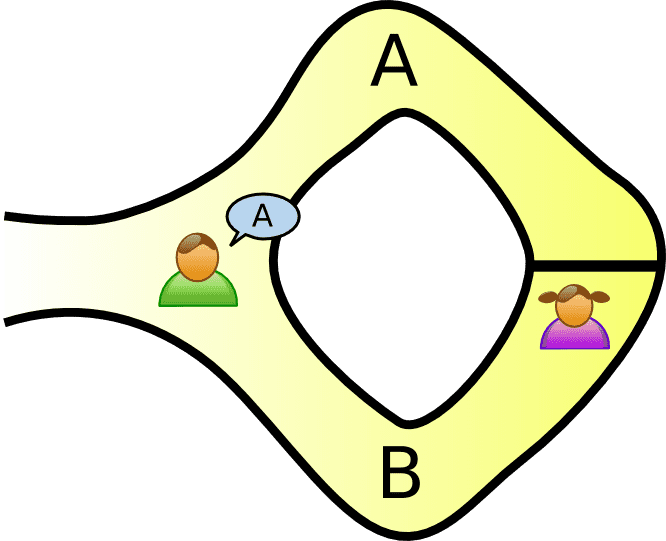
Zero-Knowledge Proofs provided the answer.
Advanced proof systems such as zk-SNARKs and later zk-STARKs enabled blockchain networks to verify transactions without revealing confidential information. They also helped improve scalability by allowing thousands of transactions to be represented by a single cryptographic proof.
Today, Zero-Knowledge technology plays a central role in many blockchain privacy solutions, Layer-2 scaling networks, and decentralized finance (DeFi) applications.
Modern Web3 Adoption
As the Web3 ecosystem continues to grow, Zero-Knowledge Proofs have become one of its foundational technologies.
Modern decentralized applications use ZKPs to support:
- Private blockchain transactions.
- Secure digital identities.
- Confidential smart contracts.
- Decentralized authentication.
- Scalable Layer-2 rollups.
Rather than exposing user activity on public networks, Web3 applications increasingly rely on Zero-Knowledge Proofs to verify information while protecting user privacy.
This combination of transparency, security, and confidentiality is helping shape the next generation of decentralized internet services.
AI Adoption
The newest frontier for Zero-Knowledge Proofs is artificial intelligence (AI).
AI systems require vast amounts of data to train models and generate accurate results. Much of this information is confidential, making privacy a major concern for businesses, healthcare providers, financial institutions, and governments.
Zero-Knowledge Proofs offer a way to verify AI computations, prove model integrity, and confirm data ownership without exposing sensitive datasets.
Researchers are actively exploring how ZKPs can support privacy-preserving machine learning, secure AI model sharing, and trustworthy AI systems.
As AI becomes more deeply integrated into everyday life, Zero-Knowledge Proofs are expected to play an increasingly important role in protecting sensitive information while maintaining transparency and accountability.
Timeline of Zero-Knowledge Proof Evolution
| Year | Milestone |
| 1985 | Shafi Goldwasser, Silvio Micali, and Charles Rackoff introduce the concept of Zero-Knowledge Proofs. |
| Late 1980s–1990s | Academic research expands the mathematical foundations and security properties of ZKPs. |
| 2000s | Improvements in computing power and cryptographic techniques make practical implementations possible. |
| 2010s | Blockchain projects begin adopting ZKPs to improve privacy and transaction verification. |
| Late 2010s–2020s | zk-SNARKs, zk-STARKs, and Layer-2 rollups accelerate blockchain scalability and privacy. |
| 2020s | Web3 applications integrate ZKPs for decentralized identity, smart contracts, and secure authentication. |
| Today and Beyond | Research expands into AI, enterprise security, cloud computing, CBDCs, and post-quantum cryptography. |
Why the History Matters
The journey of Zero-Knowledge Proof (ZKP) from a theoretical cryptographic concept to a real-world technology demonstrates how visionary research can reshape entire industries. What began as an academic breakthrough in 1985 now supports innovations in blockchain, digital identity, enterprise security, artificial intelligence, and privacy-preserving computing.
As digital transformation continues, Zero-Knowledge Proofs are no longer just a topic for cryptographers. They are becoming a foundational technology that enables organizations to build secure, scalable, and privacy-first digital systems for the future.
How Does Zero-Knowledge Proof (ZKP) Work?
The idea behind a Zero-Knowledge Proof (ZKP) is surprisingly simple. One person must convince another that they know a secret without revealing the secret itself.
To achieve this, ZKPs use carefully designed cryptographic protocols that allow a claim to be verified while keeping the underlying information completely private. Depending on the application, this verification may involve multiple rounds of communication or a single cryptographic proof.
Although the mathematics behind Zero-Knowledge Proofs can be highly advanced, the basic concept is easy to understand once you know the roles of the two participants.
The Prover and the Verifier
Every Zero-Knowledge Proof involves two parties:
- Prover: The person or system that possesses the secret and wants to prove a claim.
- Verifier: The person or system that checks whether the claim is true.
Suppose Alice knows the password to a secure database, and Bob is responsible for granting access.
Instead of asking Alice to reveal the password, Bob asks her to provide a cryptographic proof that she knows it.
Alice generates the proof using her secret information. Bob verifies the proof using a mathematical algorithm. If the proof is valid, Bob knows Alice possesses the correct password, even though he never learns what the password actually is.
This interaction is the foundation of every Zero-Knowledge Proof system.
Interactive Zero-Knowledge Proofs
In an Interactive Zero-Knowledge Proof, the prover and verifier communicate through multiple rounds.
The verifier asks a series of random questions or challenges, and the prover responds with cryptographic answers generated using the secret information.
Each successful response increases the verifier’s confidence that the prover truly knows the secret. Because the challenges are random and unpredictable, it becomes extremely difficult for an attacker to guess the correct responses without possessing the secret.
Interactive Zero-Knowledge Proofs provide strong security but require continuous communication between both parties. They are commonly used in research and specialized authentication protocols where direct interaction is practical.
Non-Interactive Zero-Knowledge Proofs
A Non-Interactive Zero-Knowledge Proof (NIZKP) eliminates the need for repeated communication.
Instead of exchanging multiple messages, the prover creates a single cryptographic proof that anyone can verify independently.
This approach is faster, more efficient, and easier to deploy in distributed systems where continuous interaction is impractical.
Most modern blockchain platforms and decentralized applications rely on non-interactive proofs because they enable thousands of network participants to verify transactions without communicating directly with the original sender.
Popular technologies such as zk-SNARKs and zk-STARKs are advanced forms of Non-Interactive Zero-Knowledge Proofs used to improve blockchain privacy and scalability.
Step-by-Step Example Using the Color-Blind Cave Story
One of the most famous examples of a Zero-Knowledge Proof is the Ali Baba Cave thought experiment, introduced by cryptographer Jean-Jacques Quisquater. It illustrates how someone can prove they know a secret without revealing it.
Imagine a cave shaped like a circle with two paths, Path A and Path B, connected by a locked magic door. Only someone who knows the secret password can open the door and move between the two paths.
Here is how the proof works:
- Alice enters the cave while Bob waits outside, so he cannot see which path she chooses.
- Alice randomly takes either Path A or Path B.
- Bob enters the cave entrance and randomly asks Alice to return through either Path A or Path B.
- If Alice knows the secret password, she can open the hidden door when necessary and always return through the path Bob requests.
- If Alice does not know the password, she can only return through the path she originally selected. She has only a 50% chance of guessing Bob’s request correctly.
- Bob repeats this challenge many times. Each successful round dramatically reduces the probability that Alice is guessing.
After enough rounds, Bob becomes convinced that Alice knows the secret password. However, Alice never reveals the password itself.
This simple example demonstrates the core principle of a Zero-Knowledge Proof: the verifier gains confidence without learning the secret.
Mathematical Foundation (Beginner-Friendly)
Although Zero-Knowledge Proofs rely on sophisticated mathematics, the underlying principles can be understood without advanced cryptography.
A ZKP system uses mathematical functions that are easy to verify but extremely difficult to reverse. The prover combines their secret information with random values and cryptographic algorithms to generate a proof. This proof convinces the verifier that the claim is true without exposing the secret used to create it.
Modern Zero-Knowledge Proof systems are built using mathematical concepts such as finite fields, elliptic curve cryptography, polynomial commitments, hash functions, and modular arithmetic. These techniques ensure that the proof cannot be forged while keeping the underlying data confidential.
The verifier does not need access to the secret. Instead, they perform a series of mathematical checks on the proof itself. If the proof satisfies all verification rules, the claim is accepted. Otherwise, it is rejected.
As a result, Zero-Knowledge Proofs achieve something that once seemed impossible: they allow trust to be established through mathematics rather than by exposing confidential information. This capability has made ZKPs a cornerstone of modern blockchain networks, digital identity systems, privacy-preserving artificial intelligence, and secure cloud computing.
Types of Zero-Knowledge Proofs
Not all Zero-Knowledge Proof (ZKP) systems work in the same way. Over the years, researchers have developed different types of ZKPs to meet specific requirements such as privacy, scalability, efficiency, and verification speed.
Some Zero-Knowledge Proofs require continuous interaction between the prover and verifier, while others generate a single proof that anyone can verify independently. More advanced implementations, such as zk-SNARKs, zk-STARKs, Bulletproofs, and Recursive Proofs, are widely used in blockchain networks, decentralized applications, and enterprise security solutions.
Understanding these different types helps explain why various blockchain platforms and privacy-focused technologies choose different ZKP implementations.
Interactive ZKP
An Interactive Zero-Knowledge Proof requires the prover and verifier to exchange multiple messages before the verifier accepts the proof.
The verifier repeatedly sends random challenges, and the prover responds using their secret information. Each successful response increases the verifier’s confidence that the prover possesses the required knowledge.
Because every challenge is unpredictable, attackers cannot simply memorize previous responses or guess the correct answers.
Although Interactive ZKPs provide strong security guarantees, they require both parties to remain online throughout the verification process. This communication overhead makes them less suitable for decentralized systems such as public blockchains, where millions of participants may need to verify transactions independently.
Today, Interactive ZKPs are mainly used in academic research, authentication protocols, and cryptographic demonstrations.
Non-Interactive ZKP
A Non-Interactive Zero-Knowledge Proof (NIZKP) eliminates the need for repeated communication between the prover and verifier.
Instead of exchanging multiple rounds of messages, the prover generates a single cryptographic proof. The verifier can validate this proof independently without further interaction.
This approach significantly reduces communication costs and improves scalability. It is particularly useful in blockchain networks, where every node must verify transactions efficiently without contacting the original sender.
Most modern blockchain privacy and scaling solutions rely on Non-Interactive Zero-Knowledge Proofs because they offer faster verification while preserving user privacy.
zk-SNARK
zk-SNARK stands for Zero-Knowledge Succinct Non-Interactive Argument of Knowledge.
It is one of the most widely adopted Zero-Knowledge Proof technologies because it produces very small proofs that can be verified quickly. This makes zk-SNARKs ideal for blockchain applications where storage space and verification speed are critical.
zk-SNARKs are commonly used to:
- Verify blockchain transactions privately.
- Improve Layer-2 blockchain scalability.
- Reduce transaction verification time.
- Support privacy-preserving smart contracts.
One limitation of many zk-SNARK implementations is that they require a trusted setup, a one-time initialization process. If this setup is compromised, it could affect the security of the system, although modern protocols continue to improve this process.
zk-STARK
zk-STARK stands for Zero-Knowledge Scalable Transparent Argument of Knowledge.
It was developed to address some of the limitations of zk-SNARKs, particularly the need for a trusted setup.
Unlike zk-SNARKs, zk-STARKs use publicly verifiable randomness, making them more transparent and resistant to certain attack scenarios. They also scale more efficiently for very large computations.
Key advantages of zk-STARKs include:
- No trusted setup required.
- Strong transparency.
- Better scalability for complex computations.
- Greater resistance to future quantum computing attacks.
The trade-off is that zk-STARK proofs are generally larger than zk-SNARK proofs, which can increase storage and bandwidth requirements.
Bulletproofs
Bulletproofs are a specialized type of Zero-Knowledge Proof designed to verify confidential transactions efficiently while keeping transaction amounts private.
Unlike traditional range proofs, Bulletproofs dramatically reduce proof size without sacrificing security. Smaller proofs mean lower storage requirements and faster verification.
Bulletproofs are widely used in privacy-focused blockchain systems because they help verify that transaction amounts are valid without revealing the actual values involved.
Their main benefits include:
- Smaller proof sizes.
- Reduced blockchain storage requirements.
- Faster verification.
- Enhanced financial privacy.
Bulletproofs have become an important optimization for confidential transactions and demonstrate how Zero-Knowledge Proof technology continues to evolve.
Recursive Proofs
Recursive Proofs represent one of the newest advances in Zero-Knowledge Proof technology.
Instead of verifying every proof individually, a Recursive Proof can verify multiple proofs and combine them into a single proof. This proof can then be verified as though it represented all previous computations.
This technique significantly improves scalability because thousands—or even millions—of computations can be compressed into one efficiently verifiable proof.
Recursive Proofs are increasingly used in:
- Blockchain scaling solutions.
- Layer-2 rollups.
- Large distributed computing systems.
- Privacy-preserving artificial intelligence.
- High-performance cryptographic protocols.
As blockchain networks continue to grow, Recursive Proofs are expected to play a central role in reducing verification costs while maintaining strong security guarantees.
Comparison of Major Zero-Knowledge Proof Types
| Type | Interaction Required | Trusted Setup | Main Strength | Common Use Cases |
| Interactive ZKP | Yes | No | High security through multiple verification rounds | Authentication protocols, research |
| Non-Interactive ZKP | No | Depends on implementation | Efficient verification | Blockchain, distributed systems |
| zk-SNARK | No | Yes (in many implementations) | Small proofs and fast verification | Blockchain privacy, Layer-2 scaling |
| zk-STARK | No | No | Transparency and scalability | Large-scale blockchain applications |
| Bulletproofs | No | No | Compact confidential transaction proofs | Privacy-focused cryptocurrencies |
| Recursive Proofs | No | Depends on implementation | Compresses many proofs into one | Rollups, scalable blockchain networks, AI verification |
Understanding these different types of Zero-Knowledge Proofs makes it easier to appreciate how the technology has evolved from a theoretical cryptographic concept into a practical solution powering secure authentication, blockchain scalability, digital identity, financial privacy, and next-generation computing systems.
How Zero-Knowledge Proofs Protect Privacy
Privacy has become a fundamental requirement in today’s digital world. Every online interaction—from logging into a website to completing a financial transaction—requires users to prove something about themselves. Traditionally, this meant sharing passwords, identity documents, account numbers, or other sensitive information.
The problem with this approach is simple: the more data you share, the greater the risk of that data being exposed, stolen, or misused.
Zero-Knowledge Proof (ZKP) changes this model. Instead of revealing confidential information, ZKPs allow users to prove that a claim is true while keeping the underlying data completely private. This minimizes unnecessary data exposure, reduces cybersecurity risks, and gives users greater control over their personal information.
Here are some of the most important ways Zero-Knowledge Proofs protect privacy.
Identity Verification
Identity verification is one of the most promising applications of Zero-Knowledge Proofs.
Traditional verification systems often require users to submit government-issued identification, passports, driver’s licenses, or other personal documents. While these documents help verify identity, they also expose far more information than most organizations actually need.
For example, an online service may only need to verify that a customer is over 18 years old. However, uploading a driver’s license also reveals the person’s full name, home address, and date of birth, document number, and photograph.
With a Zero-Knowledge Proof, users can prove they satisfy a specific requirement—such as being above the legal age, residing in a particular country, or possessing a valid credential—without revealing any unnecessary personal details.
This selective disclosure approach improves privacy while helping organizations reduce the amount of sensitive data they collect and store.
Financial Privacy
Financial transactions contain highly sensitive information, including account balances, payment amounts, investment portfolios, and purchasing habits.
Traditional payment systems and banking services often require this information to be visible to multiple intermediaries during processing. Even when transactions are encrypted, organizations may still store valuable financial data that could become a target for cybercriminals.
Zero-Knowledge Proofs offer a different approach.
Instead of revealing the complete transaction details, ZKPs allow financial institutions or blockchain networks to verify that a transaction is legitimate without exposing confidential information such as account balances or payment amounts.
This enables secure financial verification while protecting customer privacy.
In blockchain ecosystems, Zero-Knowledge Proofs also improve transaction confidentiality and help validate transfers without publicly revealing sensitive transaction data.
Passwordless Authentication
Passwords remain one of the weakest links in cybersecurity.
Weak passwords, password reuse, phishing attacks, and stolen credentials continue to be among the leading causes of security breaches.
Zero-Knowledge Proofs support modern passwordless authentication by allowing users to prove they possess valid credentials without transmitting passwords across the network.
Instead of sending a password that could be intercepted or stolen, the user’s device generates a cryptographic proof that confirms their identity.
The authentication server verifies the proof and grants access without ever receiving the user’s secret.
This approach significantly reduces the risk of credential theft while improving both security and user experience.
Private Data Sharing
Organizations increasingly need to share sensitive information with partners, regulators, healthcare providers, and cloud platforms. However, sharing complete datasets often creates privacy concerns and increases compliance obligations.
Zero-Knowledge Proofs make it possible to verify specific facts without exposing the entire dataset.
For example, a patient can prove they have valid health insurance without revealing their complete medical history. A business can demonstrate regulatory compliance without disclosing confidential financial records. A university graduate can prove they hold a degree without sharing every academic transcript.
This capability supports the principle of data minimization, where only the information required for a particular purpose is verified.
As governments introduce stricter privacy regulations and organizations seek to reduce cybersecurity risks, Zero-Knowledge Proofs are becoming an essential technology for secure and privacy-preserving data sharing across industries.
By enabling verification without disclosure, ZKPs help organizations build systems that protect user privacy by design rather than by relying solely on traditional security measures.
Real-World Applications of Zero-Knowledge Proof (ZKP)
When Zero-Knowledge Proofs (ZKPs) were first introduced in the 1980s, they were primarily a theoretical concept in cryptography. Today, they have evolved into one of the most practical privacy-enhancing technologies, solving real-world security challenges across multiple industries.
From securing blockchain transactions and protecting digital identities to enabling privacy-preserving artificial intelligence and confidential cloud computing, Zero-Knowledge Proofs are transforming how organizations verify information without exposing sensitive data.
As digital privacy becomes a global priority, businesses and governments are increasingly adopting ZKP-based solutions to build secure, transparent, and trustworthy systems.
Blockchain and Cryptocurrencies
Blockchain remains the most well-known application of Zero-Knowledge Proofs.
Traditional public blockchains make transaction details visible to everyone on the network. While this improves transparency, it also raises privacy concerns because wallet balances, transaction histories, and payment relationships can often be analyzed.
Zero-Knowledge Proofs solve this problem by allowing blockchain networks to verify transactions without revealing confidential information.
They are widely used to:
- Protect transaction privacy.
- Improve blockchain scalability through Layer-2 rollups.
- Verify smart contract execution.
- Reduce blockchain storage and verification costs.
Today, several blockchain platforms use ZKP technologies such as zk-SNARKs and zk-STARKs to process thousands of secure transactions while maintaining user privacy.
Digital Identity
Traditional identity verification often requires users to disclose more personal information than necessary.
For example, proving your age may require uploading an identity card that also reveals your full name, address, identification number, and photograph.
Zero-Knowledge Proofs enable selective disclosure.
Instead of sharing the entire document, users can prove they satisfy a specific requirement—such as being over the legal age or holding a valid professional certification—without exposing unrelated personal information.
This approach strengthens privacy while reducing the amount of sensitive data organizations must collect and store.
Online Voting
Electronic voting systems must balance two important requirements: voter privacy and election integrity.
Voters should be able to cast their ballots anonymously, while election officials must verify that every vote is legitimate and counted correctly.
Zero-Knowledge Proofs help achieve both goals.
They allow voting systems to verify voter eligibility and ballot validity without revealing the identity of individual voters or how they voted.
This increases trust, protects voter anonymity, and helps reduce the risk of election fraud.
Healthcare Records
Healthcare organizations manage some of the most sensitive personal information.
Hospitals, insurance providers, laboratories, and healthcare professionals frequently need to verify medical information while complying with strict privacy regulations.
Zero-Knowledge Proofs allow patients to prove specific healthcare-related facts without sharing their complete medical records.
For example, a patient could prove they have valid insurance coverage, meet eligibility requirements for a treatment program, or possess a required vaccination without exposing their full medical history.
This improves patient privacy while simplifying secure healthcare data sharing.
Banking and Finance
Banks and financial institutions process enormous volumes of confidential information every day.
Customer identities, account balances, credit histories, investment portfolios, and transaction records all require strong protection.
Zero-Knowledge Proofs help financial institutions verify customer identities, authenticate transactions, and support regulatory compliance without unnecessarily exposing confidential financial information.
This reduces fraud risks, strengthens customer privacy, and helps organizations comply with modern data protection regulations.
As digital banking continues to grow, ZKPs are becoming an important tool for secure financial verification.
Supply Chain
Modern supply chains involve manufacturers, logistics providers, distributors, retailers, regulators, and customers.
Each participant often needs to verify product authenticity, certifications, or compliance without revealing confidential business information.
Zero-Knowledge Proofs enable companies to prove that products meet regulatory standards or originate from approved suppliers without exposing proprietary manufacturing processes or sensitive commercial data.
This improves transparency while protecting valuable business intelligence.
Cloud Computing
Organizations increasingly rely on cloud platforms to store, process, and analyze business-critical information.
However, moving sensitive workloads to the cloud introduces concerns about confidentiality and unauthorized access.
Zero-Knowledge Proofs enable cloud providers to verify user permissions, data integrity, and computational results without accessing the underlying confidential data.
This reduces the need to expose sensitive information while improving trust in cloud-based services.
AI and Machine Learning
Artificial intelligence depends on large volumes of data for training and decision-making.
Unfortunately, many AI datasets contain confidential personal, financial, or healthcare information that organizations cannot freely share.
Zero-Knowledge Proofs support privacy-preserving AI by allowing AI systems to verify computations, model integrity, or data ownership without revealing the underlying datasets.
As AI adoption accelerates across industries, ZKPs are expected to play an increasingly important role in building trustworthy and privacy-compliant AI systems.
Government Services
Governments routinely verify identities, process tax records, issue licenses, distribute public benefits, and deliver digital services.
Many of these processes require handling highly sensitive citizen information.
Zero-Knowledge Proofs allow government agencies to verify eligibility, residency, age, or citizenship without collecting unnecessary personal data.
This helps reduce identity theft risks while improving citizen privacy and supporting secure digital government initiatives.
Enterprise Security
Large organizations manage thousands of employees, contractors, devices, and business applications.
Traditional access control systems often require users to repeatedly submit passwords or sensitive credentials across multiple platforms.
Zero-Knowledge Proofs strengthen enterprise security by enabling passwordless authentication, secure access verification, confidential data sharing, and privacy-preserving compliance checks.
They also reduce the amount of sensitive information stored within enterprise systems, limiting the potential impact of data breaches and insider threats.
As cybersecurity threats continue to evolve, Zero-Knowledge Proofs are becoming an essential component of modern enterprise security architectures.
Key Takeaway
The applications of Zero-Knowledge Proof (ZKP) extend far beyond blockchain. Today, this technology is helping organizations solve real-world privacy and security challenges in finance, healthcare, cloud computing, artificial intelligence, digital identity, government services, enterprise security, and supply chain management.
As businesses continue to embrace digital transformation, Zero-Knowledge Proofs are expected to become a foundational technology for building secure systems that verify information without compromising privacy.
Zero-Knowledge Proofs in Blockchain
Blockchain technology has transformed the way digital assets are stored and transferred. However, public blockchains face three major challenges: privacy, scalability, and transaction efficiency.
Most public blockchain networks are transparent by design. Anyone can view wallet addresses, transaction histories, and, in many cases, transaction amounts. While this transparency builds trust, it also creates privacy concerns for individuals and businesses.
At the same time, as blockchain adoption has grown, networks have struggled to process thousands of transactions quickly and cost-effectively.
Zero-Knowledge Proofs (ZKPs) address these challenges by allowing blockchain networks to verify transactions without revealing sensitive information. They also reduce the amount of data that needs to be processed on the main blockchain, improving speed and lowering transaction costs.
Today, ZKPs are considered one of the most important technologies driving the next generation of blockchain infrastructure.
Ethereum Layer-2 Rollups
One of the most significant uses of Zero-Knowledge Proofs is in Ethereum Layer-2 rollups.
Ethereum’s main blockchain provides strong security, but it can become congested during periods of high demand. Network congestion often leads to slower transaction confirmations and higher transaction fees.
Layer-2 rollups solve this problem by processing thousands of transactions outside the Ethereum main chain. Instead of recording every transaction individually, the rollup generates a single Zero-Knowledge Proof that mathematically proves all transactions are valid.
This proof is then submitted to the Ethereum blockchain for verification.
As a result, Ethereum gains several important benefits:
- Higher transaction throughput.
- Lower gas fees.
- Faster transaction confirmation.
- The same security guarantees provided by the Ethereum main network.
This approach allows Ethereum to scale without compromising decentralization or security.
Privacy Coins
Privacy-focused cryptocurrencies use Zero-Knowledge Proofs to improve transaction confidentiality.
Unlike traditional public blockchains, where transaction details are often visible, privacy-oriented networks aim to protect user identities and financial information.
Zero-Knowledge Proofs help verify that transactions are legitimate without revealing sensitive details such as wallet balances, transaction amounts, or the identities of the participants.
Different privacy-focused blockchain projects use different cryptographic techniques. Some rely primarily on Zero-Knowledge Proofs, while others combine them with technologies such as Ring Signatures, Ring Confidential Transactions (RingCT), Stealth Addresses, and Bulletproofs to provide stronger privacy guarantees.
This combination of technologies enables secure digital payments while preserving user confidentiality.
Smart Contracts
Smart contracts automatically execute agreements when predefined conditions are met.
Traditional smart contracts often require transaction details or input data to be publicly visible so that every blockchain node can verify the computation.
Zero-Knowledge Proofs enable a more private approach.
Instead of exposing sensitive contract data, users can generate a proof showing that all contract conditions have been satisfied. The blockchain verifies the proof without accessing confidential business logic or personal information.
This capability opens new possibilities for:
- Private decentralized finance (DeFi).
- Confidential business agreements.
- Secure digital identity systems.
- Enterprise blockchain applications.
By reducing unnecessary data exposure, ZKPs make smart contracts more suitable for industries that handle sensitive information.
Cross-Chain Verification
The blockchain ecosystem consists of many independent networks, each with its own rules, consensus mechanisms, and security models.
Moving assets or verifying information across different blockchains can be challenging because one blockchain cannot automatically trust another.
Zero-Knowledge Proofs provide an efficient solution.
Instead of transferring large amounts of verification data between networks, one blockchain can generate a compact cryptographic proof confirming that a transaction or event occurred on another blockchain.
The receiving blockchain verifies the proof rather than the entire transaction history.
This approach reduces communication overhead, improves interoperability, and enables secure cross-chain asset transfers without sacrificing security.
As blockchain ecosystems continue to expand, ZKPs are expected to play an increasingly important role in cross-chain interoperability.
Scaling Blockchains
Scalability remains one of the biggest challenges facing blockchain technology.
Popular public blockchains often experience network congestion as the number of users and transactions increases. Higher demand can result in slower confirmation times, increased transaction fees, and reduced user experience.
Zero-Knowledge Proofs help solve this problem by dramatically reducing the amount of computation that must occur on the blockchain.
Instead of verifying every individual transaction separately, the network verifies a single cryptographic proof representing thousands of transactions.
This approach offers several important advantages:
- Processes significantly more transactions per second.
- Reduces storage requirements.
- Lowers transaction costs.
- Improves network efficiency.
- Maintains strong cryptographic security.
Because of these benefits, Zero-Knowledge Proofs are becoming a cornerstone of blockchain scalability. Many next-generation blockchain platforms and Layer-2 solutions now rely on ZKP technology to deliver faster, more affordable, and privacy-preserving decentralized applications.
Key Takeaway
Zero-Knowledge Proofs are reshaping blockchain technology by addressing its biggest limitations: privacy, scalability, and efficiency. From Ethereum Layer-2 rollups and confidential smart contracts to cross-chain verification and privacy-focused cryptocurrencies, ZKPs enable blockchain networks to process more transactions while revealing less information.
As Web3 continues to evolve, Zero-Knowledge Proofs are expected to become a core building block for secure, scalable, and privacy-preserving blockchain ecosystems.
Real-World Case Studies: Zero-Knowledge Proof (ZKP) in Action
While the theory behind Zero-Knowledge Proof (ZKP) is fascinating, its real value becomes clear when you see how organizations use it to solve practical problems. From reducing blockchain transaction costs to protecting personal identities and securing financial data, ZKPs are transforming how information is verified without compromising privacy.
The following case studies demonstrate how Zero-Knowledge Proofs are being applied across different industries.
Case Study 1: Ethereum Layer-2 Rollups – Reducing Gas Fees and Improving Scalability
The Challenge
The Ethereum blockchain processes millions of transactions, but every transaction competes for limited block space. During periods of high demand, gas fees can increase significantly, making small transactions expensive and slowing network performance.
The ZKP Solution
Ethereum Layer-2 scaling solutions use Zero-Knowledge Rollups (ZK Rollups) to process thousands of transactions off the main blockchain.
Instead of recording every transaction individually on Ethereum, the rollup bundles many transactions together and generates a single cryptographic proof. Ethereum only needs to verify this proof rather than execute every transaction again.
This approach maintains security while dramatically reducing the amount of data stored on the main blockchain.
The Results
Benefits include:
- Lower transaction costs.
- Faster transaction confirmations.
- Higher network throughput.
- Improved scalability without sacrificing Ethereum’s security.
- Better user experience for decentralized applications.
Today, ZK Rollups are considered one of the most promising technologies for scaling Ethereum while preserving decentralization.
Key Lesson: Zero-Knowledge Proofs make blockchain networks more efficient by proving that many transactions are valid with a single cryptographic proof.
Case Study 2: World ID – Privacy-Preserving Digital Identity
The Challenge
Traditional identity verification often requires users to share passports, driver’s licenses, or other personal documents. This creates privacy risks and increases the likelihood of identity theft or data breaches.
The ZKP Solution
World ID uses Zero-Knowledge Proofs to help users prove facts about their identity without exposing unnecessary personal information.
For example, a user may need to prove they are a unique individual or meet certain eligibility requirements without revealing their name, address, or other sensitive details.
Instead of transmitting confidential data, the system verifies the cryptographic proof.
The Results
Potential advantages include:
- Greater privacy.
- Reduced exposure of personal information.
- Lower risk of identity theft.
- Simplified authentication.
- Improved trust in digital identity systems.
This demonstrates how ZKPs can enable secure digital identity while giving users more control over their personal data.
Key Lesson: Zero-Knowledge Proofs allow people to prove who they are without revealing more information than necessary.
Case Study 3: Privacy Coins – Protecting Financial Transactions
The Challenge
Most public blockchains make transaction histories visible to anyone. While wallet addresses are pseudonymous, transaction analysis can sometimes reveal spending patterns and user relationships.
Individuals and businesses may prefer greater financial confidentiality for legitimate reasons, such as protecting business relationships, salaries, or commercial transactions.
The ZKP Solution
Privacy-focused blockchain projects use advanced cryptographic techniques—including Zero-Knowledge Proofs and related privacy technologies—to verify transactions while limiting the amount of publicly visible information.
Depending on the protocol, these techniques can hide transaction amounts, participants, or other sensitive details while still allowing the network to confirm that transactions are valid.
The Results
Privacy-enhancing technologies help provide:
- Greater financial confidentiality.
- Secure transaction verification.
- Protection against unnecessary data exposure.
- Compliance with protocol security requirements.
These systems demonstrate how strong privacy and cryptographic verification can coexist without compromising network integrity.
Key Lesson: Zero-Knowledge technologies make it possible to verify transactions without publicly revealing every transaction detail.
Case Study 4: Enterprise KYC Verification – Smarter Compliance
The Challenge
Banks and financial institutions must perform Know Your Customer (KYC) verification to comply with regulations designed to prevent fraud, money laundering, and other financial crimes.
Traditional KYC processes often require customers to repeatedly submit sensitive documents such as passports, tax records, or proof of address to multiple organizations.
The ZKP Solution
Zero-Knowledge Proofs enable customers to prove they have successfully completed required identity or compliance checks without repeatedly sharing the underlying documents.
For example, a customer could cryptographically prove that:
- They passed identity verification.
- They meet age requirements.
- They reside in an approved jurisdiction.
- Their credentials were verified by a trusted institution.
The verifier confirms the proof without accessing the original confidential documents.
The Results
Potential benefits include:
- Faster onboarding.
- Improved customer privacy.
- Reduced duplicate document collection.
- Lower risk of sensitive data exposure.
- More efficient compliance processes.
Many organizations are exploring privacy-preserving identity technologies to modernize digital onboarding and regulatory compliance.
Key Lesson: Zero-Knowledge Proofs can simplify regulatory verification while minimizing the amount of personal data organizations need to store.
What These Case Studies Teach Us
Although each industry has different requirements, every implementation of Zero-Knowledge Proofs follows the same core principle:
Verify a claim without revealing unnecessary information.
Whether securing blockchain transactions, protecting digital identities, improving financial privacy, or streamlining enterprise compliance, ZKPs help organizations balance security, transparency, and confidentiality.
As computing power increases and cryptographic research advances, we can expect Zero-Knowledge Proofs to become a standard component of digital identity systems, enterprise applications, cloud services, artificial intelligence, healthcare, and next-generation internet infrastructure.
Case Study Summary
| Industry | Problem | How ZKP Helps | Primary Benefit |
| Ethereum Layer-2 | High gas fees and limited scalability | Verifies thousands of off-chain transactions with a single proof | Lower costs and faster transactions |
| World ID | Privacy concerns in identity verification | Confirms identity-related claims without revealing personal information | Stronger privacy and user control |
| Privacy-Focused Blockchain Networks | Public visibility of transaction data | Uses advanced cryptographic proofs to validate transactions while limiting disclosed information | Enhanced financial privacy |
| Enterprise KYC | Repeated sharing of sensitive customer documents | Verifies compliance without repeatedly exposing confidential records | Faster onboarding and reduced data exposure |
Key Takeaway
These real-world examples show that Zero-Knowledge Proofs are no longer just an academic concept. They are solving practical challenges in blockchain scalability, digital identity, financial privacy, and enterprise compliance today. As adoption expands across Web3, artificial intelligence, cloud computing, and regulated industries, ZKPs are becoming a foundational technology for building secure, scalable, and privacy-first digital systems.
ZKP vs Other Privacy Technologies
Privacy-preserving technologies have evolved rapidly over the past decade. While Zero-Knowledge Proofs (ZKPs) are among the most powerful cryptographic innovations, they are not the only solution for protecting sensitive information.

Understanding their differences helps organizations choose the right technology for specific use cases. In many modern systems, these technologies complement one another rather than compete.
Privacy Technologies at a Glance
| Technology | Protects | Best For | Typical Industries |
| Zero-Knowledge Proof (ZKP) | Data privacy during verification | Identity, blockchain, AI | Finance, Web3, Healthcare |
| Ring Signatures | Signer anonymity | Privacy coins | Blockchain |
| RingCT | Transaction privacy | Cryptocurrency | Blockchain |
| Homomorphic Encryption | Encrypted computation | AI, Cloud | Enterprise |
| Secure Multi-Party Computation | Collaborative analytics | Multi-organization computing | Finance, Healthcare |
| Trusted Execution Environments | Secure hardware execution | Confidential computing | Cloud, Enterprise |
Zero-Knowledge Proof vs Ring Signatures
Both Zero-Knowledge Proofs and Ring Signatures enhance privacy, but they achieve different objectives.
A Zero-Knowledge Proof allows a prover to convince a verifier that a statement is true without revealing any additional information. The focus is on private verification.
A Ring Signature, on the other hand, allows one member of a group to sign a message anonymously. The verifier can confirm that the signature belongs to someone in the group but cannot determine which member actually created it. The focus is on anonymous authentication.
For example, a blockchain transaction protected by a Ring Signature hides the sender’s identity, whereas a Zero-Knowledge Proof can verify that the transaction is valid without exposing confidential transaction details.
| Feature | Zero-Knowledge Proof | Ring Signature |
| Primary purpose | Verify a claim privately | Hide the identity of the signer |
| Reveals secret information | No | No |
| Hides signer identity | Not necessarily | Yes |
| Common use cases | Identity verification, blockchain, authentication | Privacy-focused cryptocurrencies, anonymous communication |
| Focus | Verification | Anonymity |
ZKP vs RingCT
Ring Confidential Transactions (RingCT) builds upon Ring Signatures by combining multiple cryptographic techniques to improve blockchain privacy.
While Zero-Knowledge Proofs verify the correctness of a statement without revealing confidential information, RingCT focuses specifically on protecting blockchain transactions.
RingCT combines:
- Ring Signatures
- Confidential Transactions
- Pedersen Commitments
- Range Proofs (such as Bulletproofs)
Together, these technologies conceal the transaction sender, receiver, and amount while still allowing the blockchain to verify transaction validity.
In contrast, Zero-Knowledge Proofs have much broader applications beyond cryptocurrency, including digital identity, cloud computing, artificial intelligence, healthcare, enterprise security, and secure authentication.
ZKP vs Homomorphic Encryption
Both technologies enable secure data processing, but they solve different problems.
Homomorphic Encryption allows computations to be performed directly on encrypted data without decrypting it first.
For example, a cloud provider can analyze encrypted medical records without ever seeing the patient’s actual information.
Zero-Knowledge Proofs work differently. Instead of computing on encrypted data, they allow one party to prove that a computation or statement is correct without revealing the underlying data.
In many advanced systems, Homomorphic Encryption and Zero-Knowledge Proofs are used together to deliver both secure computation and private verification.
| Feature | Zero-Knowledge Proof | Homomorphic Encryption |
| Verifies a claim | Yes | No |
| Computes on encrypted data | No | Yes |
| Protects data privacy | Yes | Yes |
| Common use cases | Authentication, blockchain, identity | Secure cloud computing, confidential AI, encrypted analytics |
ZKP vs Secure Multi-Party Computation
Secure Multi-Party Computation (MPC) enables multiple participants to jointly compute a result without revealing their individual inputs.
For example, several hospitals could calculate national disease statistics without sharing confidential patient records with one another.
Zero-Knowledge Proofs have a different objective.
Rather than jointly computing data, they prove that a specific claim or computation is valid without revealing confidential information.
These technologies are often combined in privacy-preserving analytics, collaborative machine learning, financial systems, and enterprise data-sharing platforms.
ZKP vs Trusted Execution Environments
A Trusted Execution Environment (TEE) protects sensitive computations by isolating them within secure hardware.
Even if the operating system becomes compromised, the protected execution environment remains isolated from unauthorized access.
Zero-Knowledge Proofs achieve security through cryptographic mathematics rather than specialized hardware.
This difference creates several trade-offs.
TEEs generally offer excellent performance but require trust in the underlying hardware manufacturer.
Zero-Knowledge Proofs require no trusted hardware and provide stronger cryptographic guarantees, although generating proofs can be computationally intensive.
As a result, some organizations combine both technologies to achieve stronger security, better scalability, and improved performance.
Comparison of Privacy Technologies
| Technology | Primary Goal | Requires Trusted Hardware | Typical Applications |
| Zero-Knowledge Proof (ZKP) | Private verification | No | Blockchain, digital identity, authentication, AI, cloud computing |
| Ring Signatures | Anonymous signing | No | Privacy-focused cryptocurrencies, anonymous communication |
| RingCT | Confidential blockchain transactions | No | Private cryptocurrency transactions |
| Homomorphic Encryption | Compute on encrypted data | No | Cloud computing, confidential AI, secure analytics |
| Secure Multi-Party Computation (MPC) | Joint computation without revealing inputs | No | Financial services, healthcare, collaborative analytics |
| Trusted Execution Environments (TEE) | Hardware-isolated secure computation | Yes | Mobile security, cloud computing, enterprise security |
Zero-Knowledge Proof vs. Zero Trust
Many people assume that Zero-Knowledge Proofs and Zero Trust refer to the same cybersecurity concept because they both begin with the word “Zero.” In reality, they solve very different problems.
Zero-Knowledge Proof (ZKP) is a cryptographic technique that allows one party to prove they know information without revealing the information itself. Its primary goal is to protect privacy while still enabling verification.
Zero Trust, on the other hand, is a cybersecurity framework based on the principle of “never trust, always verify.” Instead of automatically trusting users or devices inside a network, every access request must be continuously authenticated, authorized, and validated.
While both technologies strengthen security, they operate at different layers.
| Feature | Zero-Knowledge Proof | Zero Trust |
| Primary Goal | Privacy-preserving verification | Continuous access control |
| Field | Cryptography | Cybersecurity architecture |
| Protects | Sensitive information | Networks, devices, applications |
| Verifies | Knowledge without disclosure | Identity, device, and permissions |
| Common Uses | Blockchain, digital identity, secure authentication | Enterprise security, cloud computing, remote work |
Can They Work Together?
Absolutely.
For example, a Zero Trust network could use Zero-Knowledge Proofs during authentication, allowing users to prove they are authorized without exposing passwords or other sensitive credentials.
As privacy-first security architectures become more common, these two technologies are increasingly seen as complementary rather than competing.
Key Takeaway
There is no single privacy technology that solves every security challenge.
Zero-Knowledge Proofs excel at proving the validity of information without revealing the underlying data. Ring Signatures and RingCT provide transaction anonymity in blockchain systems. Homomorphic Encryption enables computation on encrypted data, Secure Multi-Party Computation supports collaborative analysis without exposing private inputs, and Trusted Execution Environments protect sensitive workloads using secure hardware.
Rather than replacing one another, these technologies increasingly work together to build the next generation of secure, privacy-preserving digital systems.
Related Technologies That Work Alongside Zero-Knowledge Proof (ZKP)
Zero-Knowledge Proofs do not operate in isolation. They are part of a broader ecosystem of cryptographic and privacy-enhancing technologies that work together to secure digital communications, verify identities, and protect sensitive information.
Understanding these related technologies will help you see where ZKPs fit within modern cybersecurity, blockchain, cloud computing, and artificial intelligence.
Digital Signatures
A digital signature is a cryptographic technique that verifies the authenticity and integrity of digital data.
When someone digitally signs a document or transaction, the recipient can confirm that it was created by the legitimate sender and has not been altered during transmission.
Unlike Zero-Knowledge Proofs, digital signatures do not hide information. Instead, they prove who signed the data and ensure its integrity.
Common uses include:
- Cryptocurrency transactions
- Software code signing
- Electronic contracts
- Secure email
- Digital certificates
How it differs from ZKP: A digital signature proves who created a message, while a Zero-Knowledge Proof proves knowledge of a secret without revealing the secret itself.
Public Key Cryptography
Public Key Cryptography, also called asymmetric cryptography, uses two mathematically related keys:
- A public key that anyone can share.
- A private key that remains secret.
This technology enables secure communication over untrusted networks without requiring both parties to share a secret key beforehand.
Public Key Cryptography forms the foundation of:
- HTTPS websites
- Digital signatures
- Secure messaging
- Cryptocurrency wallets
- Identity management
Many Zero-Knowledge Proof systems build upon the same mathematical principles used in public key cryptography, making the two technologies closely related.
How it differs from ZKP: Public Key Cryptography focuses on secure communication and authentication, whereas ZKP focuses on private verification.
Hash Functions
A hash function converts data of any size into a fixed-length string called a hash value or digest.
Even a tiny change to the original data produces a completely different hash, making hash functions ideal for detecting tampering.
Hash functions are widely used in:
- Password storage
- Blockchain
- Digital signatures
- Data integrity verification
- File authentication
Many Zero-Knowledge Proof systems use cryptographic hash functions during proof generation and verification.
How it differs from ZKP: A hash function creates a unique fingerprint of data, while a Zero-Knowledge Proof verifies a claim without revealing the underlying data.
Merkle Trees
A Merkle Tree is a data structure that efficiently verifies whether data belongs to a larger dataset.
Instead of checking every individual record, systems compare cryptographic hashes through a tree-like structure until they reach the Merkle Root.
Merkle Trees are essential for:
- Blockchain transaction verification
- Distributed databases
- File synchronization
- Data integrity
- Efficient proof generation
Several Zero-Knowledge applications combine Merkle Trees with cryptographic proofs to verify large datasets efficiently.
How it differs from ZKP: Merkle Trees organize and verify data efficiently, while ZKPs prove statements about that data without revealing confidential information.
Confidential Computing
Confidential Computing protects data while it is actively being processed.
Traditional encryption secures data during storage and transmission but usually requires it to be decrypted before computation. Confidential Computing addresses this gap by using secure hardware environments known as Trusted Execution Environments (TEEs).
Organizations use Confidential Computing for:
- Cloud security
- Financial services
- Healthcare
- Government applications
- Artificial intelligence
Although Confidential Computing and Zero-Knowledge Proofs solve different problems, they are increasingly combined to provide stronger end-to-end privacy.
How it differs from ZKP: Confidential Computing protects data during computation, while ZKP proves the correctness of a computation or claim without exposing sensitive information.
Differential Privacy
Differential Privacy is a mathematical technique that protects individual privacy when organizations analyze large datasets.
Instead of hiding the entire dataset, it introduces carefully controlled statistical noise so useful insights can be shared without revealing information about any specific individual.
Differential Privacy is widely used in:
- Artificial intelligence
- Machine learning
- Government statistics
- Healthcare research
- Data analytics
Unlike Zero-Knowledge Proofs, Differential Privacy focuses on protecting privacy in aggregated data analysis rather than proving statements.
The two technologies can complement each other in privacy-preserving AI and secure data-sharing systems.
How it differs from ZKP: Differential Privacy protects individuals in statistical datasets, while Zero-Knowledge Proofs verify specific claims without disclosing secret information.
Comparison of Related Technologies
| Technology | Primary Purpose | Common Applications | Relationship to ZKP |
| Digital Signatures | Verify authenticity and integrity | Software signing, cryptocurrencies, contracts | Confirms who signed data rather than proving knowledge privately |
| Public Key Cryptography | Secure communication and authentication | HTTPS, wallets, encrypted messaging | Provides cryptographic foundations used by many ZKP systems |
| Hash Functions | Generate secure digital fingerprints | Passwords, blockchain, file verification | Frequently used during proof generation and verification |
| Merkle Trees | Efficiently verify large datasets | Blockchain, distributed systems, databases | Often combined with ZKPs for scalable verification |
| Confidential Computing | Protect data during computation | Cloud security, AI, healthcare | Complements ZKPs by securing data while it is being processed |
| Differential Privacy | Protect privacy in data analysis | AI, analytics, research | Complements ZKPs in privacy-preserving machine learning and data sharing |
Key Takeaway
Zero-Knowledge Proofs are one of several technologies shaping the future of secure and privacy-preserving computing. Digital Signatures establish authenticity, Public Key Cryptography enables secure communication, Hash Functions verify integrity, Merkle Trees support efficient verification, Confidential Computing protects data during processing, and Differential Privacy safeguards large-scale data analysis.
Together, these technologies create a comprehensive security ecosystem that supports blockchain, cloud computing, artificial intelligence, digital identity, financial services, and enterprise cybersecurity. Understanding how they complement one another provides a broader perspective on modern cryptography and highlights why Zero-Knowledge Proofs have become such an important innovation.
Advantages of Zero-Knowledge Proof (ZKP)
As cyber threats continue to grow and data privacy regulations become stricter, organizations are looking for technologies that protect sensitive information without slowing down business operations. Zero-Knowledge Proof (ZKP) has emerged as one of the most effective solutions because it enables secure verification while minimizing data exposure.
Unlike traditional authentication methods that often require users to reveal passwords, personal information, or confidential records, Zero-Knowledge Proofs allow systems to verify claims without disclosing the underlying data. This unique capability provides significant benefits for individuals, businesses, financial institutions, healthcare organizations, and blockchain networks.
Here are the key advantages of Zero-Knowledge Proof technology.
| Advantage | How ZKP Helps |
| Better Privacy | Verifies claims without revealing secrets |
| Reduced Data Exposure | Collects only the minimum required information |
| Strong Security | Prevents password theft and credential exposure |
| Regulatory Compliance | Supports GDPR, HIPAA, CCPA, KYC, and AML principles |
| Blockchain Scalability | Processes thousands of transactions with a single proof |
Better Privacy
Privacy is the primary advantage of Zero-Knowledge Proofs.
Traditional systems frequently require users to share sensitive information to prove their identity or complete a transaction. Every time personal data is transmitted or stored, the risk of unauthorized access increases.
Zero-Knowledge Proofs eliminate this unnecessary exposure.
Instead of revealing confidential information, users provide a cryptographic proof that confirms their claim is valid. The verifier receives only the proof—not the secret itself.
This privacy-by-design approach helps protect personal identities, financial information, business data, and confidential digital assets while reducing the chances of information leakage.
Reduced Data Exposure
Many organizations collect far more personal information than they actually need.
For example, an online service may request a complete identity document when it only needs to verify the user’s age or residency. Storing excessive personal data increases storage costs, cybersecurity risks, and legal responsibilities.
Zero-Knowledge Proofs support the principle of data minimization.
Organizations verify only the specific information required for a transaction without collecting unnecessary personal details.
This significantly reduces:
- Sensitive data stored in databases.
- Risks associated with data breaches.
- Exposure to insider threats.
- Costs of protecting large volumes of confidential information.
Less stored data also means fewer attractive targets for cybercriminals.
Strong Security
Zero-Knowledge Proofs rely on advanced cryptographic mathematics rather than trust alone.
Since secret information is never transmitted during verification, attackers have fewer opportunities to intercept passwords, identity documents, or confidential credentials.
Even if communication channels are monitored, attackers cannot recover the underlying secret from the cryptographic proof.
This makes Zero-Knowledge Proofs highly resistant to:
- Credential theft.
- Phishing attacks.
- Replay attacks.
- Identity fraud.
- Unauthorized access.
By reducing dependence on passwords and sensitive data transmission, ZKPs significantly strengthen modern cybersecurity systems.
Regulatory Compliance
Governments around the world continue to strengthen data protection and privacy regulations.
Organizations are expected to collect only the information they genuinely need and to safeguard that data throughout its lifecycle.
Zero-Knowledge Proofs naturally support these privacy principles by allowing verification without unnecessary disclosure.
This helps organizations align with major privacy and security frameworks such as:
- General Data Protection Regulation (GDPR).
- California Consumer Privacy Act (CCPA).
- Health Insurance Portability and Accountability Act (HIPAA).
- Know Your Customer (KYC) and Anti-Money Laundering (AML) requirements.
By reducing the amount of personal information collected and stored, organizations can simplify compliance efforts while improving customer trust.
Blockchain Scalability
Beyond privacy, Zero-Knowledge Proofs also improve blockchain performance.
Public blockchain networks often struggle with limited transaction throughput because every transaction must be verified individually by many network participants.
Zero-Knowledge Proofs solve this problem by allowing thousands of transactions to be represented by a single cryptographic proof.
Instead of validating every transaction separately, blockchain nodes verify one compact proof that confirms all included transactions are legitimate.
This provides several important benefits:
- Higher transaction throughput.
- Lower transaction fees.
- Reduced blockchain storage requirements.
- Faster confirmation times.
- Improved network efficiency.
These advantages have made Zero-Knowledge Proofs a key technology for Ethereum Layer-2 rollups and many next-generation blockchain scaling solutions.
Key Takeaway
Zero-Knowledge Proofs offer far more than enhanced privacy. They reduce unnecessary data exposure, strengthen cybersecurity, support regulatory compliance, and improve the scalability of blockchain networks. By allowing organizations to verify information without revealing confidential data, ZKPs help build digital systems that are more secure, efficient, and trustworthy.
As privacy becomes a competitive advantage rather than just a legal requirement, Zero-Knowledge Proofs are expected to play an increasingly important role in the future of authentication, digital identity, financial services, cloud computing, and decentralized technologies.
Security Vulnerabilities of Zero-Knowledge Systems
Zero-Knowledge Proofs are built on rigorous mathematical foundations and are considered highly secure when implemented correctly. However, like any technology, the security of a Zero-Knowledge system depends not only on the underlying cryptography but also on the quality of its implementation, supporting infrastructure, and operational practices.
Most real-world vulnerabilities arise from software bugs, incorrect system design, or human error rather than weaknesses in the cryptographic principles themselves.
Understanding these risks helps developers build more secure privacy-preserving applications.
Trusted Setup Risks
Some proof systems, particularly certain implementations of zk-SNARKs, require a trusted setup ceremony to generate cryptographic parameters.
If this ceremony is compromised or the secret parameters are exposed, an attacker could potentially create fraudulent proofs without detection.
Modern proof systems and carefully designed multi-party setup ceremonies significantly reduce this risk, while technologies such as zk-STARKs eliminate the need for a trusted setup altogether.
Best Practice: Choose proof systems appropriate for your security requirements and use publicly audited setup ceremonies when applicable.
Circuit Design Errors
A Zero-Knowledge Proof can only verify what the underlying circuit or program checks.
If developers omit validation rules, define incorrect constraints, or introduce logical errors, the system may accept invalid proofs even though the cryptography itself remains sound.
This makes careful circuit design one of the most critical aspects of ZKP development.
Best Practice: Thoroughly review, test, and audit circuits before deploying them in production.
Software Implementation Bugs
The security of a Zero-Knowledge system also depends on the quality of the software used to generate and verify proofs.
Programming mistakes, memory errors, incorrect input validation, or flaws in proof verification logic can introduce vulnerabilities that attackers may exploit.
These issues are similar to software bugs found in any complex application and highlight the importance of secure development practices.
Best Practice: Use well-maintained libraries, apply security updates promptly, and conduct independent code audits.
Smart Contract Vulnerabilities
Many blockchain applications rely on smart contracts to verify Zero-Knowledge Proofs.
Although the proof itself may be mathematically valid, weaknesses in the smart contract—such as flawed business logic or access controls—can still lead to financial losses or unauthorized actions.
Security therefore depends on both the cryptographic proof and the surrounding application.
Best Practice: Audit smart contracts regularly and test all verification logic under realistic conditions.
Side-Channel Attacks
Some attacks target the environment in which proofs are generated rather than the cryptographic algorithms themselves.
For example, attackers may attempt to infer confidential information by observing execution time, memory usage, cache behavior, or power consumption on physical devices.
While these attacks are challenging to execute, they remain an important consideration for high-security environments.
Best Practice: Use constant-time implementations where appropriate and follow secure hardware and software development guidelines.
Performance and Resource Constraints
Generating Zero-Knowledge Proofs can require substantial processing power and memory, particularly for large or complex computations.
Although this is not a security flaw, overloaded systems or poorly optimized applications may become vulnerable to denial-of-service attacks or operational failures.
Best Practice: Optimize proof generation, monitor system performance, and plan infrastructure capacity carefully.
Dependency and Supply Chain Risks
Modern Zero-Knowledge applications often rely on open-source libraries, cryptographic frameworks, and third-party tools.
Vulnerability in one of these dependencies can affect the overall security of the system, even if the application itself is well designed.
Best Practice: Keep dependencies updated, verify software integrity, and use trusted, actively maintained projects.
Human Error and Misconfiguration
Even the strongest cryptographic systems can be weakened by configuration mistakes.
Examples include:
- Exposing sensitive proving keys.
- Using insecure random number generators.
- Incorrectly configuring verification parameters.
- Deploying outdated software versions.
Following established security practices and maintaining comprehensive documentation can help reduce these risks.
Best Practice: Implement secure key management, automate configuration validation, and train development teams on cryptographic best practices.
Security Best Practices for Zero-Knowledge Systems
Organizations implementing Zero-Knowledge technologies should follow these recommendations:
- Use mature, well-tested cryptographic libraries.
- Perform independent security audits before production deployment.
- Protect cryptographic keys and setup parameters.
- Continuously update software and dependencies.
- Validate circuits and verification logic thoroughly.
- Monitor systems for unusual activity and performance issues.
- Follow secure software development lifecycle (SSDLC) practices.
Key Takeaway
Zero-Knowledge Proofs remain one of the most secure privacy-preserving technologies available today. In practice, the greatest risks rarely come from the mathematics behind the proofs. Instead, they arise from implementation errors, software vulnerabilities, insecure integrations, or operational mistakes.
By combining robust cryptographic frameworks with secure development practices, independent audits, and ongoing monitoring, organizations can build Zero-Knowledge systems that deliver strong privacy, high security, and reliable performance in real-world applications.
The Rise of Zero-Knowledge Virtual Machines (zkVMs)
Zero-Knowledge Proofs have made remarkable progress over the past decade, but one challenge has remained: developing ZKP applications traditionally required deep expertise in cryptography, specialized programming languages, and complex mathematical circuits. This steep learning curve limited adoption to researchers and highly specialized engineering teams.
That is beginning to change with the emergence of Zero-Knowledge Virtual Machines (zkVMs).
A zkVM is a virtual machine that executes ordinary programs while simultaneously generating a cryptographic proof that the computation was performed correctly. Instead of manually designing complex arithmetic circuits for every application, developers can often write code in familiar programming languages, execute it inside a zkVM, and produce a Zero-Knowledge Proof with much less effort.
This significantly lowers the barrier to building privacy-preserving and verifiable applications.
Why zkVMs Matter
Traditional Zero-Knowledge Proof development can be time-consuming because developers must convert application logic into specialized circuits before generating proofs. This process is powerful but often difficult to learn and maintain.
zkVMs simplify development by providing a more familiar software environment. Developers can focus on solving business problems while the zkVM handles much of the complexity involved in proof generation.
This approach offers several advantages:
- Faster application development.
- Greater accessibility for software engineers.
- Reusable code and development tools.
- Easier debugging and testing.
- Faster adoption of Zero-Knowledge technologies across industries.
As a result, zkVMs are helping move Zero-Knowledge Proofs from academic research into mainstream software development.
How a zkVM Works
At a high level, the workflow is straightforward:
- A developer writes a program.
- The program runs inside a Zero-Knowledge Virtual Machine.
- The zkVM executes the computation.
- A cryptographic proof is generated automatically.
- Another party verifies the proof without re-executing the entire program.
This allows users to trust that the computation was performed correctly while avoiding the cost of repeating the same work.
Real-World Applications of zkVMs
Zero-Knowledge Virtual Machines are being adopted across a wide range of industries.
In blockchain, zkVMs enable scalable Layer-2 networks, decentralized applications, and cross-chain verification while reducing transaction costs.
In artificial intelligence, they can help prove that an AI model produced a result correctly without exposing proprietary algorithms or sensitive training data.
In cloud computing, zkVMs support verifiable computation, allowing customers to confirm that cloud services executed workloads accurately without independently repeating every calculation.
Financial institutions, healthcare providers, and enterprise software vendors are also exploring zkVMs for secure auditing, privacy-preserving analytics, and regulatory compliance.
Examples of Popular zkVM Projects
Several projects are advancing Zero-Knowledge Virtual Machine technology.
- RISC Zero enables developers to generate Zero-Knowledge Proofs for programs compiled to the RISC-V instruction set.
- SP1 focuses on improving developer experience and performance for general-purpose verifiable computation.
- Succinct develops infrastructure that makes Zero-Knowledge Proof generation more accessible for decentralized applications.
- Cairo VM, developed within the Starknet ecosystem, provides a specialized execution environment for STARK-based proofs.
These projects demonstrate how rapidly the zkVM ecosystem is evolving and how much investment is flowing into privacy-preserving computing.
zkVM vs Traditional Zero-Knowledge Development
| Traditional ZKP Development | zkVM-Based Development |
| Requires specialized circuit design | Executes general-purpose programs |
| Higher learning curve | More familiar developer experience |
| Extensive cryptographic expertise often needed | Lower barrier for software engineers |
| Manual proof engineering | Greater automation of proof generation |
| Best suited for highly customized systems | Well suited for scalable application development |
The Future of zkVMs
Many experts view Zero-Knowledge Virtual Machines as the next major milestone in privacy-preserving computing.
As zkVM technology matures, developers will be able to build secure, verifiable applications using increasingly familiar programming tools instead of mastering complex cryptographic circuit design. This shift is expected to accelerate adoption across blockchain, cloud computing, artificial intelligence, financial technology, and enterprise software.
Although zkVMs are still evolving, they are already reshaping how developers build systems that combine privacy, transparency, and verifiable computation.
Key Takeaway
Zero-Knowledge Virtual Machines are making Zero-Knowledge Proofs significantly more accessible to software developers. By simplifying proof generation and supporting general-purpose programming, zkVMs are helping transform ZKPs from a specialized cryptographic technique into a practical foundation for the next generation of secure, scalable, and privacy-first applications.
Want to explore further? Read our upcoming guide: “What Is a Zero-Knowledge Virtual Machine (zkVM)?” ”How It Works, Benefits, and Real-World Applications.”
Challenges and Limitations
Despite their impressive capabilities, Zero-Knowledge Proofs (ZKPs) are not a perfect solution for every application. Like any advanced technology, they come with technical, computational, and implementation challenges that organizations must carefully consider.
Generating and verifying Zero-Knowledge Proofs often requires sophisticated cryptographic algorithms, specialized expertise, and significant computing resources. While continuous research has made ZKPs faster and more practical, some limitations still affect their adoption across industries.
Understanding these challenges helps developers, businesses, and decision-makers choose the right privacy technology for their specific needs.
| Challenge | Impact | Current Progress |
| High Computational Cost | Slower proof generation | Faster algorithms and hardware acceleration |
| Complex Development | Requires specialized expertise | Better SDKs, frameworks, and documentation |
| Trusted Setup | Potential security concern in some zk-SNARKs | Transparent ceremonies and zk-STARK adoption |
| Verification Overhead | Additional processing for proof validation | Recursive proofs and optimized verifiers |
| Adoption Challenges | Slower enterprise implementation | Growing ecosystem, standards, and industry support |
High Computational Cost
One of the biggest challenges of Zero-Knowledge Proofs is the computational effort required to generate proofs.
Creating a cryptographic proof often involves complex mathematical operations such as elliptic curve cryptography, polynomial commitments, and advanced hashing algorithms. These computations can consume considerable processing power, memory, and time, especially for large or complex applications.
Although proof verification is usually much faster than proof generation, producing proofs for millions of transactions or large datasets can still place significant demands on computing infrastructure.
Fortunately, ongoing research continues to improve proof-generation efficiency, making modern ZKP systems far more practical than earlier implementations.
Complex Development
Developing applications that use Zero-Knowledge Proofs requires specialized cryptographic knowledge.
Unlike traditional software development, ZKP-based systems involve advanced mathematical concepts, specialized programming frameworks, and carefully designed security protocols.
Developers must understand topics such as:
- Cryptographic circuits.
- Finite field arithmetic.
- Constraint systems.
- Proof generation and verification.
- Secure protocol design.
This steep learning curve makes it more difficult for organizations to build and maintain ZKP applications compared with conventional software systems.
However, improved developer tools, software libraries, and blockchain frameworks are steadily reducing this complexity.
Trusted Setup (Where Applicable)
Some Zero-Knowledge Proof systems—particularly certain zk-SNARK implementations—require a trusted setup before they can generate proofs.
During this initialization process, special cryptographic parameters are created.
If the trusted setup is compromised or intentionally manipulated, it could weaken the security guarantees of the system.
Because of this concern, many modern ZKP projects use carefully audited multi-party ceremonies or adopt newer technologies such as zk-STARKs, which eliminate the need for a trusted setup altogether.
As Zero-Knowledge Proof technology continues to evolve, transparent and trust-minimized approaches are becoming increasingly common.
Verification Overhead
Although proof verification is generally much faster than proof generation, it still introduces additional computational work compared with some traditional verification methods.
Large-scale systems processing millions of users or transactions must allocate resources to verify every incoming proof.
In distributed environments such as blockchain networks, verification overhead can affect throughput if proofs are extremely large or generated inefficiently.
Advances in recursive proofs, optimized proof systems, and dedicated verification algorithms continue to reduce these performance challenges, enabling more scalable deployments.
Adoption Challenges
Despite growing interest, Zero-Knowledge Proofs remain an emerging technology.
Many organizations face practical barriers when considering adoption.
These include:
- Limited availability of experienced ZKP developers.
- Integration with existing software systems.
- Higher implementation costs.
- Limited awareness among business leaders.
- Rapidly evolving standards and frameworks.
Organizations may also hesitate to adopt ZKP technology until development tools, interoperability standards, and industry best practices become more mature.
However, adoption is accelerating as blockchain platforms, cloud providers, financial institutions, and enterprise software vendors increasingly incorporate Zero-Knowledge Proof capabilities into their products.
Key Takeaway
While Zero-Knowledge Proofs offer exceptional privacy and security benefits, they also introduce challenges related to computational cost, development complexity, trusted setup requirements, verification overhead, and industry adoption. Fortunately, these limitations are steadily being addressed through ongoing research, improved cryptographic techniques, and more developer-friendly tools.
As hardware becomes more powerful and ZKP frameworks continue to mature, many of today’s challenges are expected to diminish, making Zero-Knowledge Proofs increasingly practical for mainstream applications across blockchain, cybersecurity, digital identity, cloud computing, and artificial intelligence.
The Future of Zero-Knowledge Proof (ZKP)
Zero-Knowledge Proofs (ZKPs) have already transformed blockchain privacy and digital authentication, but their greatest impact is still ahead. As organizations generate and process larger volumes of sensitive data, the need to verify information without exposing it will continue to grow.
Emerging technologies such as artificial intelligence, decentralized identity, Web3, central bank digital currencies, and confidential cloud computing all require stronger privacy protections than traditional security models can provide. Zero-Knowledge Proofs are well positioned to become a foundational technology for these next-generation digital ecosystems.
While research and development continue to improve efficiency and scalability, ZKPs are expected to move beyond niche cryptographic applications and become a standard component of modern digital infrastructure.
AI Privacy
Artificial intelligence systems rely on enormous datasets to train models and make decisions. Many of these datasets contain sensitive information such as medical records, financial transactions, customer profiles, and proprietary business data.
Organizations often face a difficult balance between protecting privacy and enabling AI innovation.
Zero-Knowledge Proofs help solve this challenge by allowing AI systems to verify computations, model integrity, or data ownership without revealing the underlying information.
For example, an organization could prove that an AI model was trained using authorized data or that a prediction meets certain requirements without exposing the confidential dataset itself.
As privacy regulations become stricter and AI adoption accelerates, ZKPs are expected to play a major role in building trustworthy and privacy-preserving AI systems.
Decentralized Identity
Digital identity is moving away from centralized databases toward Decentralized Identity (DID), where individuals control their own credentials.
Instead of relying on a single organization to store identity information, users maintain digital credentials in secure wallets and selectively share only the information required for a particular service.
Zero-Knowledge Proofs make this possible.
A user could prove they are over the legal age, hold a valid driver’s license, possess a professional certification, or reside in a specific country without revealing unnecessary personal information.
This privacy-first approach reduces identity theft risks while giving individuals greater control over their digital identities.
Web3
Web3 aims to create a decentralized internet where users own their data, digital assets, and online identities.
However, public blockchains that support many Web3 applications often expose transaction details and user activity, creating privacy challenges.
Zero-Knowledge Proofs help address these concerns by enabling confidential transactions, private smart contracts, secure decentralized applications (dApps), and scalable blockchain infrastructure.
As Web3 ecosystems continue to evolve, ZKPs are expected to become one of the core technologies supporting secure, scalable, and privacy-preserving decentralized services.
CBDCs
Many central banks around the world are exploring or piloting Central Bank Digital Currencies (CBDCs) as digital versions of national currencies.
A successful CBDC must balance two competing objectives: protecting user privacy while allowing regulators to combat fraud, money laundering, and other financial crimes.
Zero-Knowledge Proofs offer a promising solution.
They can enable users to prove that transactions comply with regulatory requirements without exposing unnecessary personal or financial information.
This selective verification approach could help future CBDCs provide stronger privacy protections while maintaining financial transparency where legally required.
Enterprise Applications
Businesses are increasingly adopting privacy-enhancing technologies to secure customer information, intellectual property, and confidential business operations.
Zero-Knowledge Proofs can strengthen enterprise security by supporting:
- Passwordless authentication.
- Privacy-preserving customer verification.
- Secure cloud computing.
- Confidential business transactions.
- Regulatory compliance.
- Cross-organization data sharing.
As enterprises modernize their digital infrastructure, ZKPs are expected to become an essential component of cybersecurity, identity management, and secure collaboration.
Post-Quantum Research
Quantum computing has the potential to solve certain mathematical problems much faster than today’s classical computers.
Although practical large-scale quantum computers are still under development, researchers are already preparing cryptographic systems for a future where some existing encryption methods may become vulnerable.
Zero-Knowledge Proof research is evolving alongside post-quantum cryptography.
New proof systems are being designed to remain secure against future quantum attacks while preserving the privacy and efficiency that make ZKPs valuable today.
Researchers are also exploring ways to combine Zero-Knowledge Proofs with quantum-resistant cryptographic algorithms to build digital systems capable of protecting sensitive information for decades to come.
Key Takeaway
The future of Zero-Knowledge Proof (ZKP) extends far beyond blockchain. As artificial intelligence, decentralized identity, Web3, enterprise security, and digital finance continue to evolve, the demand for privacy-preserving verification will only increase.
Although challenges such as computational efficiency and implementation complexity remain, ongoing advances in cryptography, hardware, and developer tools are making ZKPs more practical every year. Over the coming decade, Zero-Knowledge Proofs are likely to become a cornerstone of secure digital systems, enabling organizations to verify information, protect user privacy, and build greater trust without compromising confidentiality.
The Future of Zero-Knowledge Proofs: 2026–2035 Roadmap
| Year | Expected Trend |
| 2026 | Wider adoption of zk-Rollups and enterprise pilots |
| 2027 | Growth of decentralized identity solutions using ZKPs |
| 2028 | Privacy-preserving AI becomes more common |
| 2029 | Expansion of ZKP-enabled Web3 applications |
| 2030+ | Broader integration into CBDCs, enterprise platforms, and quantum-resistant cryptographic systems |
Common Myths About Zero-Knowledge Proofs
As Zero-Knowledge Proof (ZKP) technology becomes more popular, misconceptions about how it works have also increased. Because ZKPs are often associated with blockchain and advanced cryptography, many people assume they are too complicated or useful only in niche applications.
In reality, Zero-Knowledge Proofs are a versatile cryptographic technique with applications that extend far beyond cryptocurrency. Understanding the facts behind the most common myths helps organizations, developers, and everyday users better appreciate the value of this privacy-preserving technology.
Let’s separate fact from fiction.
Myth: “ZKP Is Only for Cryptocurrency”
This is one of the most common misconceptions.
While Zero-Knowledge Proofs gained widespread attention through privacy-focused cryptocurrencies and blockchain scaling solutions, their applications extend far beyond digital assets.
Today, ZKPs are being explored and adopted in many industries, including:
- Digital identity verification.
- Passwordless authentication.
- Healthcare data protection.
- Banking and financial services.
- Cloud computing.
- Artificial intelligence.
- Government digital services.
- Enterprise cybersecurity.
Any system that needs to verify information without revealing sensitive data can potentially benefit from Zero-Knowledge Proofs.
Reality: Cryptocurrency is only one application of ZKP. The technology has broad uses across privacy, cybersecurity, finance, healthcare, AI, and digital identity.
Myth: “ZKP Encrypts Data”
Many people confuse Zero-Knowledge Proofs with encryption because both help protect sensitive information.
However, they serve different purposes.
Encryption converts readable information into ciphertext so that only authorized parties can recover the original data using a decryption key.
A Zero-Knowledge Proof does not encrypt information. Instead, it creates a mathematical proof that demonstrates a statement is true without revealing the underlying secret.
For example, ZKP can prove you know a password without transmitting the password itself.
In many modern systems, encryption and Zero-Knowledge Proofs work together. Encryption protects stored or transmitted data, while ZKPs verify facts about that data without exposing it.
Reality: ZKPs verify information privately—they do not replace encryption.
Myth: “ZKP Makes Systems Unhackable”
No cybersecurity technology can guarantee complete protection against every attack.
Zero-Knowledge Proofs significantly improve privacy and reduce certain attack surfaces because secret information is never transmitted during verification.
However, a system that uses ZKP can still be vulnerable to:
- Software bugs.
- Misconfigured servers.
- Weak authentication policies.
- Insider threats.
- Social engineering attacks.
- Hardware vulnerabilities.
Security depends on the entire system—not just the cryptographic protocol.
Organizations should treat Zero-Knowledge Proofs as one important layer within a broader cybersecurity strategy that also includes secure software development, encryption, access controls, monitoring, and regular security testing.
Reality: ZKPs strengthen security, but they do not make systems impossible to compromise.
Myth: “Only Cryptographers Can Understand ZKP”
Zero-Knowledge Proofs are based on advanced mathematics, but understanding the core idea does not require a background in cryptography.
The central concept is surprisingly simple:
You can prove that something is true without revealing the secret that proves it.
Real-world examples, such as proving your age without showing your birth date or proving you know a password without revealing it, make the concept easy to understand.
Modern development frameworks and software libraries are also making ZKP technology more accessible to developers who are not cryptography experts.
As adoption grows, Zero-Knowledge Proofs are becoming easier to learn, implement, and integrate into everyday applications.
Reality: While designing ZKP protocols requires specialized expertise, understanding the basic concept is accessible to anyone interested in privacy and cybersecurity.
Myth vs. Reality: Quick Comparison
| Myth | Reality |
| ZKP is only for cryptocurrency. | ZKP has applications in digital identity, healthcare, AI, cloud computing, finance, enterprise security, and more. |
| ZKP encrypts data. | ZKP verifies information without revealing it; encryption protects data by converting it into ciphertext. |
| ZKP makes systems unhackable. | ZKP improves privacy and security but must be combined with other cybersecurity practices. |
| Only cryptographers can understand ZKP. | The core concept is easy to grasp using everyday examples, even though the mathematics behind it is advanced. |
Key Takeaway
Many misconceptions about Zero-Knowledge Proofs arise because the technology combines advanced cryptography with relatively new real-world applications. In reality, ZKPs are neither limited to cryptocurrency nor intended to replace encryption or eliminate every security risk.
Instead, they provide a powerful way to verify information while protecting privacy. As organizations continue adopting privacy-enhancing technologies, understanding what Zero-Knowledge Proofs can—and cannot—do will help businesses and individuals make better decisions about securing digital systems.
Best Tools, Libraries, and Frameworks
As Zero-Knowledge Proof (ZKP) technology has matured, a rich ecosystem of development tools, programming languages, and cryptographic frameworks has emerged. These tools simplify the process of designing, testing, and deploying Zero-Knowledge applications, allowing developers to build privacy-preserving systems without implementing complex cryptographic algorithms from scratch.
Whether you are creating blockchain applications, digital identity solutions, or secure enterprise systems, choosing the right framework depends on your project’s requirements, supported proof system, performance goals, and developer experience.
Zero-Knowledge Development Tools at a Glance
| Tool | Difficulty | Primary Use | Recommended For |
| Circom | Intermediate | Circuit development | zk-SNARK developers |
| Noir | Beginner–Intermediate | Privacy application development | New ZKP developers |
| Halo2 | Advanced | Recursive proofs and scalability | Blockchain infrastructure teams |
| ZoKrates | Beginner | Ethereum smart contracts | Solidity developers |
| SnarkJS | Beginner–Intermediate | JavaScript proof generation | Web and Node.js developers |
Below are some of the most popular tools and frameworks used in the Zero-Knowledge ecosystem.
Circom
Circom is one of the most widely used programming languages for developing Zero-Knowledge Proof circuits.
It allows developers to define arithmetic circuits that describe the computations a prover wants to verify. These circuits are then compiled into constraints that can be used to generate Zero-Knowledge Proofs.
Circom is commonly paired with SnarkJS, making it one of the most popular combinations for learning and building zk-SNARK applications.
Key features:
- Domain-specific language for ZKP circuits.
- Designed primarily for zk-SNARK development.
- Large open-source community.
- Extensive documentation and tutorials.
- Compatible with SnarkJS for proof generation and verification.
Best suited for: Developers building zk-SNARK-based blockchain applications and educational projects.
Noir
Noir is a modern programming language designed specifically for Zero-Knowledge application development.
Its syntax resembles conventional programming languages, making it easier for developers to learn compared with lower-level cryptographic frameworks.
Noir enables developers to write privacy-preserving applications without requiring deep expertise in cryptographic mathematics.
Key features:
- Beginner-friendly syntax.
- Supports multiple proving backends.
- Simplifies circuit development.
- Growing ecosystem for Web3 applications.
- Focuses on developer productivity.
Best suited for: Developers seeking an accessible way to build modern Zero-Knowledge applications.
Halo2
Halo2 is an advanced Zero-Knowledge Proof framework developed to support highly efficient and scalable proof systems.
It is particularly well known for enabling recursive proof construction, allowing multiple proofs to be combined into a single proof for improved scalability.
Halo2 is used in several next-generation blockchain projects that require high-performance privacy and transaction verification.
Key features:
- Supports recursive proofs.
- Highly scalable architecture.
- No traditional trusted setup.
- Optimized for complex cryptographic applications.
- Suitable for enterprise-grade blockchain systems.
Best suited for: Large-scale blockchain projects, advanced cryptographic research, and high-performance applications.
ZoKrates
ZoKrates is one of the earliest developer toolkits created specifically for integrating Zero-Knowledge Proofs with blockchain platforms.
It provides a complete workflow for writing programs, compiling circuits, generating proofs, and verifying them within smart contracts.
ZoKrates has become a popular educational platform because it simplifies many aspects of ZKP development.
Key features:
- Complete development toolkit.
- Smart contract integration.
- Automated proof generation.
- Beginner-friendly workflow.
- Strong Ethereum ecosystem support.
Best suited for: Ethereum developers learning or implementing Zero-Knowledge Proofs in decentralized applications.
SnarkJS
SnarkJS is a JavaScript library that supports the creation, verification, and management of zk-SNARK proofs.
It is widely used alongside Circom and enables developers to integrate Zero-Knowledge functionality directly into JavaScript and Node.js applications.
Because JavaScript is one of the world’s most popular programming languages, SnarkJS has become an important tool for web developers entering the Zero-Knowledge ecosystem.
Key features:
- JavaScript and Node.js support.
- Generates and verifies zk-SNARK proofs.
- Integrates seamlessly with Circom.
- Open-source and actively maintained.
- Ideal for web-based blockchain applications.
Best suited for: JavaScript developers building Zero-Knowledge applications and blockchain front-end tools.
Comparison of Popular Zero-Knowledge Development Tools
| Tool | Primary Purpose | Best For | Typical Ecosystem |
| Circom | Circuit development | zk-SNARK circuits | Blockchain, Web3 |
| Noir | ZKP programming language | Beginner-friendly application development | Web3, Privacy applications |
| Halo2 | Advanced proving framework | Recursive proofs and scalable systems | Enterprise blockchain, Research |
| ZoKrates | End-to-end ZKP toolkit | Ethereum smart contracts | Ethereum, dApps |
| SnarkJS | Proof generation and verification | JavaScript-based ZKP applications | Web, Node.js, Blockchain |
Which Tool Should You Choose?
The right framework depends on your technical background and project goals.
- New to Zero-Knowledge development? Start with Noir or ZoKrates because they offer approachable development workflows.
- Building zk-SNARK applications? Circom combined with SnarkJS remains one of the most widely adopted solutions.
- Developing large-scale blockchain infrastructure? Halo2 provides advanced scalability and recursive proof capabilities for enterprise-grade systems.
As the Zero-Knowledge ecosystem continues to evolve, these tools are becoming faster, more developer-friendly, and better integrated with modern programming environments.
Key Takeaway
The rapid growth of the Zero-Knowledge ecosystem has produced powerful tools that make developing privacy-preserving applications more accessible than ever before. Whether you are experimenting with your first zk-SNARK circuit or building enterprise-scale blockchain infrastructure, frameworks such as Circom, Noir, Halo2, ZoKrates, and SnarkJS provide the foundation for creating secure and efficient Zero-Knowledge applications.
Choosing the right tool depends on your experience, preferred programming language, and project requirements, but all of these frameworks contribute to the expanding adoption of Zero-Knowledge Proof technology across Web3, enterprise security, and privacy-focused computing.
ZKP Terminology / Glossary
If you’re new to Zero-Knowledge Proof (ZKP), you will encounter several technical terms that may seem unfamiliar at first. Understanding this terminology makes it much easier to follow discussions about blockchain, cryptography, digital identity, and privacy-preserving technologies.
The glossary below explains the most common Zero-Knowledge Proof terms in simple, beginner-friendly language.
| Term | Simple Definition |
| Zero-Knowledge Proof (ZKP) | A cryptographic method that allows someone to prove a statement is true without revealing the secret information behind it. |
| Prover | The person, device, or system that generates a proof to demonstrate knowledge of a secret. |
| Verifier | The person, device, or system that checks the proof and confirms whether the claim is valid. |
| Witness | The confidential information or secret that the prover knows but never reveals during the proof process. |
| Statement | The claim the prover wants to prove, such as knowing a password or owning a digital asset. |
| Proof | A mathematical piece of evidence that convinces the verifier without exposing the underlying secret. |
| Completeness | A property ensuring that an honest prover can successfully convince an honest verifier. |
| Soundness | A property ensuring that a dishonest prover cannot successfully convince the verifier with a false claim. |
| Zero-Knowledge | The property that guarantees the verifier learns nothing beyond the fact that the statement is true. |
| Interactive Proof | A proof system where the prover and verifier exchange multiple messages before verification is complete. |
| Non-Interactive Proof (NIZKP) | A proof system where the prover creates a single proof that the verifier can validate without further interaction. |
| zk-SNARK | A compact and fast Zero-Knowledge Proof system widely used in blockchain applications. Many implementations require a trusted setup. |
| zk-STARK | A scalable and transparent Zero-Knowledge Proof system that avoids a trusted setup and offers stronger resistance to future quantum attacks. |
| Bulletproofs | Compact cryptographic proofs commonly used to verify confidential transactions while reducing proof size. |
| Recursive Proofs | Proofs that can verify other proofs, allowing thousands of transactions or computations to be combined into a single proof. |
| Arithmetic Circuit | A mathematical representation of a computation that a Zero-Knowledge Proof system verifies. |
| Constraint System | A collection of mathematical rules that the proof must satisfy to be considered valid. |
| Trusted Setup | A one-time initialization process required by some proof systems to generate cryptographic parameters securely. |
| Verifier Key | Public information used by the verifier to validate a Zero-Knowledge Proof. |
| Proving Key | Cryptographic data used by the prover to generate valid proofs. |
| Pedersen Commitment | A cryptographic technique that hides a value while allowing it to be verified later without revealing it. |
| Range Proof | A proof that demonstrates a value falls within a valid range without revealing the exact value. |
| Hash Function | A one-way mathematical function that converts data into a fixed-length digital fingerprint used throughout cryptography. |
| Elliptic Curve Cryptography (ECC) | A form of public-key cryptography that provides strong security with relatively small cryptographic keys and is widely used in modern ZKP systems. |
| Layer-2 Rollup | A blockchain scaling solution that processes transactions off-chain and submits a single Zero-Knowledge Proof to the main blockchain. |
| Privacy-Preserving Computing | Technologies that allow data to be processed or verified while protecting confidential information. |
Common Mistakes When Learning Zero-Knowledge Proof (ZKP)
Zero-Knowledge Proofs (ZKPs) combine advanced mathematics with practical applications in cybersecurity, blockchain, and digital privacy. Because the technology spans multiple fields, beginners often develop misconceptions that can make learning more difficult.
Understanding these common mistakes early will help you build a stronger foundation and better appreciate how Zero-Knowledge Proofs work in real-world systems.
Mistake 1: Thinking ZKP Is Encryption
One of the most common misunderstandings is believing that Zero-Knowledge Proofs are a type of encryption.
Although both technologies protect sensitive information, they serve different purposes.
Encryption converts readable data into ciphertext so that only authorized users with the correct key can decrypt and read it.
Zero-Knowledge Proofs, however, do not encrypt or hide data. Instead, they allow someone to prove that a statement is true without revealing the secret information behind it.
For example, encryption protects the contents of a confidential document, while a Zero-Knowledge Proof can prove that you have permission to access that document without revealing your credentials.
How to avoid this mistake: Remember that encryption protects data, while ZKP verifies information without disclosing it.
Mistake 2: Confusing ZKP with Blockchain
Many people first encounter Zero-Knowledge Proofs while learning about cryptocurrencies, leading them to believe that ZKPs are exclusive to blockchain technology.
In reality, blockchain is just one application.
Zero-Knowledge Proofs are also used in:
- Digital identity verification.
- Passwordless authentication.
- Healthcare data protection.
- Banking and financial services.
- Cloud computing.
- Artificial intelligence.
- Enterprise cybersecurity.
Blockchain has accelerated ZKP adoption, but the underlying technology is much broader and can improve privacy in almost any system that requires secure verification.
How to avoid this mistake: Think of blockchain as one use case, not the definition of Zero-Knowledge Proofs.
Mistake 3: Assuming Bitcoin Uses ZKP
Another common misconception is that all cryptocurrencies use Zero-Knowledge Proofs.
Bitcoin does not use ZKP as part of its core protocol.
Bitcoin secures transactions using digital signatures, cryptographic hashing, and the Proof-of-Work consensus mechanism. While researchers continue to explore privacy enhancements, Zero-Knowledge Proofs are not part of standard Bitcoin transaction verification.
In contrast, many Ethereum Layer-2 rollups and several privacy-focused blockchain projects actively use technologies such as zk-SNARKs, zk-STARKs, or other privacy-preserving cryptographic techniques.
How to avoid this mistake: Remember that Bitcoin pioneered blockchain, but Zero-Knowledge Proof adoption has largely been driven by newer blockchain ecosystems.
Mistake 4: Believing ZKP Makes Systems Unhackable
Zero-Knowledge Proofs significantly improve privacy and reduce certain security risks, but they do not eliminate every cybersecurity threat.
A system using ZKP can still be affected by:
- Software vulnerabilities.
- Misconfigured servers.
- Weak authentication policies.
- Social engineering attacks.
- Insider threats.
Security depends on the overall system architecture, not just one cryptographic technology.
Organizations should combine Zero-Knowledge Proofs with encryption, secure coding practices, identity management, network security, and continuous monitoring to achieve comprehensive protection.
How to avoid this mistake: View ZKP as one important layer in a defense-in-depth cybersecurity strategy, not a complete security solution.
Mistake 5: Ignoring Computational Costs
Zero-Knowledge Proofs offer powerful privacy benefits, but they are not free from performance trade-offs.
Generating cryptographic proofs often requires significant computing resources, especially for complex applications or large datasets.
While proof verification is typically much faster than proof generation, organizations must still consider:
- Processing power.
- Memory requirements.
- Storage needs.
- Development complexity.
- Infrastructure costs.
Fortunately, modern proof systems, optimized algorithms, hardware acceleration, and recursive proof techniques continue to improve efficiency year after year.
How to avoid this mistake: Consider both security benefits and computational requirements when evaluating Zero-Knowledge Proof solutions.
Quick Checklist: Avoid These Common Mistakes
| Mistake | Correct Understanding |
| Thinking ZKP is encryption | ZKP verifies information privately; encryption protects data by converting it into ciphertext. |
| Confusing ZKP with blockchain | Blockchain is only one of many applications of Zero-Knowledge Proofs. |
| Assuming Bitcoin uses ZKP | Bitcoin does not use ZKP in its core protocol, although other blockchain ecosystems do. |
| Believing ZKP makes systems unhackable | ZKP strengthens privacy and security but must be combined with other cybersecurity measures. |
| Ignoring computational costs | Proof generation can be resource-intensive, so performance and scalability should be considered during implementation. |
Key Takeaway
Learning Zero-Knowledge Proof (ZKP) becomes much easier once you separate facts from misconceptions. Understanding that ZKPs are not encryption, not limited to blockchain, not part of Bitcoin’s core protocol, and not a complete replacement for cybersecurity best practices provides a much stronger foundation for exploring the technology.
By recognizing both the strengths and limitations of Zero-Knowledge Proofs, you will be better equipped to understand how they are transforming privacy, security, blockchain, artificial intelligence, digital identity, and enterprise computing.
Who Should Learn Zero-Knowledge Proof (ZKP)?
Zero-Knowledge Proofs (ZKPs) are no longer limited to academic research or blockchain enthusiasts. As organizations place greater emphasis on privacy, security, and regulatory compliance, professionals across many industries are beginning to adopt ZKP technologies.
Whether you’re building decentralized applications, securing enterprise systems, or researching next-generation cryptography, understanding Zero-Knowledge Proofs can provide a valuable competitive advantage.
Blockchain Developers
Blockchain developers are among the primary users of Zero-Knowledge Proof technology.
Modern blockchain platforms increasingly rely on ZKPs to improve scalability, reduce transaction costs, and enhance user privacy. Developers working on decentralized applications (dApps), Layer-2 rollups, smart contracts, or Web3 infrastructure will benefit from understanding proof systems such as zk-SNARKs, zk-STARKs, and recursive proofs.
Why learn ZKP?
- Build scalable blockchain applications.
- Reduce gas fees with ZK Rollups.
- Develop privacy-preserving smart contracts.
- Improve transaction efficiency.
- Create next-generation Web3 solutions.
Cybersecurity Professionals
Cybersecurity is shifting from simply protecting data to verifying trust without unnecessary disclosure.
Zero-Knowledge Proofs help security professionals design systems that minimize sensitive data exposure while maintaining strong authentication and regulatory compliance.
As privacy regulations become stricter, ZKPs are expected to become an increasingly important part of modern cybersecurity strategies.
Why learn ZKP?
- Strengthen identity verification.
- Design privacy-first authentication systems.
- Reduce risks associated with sensitive data storage.
- Improve compliance with data protection regulations.
- Understand emerging privacy-enhancing technologies.
AI Engineers
Artificial intelligence depends on massive volumes of data, much of which contains confidential or proprietary information.
Zero-Knowledge Proofs can help verify AI computations, protect training data, confirm model integrity, and support trustworthy AI systems without revealing sensitive information.
As privacy-preserving AI becomes more important, engineers with knowledge of both AI and ZKPs will be well positioned to develop secure machine learning applications.
Why learn ZKP?
- Build privacy-preserving AI systems.
- Protect confidential datasets.
- Verify AI model outputs.
- Support secure collaboration between organizations.
- Enhance trust in AI-driven decisions.
Cloud Architects
Cloud computing requires organizations to process sensitive data across distributed infrastructure.
Zero-Knowledge Proofs can complement encryption and Confidential Computing by allowing cloud services to verify computations and user claims while minimizing data exposure.
Cloud architects designing secure multi-tenant environments, financial platforms, or healthcare systems can use ZKPs to strengthen privacy and trust.
Why learn ZKP?
- Design secure cloud architectures.
- Reduce exposure of sensitive customer data.
- Support privacy-first cloud services.
- Strengthen enterprise security models.
- Integrate modern cryptographic technologies into cloud platforms.
Students
Students interested in computer science, cybersecurity, blockchain, mathematics, or cryptography can gain a strong foundation by learning Zero-Knowledge Proofs.
Although some concepts involve advanced mathematics, many beginner-friendly tutorials and development frameworks now make ZKPs far more accessible than they were just a few years ago.
Learning ZKP early can open opportunities in one of the fastest-growing areas of modern technology.
Why learn ZKP?
- Understand advanced cryptography.
- Prepare for careers in cybersecurity and blockchain.
- Build practical development skills.
- Participate in open-source projects.
- Explore cutting-edge research.
Researchers
Researchers continue to advance the field of Zero-Knowledge Proofs by improving proof systems, reducing computational costs, and exploring new applications.
Research areas include:
- Privacy-preserving machine learning.
- Quantum-resistant cryptography.
- Secure digital identity.
- Distributed systems.
- Blockchain scalability.
- Enterprise security.
There are still many open research challenges, making ZKP an exciting area for innovation.
Why learn ZKP?
- Contribute to next-generation cryptography.
- Publish research in emerging technologies.
- Develop more efficient proof systems.
- Explore interdisciplinary applications.
- Shape future privacy standards.
FinTech Developers
Financial technology companies must balance security, regulatory compliance, and customer privacy.
Zero-Knowledge Proofs allow financial institutions to verify customer eligibility, identity, or transaction validity without exposing unnecessary personal information.
As digital banking, decentralized finance (DeFi), and Central Bank Digital Currencies (CBDCs) continue to evolve, ZKPs are expected to play an increasingly important role.
Why learn ZKP?
- Build secure payment systems.
- Improve Know Your Customer (KYC) processes.
- Protect customer financial data.
- Develop privacy-preserving financial services.
- Support regulatory compliance while minimizing data collection.
Career Opportunities for ZKP Skills
As adoption grows, professionals with Zero-Knowledge Proof expertise are becoming increasingly valuable across multiple industries.
| Role | How ZKP Knowledge Helps |
| Blockchain Developer | Build scalable and privacy-preserving decentralized applications. |
| Cybersecurity Engineer | Design secure authentication and privacy-enhancing systems. |
| AI Engineer | Protect training data and verify AI computations securely. |
| Cloud Solutions Architect | Develop secure cloud services with stronger privacy guarantees. |
| Cryptography Researcher | Advance proof systems and next-generation security technologies. |
| FinTech Developer | Modernize digital banking, payments, and regulatory compliance. |
| Software Engineer | Integrate privacy-preserving features into enterprise applications. |
Key Takeaway
Zero-Knowledge Proofs are becoming a foundational technology across blockchain, cybersecurity, artificial intelligence, cloud computing, financial services, and enterprise software. Whether you are a student beginning your career, a developer building innovative applications, or a security professional protecting sensitive information, learning ZKP can help you stay ahead in a rapidly evolving technology landscape.
As privacy-first computing becomes the norm, professionals who understand Zero-Knowledge Proofs will be well positioned to contribute to the next generation of secure digital systems.
Best Learning Resources for Zero-Knowledge Proof (ZKP)
Learning Zero-Knowledge Proof (ZKP) can seem challenging at first because it combines cryptography, mathematics, computer science, and blockchain technology. Fortunately, there are now excellent books, research papers, official documentation, open-source projects, online courses, and interactive tools that make the learning process much easier.
Whether you are a beginner exploring the basics or a developer building privacy-preserving applications, the following resources will help you deepen your understanding and gain hands-on experience.
Research Papers
Reading the original research papers provides valuable insight into how Zero-Knowledge Proofs evolved from a theoretical concept into a practical technology.
Start with these influential papers:
- The Knowledge Complexity of Interactive Proof Systems (1985) – Introduced the concept of Zero-Knowledge Proofs by Shafi Goldwasser, Silvio Micali, and Charles Rackoff.
- Succinct Non-Interactive Zero-Knowledge Proofs – Covers the foundations of zk-SNARKs.
- Scalable Transparent Arguments of Knowledge (STARKs) – Introduces zk-STARKs and transparent proof systems.
- Research papers on Bulletproofs, Recursive Proofs, and Layer-2 Rollups for advanced learners.
Reading these papers helps you understand both the theory and the evolution of modern proof systems.
Official Documentation
Official documentation is usually the most reliable source for learning current Zero-Knowledge technologies and development practices.
Useful documentation includes:
- Circom documentation for circuit development.
- Noir documentation for building modern ZKP applications.
- Halo2 developer guides.
- ZoKrates documentation for Ethereum smart contracts.
- SnarkJS documentation for JavaScript integration.
Official guides are regularly updated and often include tutorials, examples, and API references.
GitHub Projects
One of the best ways to learn Zero-Knowledge Proofs is by studying real-world open-source code.
Popular GitHub repositories include:
- Circom – Circuit programming language.
- SnarkJS – JavaScript zk-SNARK implementation.
- Halo2 – Advanced proving framework.
- Noir – Modern Zero-Knowledge programming language.
- ZoKrates – Ethereum-focused ZKP toolkit.
Exploring these repositories allows you to:
- Review production-quality code.
- Build sample applications.
- Learn recommended project structures.
- Contribute to open-source development.
Even if you are new to ZKPs, reading example projects can significantly accelerate your learning.
Online Courses
Structured courses provide a guided learning experience that combines theory with practical examples.
Look for courses covering topics such as:
- Cryptography fundamentals.
- Zero-Knowledge Proof basics.
- Blockchain security.
- zk-SNARK development.
- zk-STARK architecture.
- Web3 application development.
- Ethereum Layer-2 rollups.
- Privacy-preserving cryptography.
Many universities, blockchain organizations, and online learning platforms now offer beginner-friendly and advanced courses on these subjects.
Playground Tools
Interactive playgrounds allow developers to experiment with Zero-Knowledge Proofs without building a complete application.
These tools help you:
- Write simple circuits.
- Generate proofs.
- Verify proofs.
- Debug applications.
- Understand how cryptographic workflows operate.
Many frameworks provide browser-based examples, sample projects, and interactive development environments that make learning much more approachable.
Experimenting with playground tools is one of the fastest ways to understand how theoretical concepts translate into real-world applications.
Recommended Learning Path
If you are just starting your Zero-Knowledge Proof journey, follow this progression:
| Stage | Focus | Goal |
| Beginner | Learn cryptography fundamentals and understand the concepts of prover, verifier, completeness, soundness, and zero-knowledge. | Build a strong theoretical foundation. |
| Intermediate | Explore Interactive ZKP, Non-Interactive ZKP, zk-SNARKs, zk-STARKs, Bulletproofs, and Recursive Proofs. | Understand different proof systems and their use cases. |
| Developer | Practice with Circom, Noir, ZoKrates, Halo2, and SnarkJS while building small projects. | Gain practical development experience. |
| Advanced | Read research papers, contribute to open-source projects, and study enterprise and blockchain implementations. | Develop expertise in designing and optimizing ZKP applications. |
Tips for Learning Zero-Knowledge Proofs
Learning ZKP is much easier when you combine theory with hands-on practice.
- Start with the basic concepts before exploring advanced mathematics.
- Build simple projects rather than only reading documentation.
- Follow official documentation to stay current with evolving frameworks.
- Study open-source projects to understand real-world implementations.
- Join developer communities to ask questions and learn from experienced practitioners.
- Practice regularly, as understanding grows with experimentation.
Key Takeaway
Zero-Knowledge Proof technology is evolving rapidly, and the learning ecosystem has expanded significantly in recent years. By combining research papers, official documentation, open-source GitHub projects, online courses, and interactive playground tools, you can develop both a strong theoretical understanding and practical implementation skills.
Whether your goal is to build blockchain applications, secure enterprise systems, privacy-preserving AI solutions, or decentralized identity platforms, investing time in these learning resources will prepare you for one of the fastest-growing areas of modern cryptography and cybersecurity.
Frequently Asked Questions
1. What is Zero-Knowledge Proof (ZKP)?
A Zero-Knowledge Proof (ZKP) is a cryptographic technique that allows one party (the prover) to prove that a statement is true without revealing the secret information behind it. Instead of sharing passwords, personal data, or confidential records, the prover generates a mathematical proof that the verifier can validate. This approach improves privacy, reduces data exposure, and strengthens security.
2. Is ZKP encryption?
No. Zero-Knowledge Proofs are not encryption.
Encryption converts readable data into ciphertext so that only authorized users can decrypt it using a secret key. A Zero-Knowledge Proof does not hide data in this way. Instead, it proves that certain information is valid without revealing the information itself.
In many modern systems, encryption and ZKPs work together—encryption protects stored or transmitted data, while ZKPs verify facts about that data without exposing it.
3. How does ZKP work?
Zero-Knowledge Proofs work by allowing a prover to generate a cryptographic proof showing they know a secret or that a computation is correct.
The verifier checks this proof using mathematical algorithms. If the proof is valid, the verifier accepts the claim without learning the underlying secret.
Modern implementations often use advanced techniques such as polynomial commitments, elliptic curve cryptography, and cryptographic hash functions to make proof generation secure and efficient.
4. Is ZKP secure?
Yes. When implemented correctly, Zero-Knowledge Proofs provide a very high level of security.
Because confidential information is never revealed during verification, attackers have fewer opportunities to steal passwords, identities, or sensitive business data.
However, the overall security of an application also depends on secure software development, infrastructure protection, and proper system configuration. ZKPs improve security but should be combined with other cybersecurity best practices.
5. Where is ZKP used?
Zero-Knowledge Proofs are used across many industries, including:
- Blockchain and cryptocurrencies
- Digital identity verification
- Passwordless authentication
- Banking and financial services
- Healthcare record protection
- Cloud computing
- Artificial intelligence
- Government digital services
- Enterprise cybersecurity
- Supply chain verification
As privacy regulations become stricter, ZKP adoption continues to expand.
6. What is zk-SNARK?
zk-SNARK stands for Zero-Knowledge Succinct Non-Interactive Argument of Knowledge.
It is one of the most widely used types of Zero-Knowledge Proof because it generates very small proofs that can be verified quickly. zk-SNARKs are commonly used in blockchain privacy solutions, Layer-2 rollups, and confidential smart contracts.
Many zk-SNARK implementations require a trusted setup during initialization.
7. What is zk-STARK?
zk-STARK stands for Zero-Knowledge Scalable Transparent Argument of Knowledge.
Unlike many zk-SNARK implementations, zk-STARKs do not require a trusted setup. They are designed to be highly scalable, transparent, and more resistant to future quantum computing attacks.
The trade-off is that zk-STARK proofs are generally larger than zk-SNARK proofs.
8. Does Bitcoin use ZKP?
Bitcoin does not use Zero-Knowledge Proofs as part of its core protocol.
Bitcoin transactions are publicly recorded on the blockchain, and transaction validation relies on digital signatures and the Proof-of-Work consensus mechanism rather than Zero-Knowledge Proof technology.
However, researchers and developers continue to explore ways to introduce privacy-enhancing features that could incorporate Zero-Knowledge techniques in future applications or secondary layers.
9. Does Ethereum use ZKP?
Yes. Ethereum has become one of the leading platforms for Zero-Knowledge innovation.
Many Ethereum Layer-2 rollups use zk-SNARKs or zk-STARKs to bundle thousands of transactions into a single cryptographic proof. This significantly improves scalability, lowers transaction fees, and increases transaction throughput while maintaining Ethereum’s security.
Zero-Knowledge technology is also being integrated into decentralized applications, private smart contracts, and identity solutions within the Ethereum ecosystem.
10. Is ZKP difficult to implement?
Implementing Zero-Knowledge Proofs is more complex than traditional software development because it requires specialized cryptographic knowledge.
Developers often need to understand concepts such as arithmetic circuits, constraint systems, and proof generation.
Fortunately, modern tools like Circom, Noir, Halo2, ZoKrates, and SnarkJS have made ZKP development more accessible by providing higher-level programming frameworks and extensive documentation.
11. Can AI use Zero-Knowledge Proofs?
Yes. Zero-Knowledge Proofs are expected to become increasingly important in artificial intelligence.
They can help verify AI computations, prove data ownership, validate machine learning models, and confirm that AI systems follow specific rules without revealing confidential training data.
As organizations seek to build trustworthy AI while complying with privacy regulations, ZKPs are likely to become a valuable component of privacy-preserving AI systems.
12. What is the future of ZKP?
The future of Zero-Knowledge Proofs is highly promising.
Beyond blockchain, ZKPs are expected to play a major role in decentralized identity, Web3, digital banking, Central Bank Digital Currencies (CBDCs), enterprise cybersecurity, confidential cloud computing, healthcare, and artificial intelligence.
Researchers are also developing faster proof systems, more efficient developer tools, and quantum-resistant cryptographic techniques. As these advances continue, Zero-Knowledge Proofs are likely to become a foundational technology for secure digital services across industries.
Key Takeaways
Zero-Knowledge Proof (ZKP) is one of the most significant advances in modern cryptography. It allows individuals and organizations to prove that a statement is true without revealing the confidential information behind it. This unique capability makes ZKP a powerful technology for protecting privacy while maintaining trust in digital systems.
Here are the key points to remember:
- Zero-Knowledge Proof (ZKP) enables secure verification without revealing passwords, personal data, or other sensitive information.
- It is built on three fundamental principles: completeness, soundness, and zero-knowledge, ensuring that valid proofs are accepted while confidential information remains private.
- ZKPs improve privacy, security, and data minimization, helping organizations reduce the risks associated with storing and sharing sensitive information.
- The technology is widely used in blockchain, digital identity, banking, and healthcare; cloud computing, artificial intelligence, government services, and enterprise security.
- Popular implementations such as zk-SNARKs, zk-STARKs, Bulletproofs, and Recursive Proofs address different requirements for scalability, efficiency, and transparency.
- Compared with technologies like Ring Signatures, RingCT, Homomorphic Encryption, Secure Multi-Party Computation, and Trusted Execution Environments, ZKPs specialize in verifying information without exposing the underlying data.
- Modern developer tools, including Circom, Noir, Halo2, ZoKrates, and SnarkJS, have made building Zero-Knowledge applications more practical than ever.
- Although ZKPs offer significant advantages, they still face challenges such as high computational costs, development complexity, verification overhead, and trusted setup requirements in some proof systems.
- Ongoing research is making Zero-Knowledge Proofs faster, more scalable, and easier to implement, accelerating adoption across both public and private sectors.
- Looking ahead, ZKPs are expected to become a foundational technology for Web3, decentralized identity, privacy-preserving AI, Central Bank Digital Currencies (CBDCs), enterprise cybersecurity, and post-quantum cryptography.
Quick Summary
| Topic | Key Insight |
| Definition | Zero-Knowledge Proof (ZKP) allows someone to prove a statement is true without revealing the secret behind it. |
| Benefits | Enhances privacy, strengthens security, reduces data exposure, supports compliance, and improves blockchain scalability. |
| Applications | Used in blockchain, cryptocurrencies, digital identity, healthcare, banking, cloud computing, AI, government services, and enterprise security. |
| Limitations | Can require significant computing resources, specialized expertise, and trusted setup in some implementations. |
| Future Trends | Expected to drive innovation in Web3, decentralized identity, privacy-preserving AI, CBDCs, enterprise security, and quantum-resistant cryptography. |
Zero-Knowledge Proofs are reshaping how trust is established in the digital world. By enabling verification without disclosure, they offer a practical solution to one of today’s biggest challenges: protecting privacy while securely sharing and validating information. As digital ecosystems continue to evolve, ZKP is poised to become a core technology supporting secure, scalable, and privacy-first applications across industries.
Final Thoughts
The digital world is generating more personal, financial, and business data than ever before. At the same time, cyber threats, identity theft, and privacy regulations are forcing organizations to rethink how they collect, verify, and protect sensitive information. Traditional verification methods often require users to reveal more data than necessary, increasing both security risks and compliance challenges.
Zero-Knowledge Proof (ZKP) offers a fundamentally different approach. Instead of asking people to disclose confidential information, it enables them to prove that a statement is true without revealing the underlying secret. This simple yet powerful idea is redefining how trust is established in digital systems.
Although Zero-Knowledge Proofs first gained attention through blockchain and cryptocurrencies, their potential extends far beyond Web3. Today, ZKPs are improving digital identity verification, enabling passwordless authentication, protecting healthcare records, strengthening enterprise security, supporting privacy-preserving artificial intelligence, and making cloud computing more secure. Governments and financial institutions are also exploring their use in digital public services and Central Bank Digital Currencies (CBDCs).
The technology continues to evolve at a rapid pace. Faster proof systems, developer-friendly frameworks, improved scalability, and ongoing research into post-quantum cryptography are making Zero-Knowledge Proofs more practical for real-world applications. As adoption grows, businesses will be able to verify transactions, identities, and computations with greater confidence while collecting and storing less sensitive information.
No single technology can solve every cybersecurity or privacy challenge, but Zero-Knowledge Proofs have established themselves as one of the most important innovations in modern cryptography. They bridge the gap between transparency and confidentiality, allowing organizations to build systems that are both trustworthy and privacy-preserving.
Whether you are a developer building the next generation of decentralized applications, a business leader exploring secure digital transformation, or simply someone interested in the future of technology, understanding Zero-Knowledge Proof (ZKP) is becoming increasingly valuable. Its influence is already visible across blockchain, cybersecurity, cloud computing, digital identity, and artificial intelligence—and its role will only continue to expand.
As our digital lives become more connected, the ability to verify without revealing will no longer be a niche cryptographic concept. It will become a fundamental requirement for secure and privacy-first digital experiences. That is why Zero-Knowledge Proofs are widely regarded as a foundational technology shaping the future of privacy, security, blockchain, AI, and digital identity.
About the Author
Rajkumar R R is a technology writer, educator, and founder of ProDigitalWeb. He writes in-depth guides on cybersecurity, artificial intelligence, blockchain, cloud computing, and emerging technologies, with a focus on making complex technical concepts accessible to beginners and professionals alike.
About the Reviewer
Dharini R R reviews technical content for clarity, accuracy, readability, and consistency. She helps ensure that ProDigitalWeb articles are well-structured, easy to understand, and aligned with current technology trends.
Last Updated: July 2026