
Last updated: October 7, 2026
Apple has unveiled the iPhone Duo, its first entry into the foldable-phone market. Instead of replacing the familiar iPhone experience, the Duo adds a second mode: a 7.6-inch inner display for reading, browsing, video, and multitasking.
That makes the Duo different from the iPhone 18 Pro Max and from conventional iPhones. It also puts Apple directly into a category where Samsung already has several generations of experience.
The biggest issue is the price. The iPhone Duo starts at $1,999 in the U.S., so buyers are paying a substantial premium for the folding design and larger inner screen.
This iPhone Duo review looks beyond the specifications. We examine the design, displays, hinge, cameras, performance, battery life, iOS experience, and Apple Intelligence. We also compare the Duo with the iPhone 18 Pro Max and Galaxy Z Fold 8 to answer the question that matters most: is the foldable experience worth $1,999?
Editorial note: This is a pre-release review based on Apple’s published specifications, product information, and announced software features. We should add independent hands-on testing after retail availability for claims about real-world battery life, camera quality, performance, and long-term durability.
iPhone Duo Review: Our Verdict

So, is the iPhone Duo worth $1,999? If you specifically want a foldable iPhone and will regularly use the larger screen, the premium can make sense. If you mainly want the best camera, simplest design, or strongest value, the iPhone 18 Pro Max is the better choice.
iPhone Duo at a Glance
| Category | Quick take |
| Best for | Buyers who specifically want an Apple foldable |
| Biggest strength | 7.6-inch inner display and iOS integration |
| Biggest weakness | $1,999 price and first-generation hardware |
| Camera | Capable, but less versatile than the Pro Max |
| Multitasking | Useful two-app Split View, but less flexible than Samsung |
| Value | Worth considering only if you will use the foldable design |
What Is the iPhone Duo?
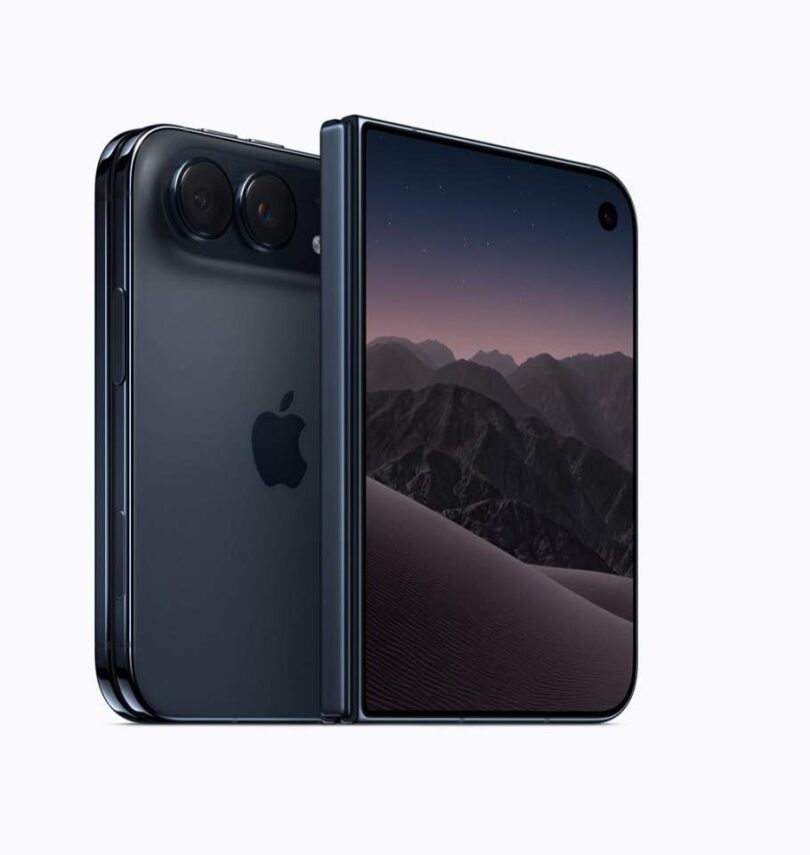
The iPhone Duo is Apple’s first foldable iPhone, combining the familiar iPhone experience with a book-style foldable design. Open it up, and the Duo provides a 7.6-inch OLED display—the largest screen ever offered on an iPhone—while the 5.4-inch outer display lets you use it like a conventional smartphone when folded. Apple has designed both displays with the same aspect ratio so content can transition between them without major changes in scale.
The Duo is built around Apple’s A20 Pro chip, a titanium frame and hinge cover, a dual-battery architecture, and a 48MP Dual Fusion camera system. It also introduces an iOS experience designed specifically around the foldable form factor, including ways to take advantage of the larger inner screen for viewing content and multitasking.
At $1,999, however, the iPhone Duo sits firmly in the ultra-premium smartphone category. That price makes the foldable design itself a major part of the buying decision—and a central question throughout this review.
| Feature | iPhone Duo |
| Starting price | $1,999 |
| Inner display | 7.6-inch Super Retina XDR OLED, 120Hz ProMotion |
| Outer display | 5.4-inch Super Retina XDR OLED, 120Hz ProMotion |
| Processor | A20 Pro |
| Rear cameras | 48MP Dual Fusion camera system |
| Front camera | Under-display FaceTime camera with Center Stage |
| Storage | 256GB, 512GB, 1TB, 2TB |
| Weight | 254g / 8.96 oz |
| Battery | Dual-battery system; up to 24 hours of typical use |
| Charging | Up to 50% in around 20 minutes with a 60W+ adapter |
| Operating system | iOS 27.1 |
| AI | Apple Intelligence and Siri AI |
| Water/dust resistance | IP68 |
| Colors | Star White, Night Sky |
| SIM | Dual eSIM; no physical SIM |
iPhone Duo Price and Availability
The iPhone Duo starts at $1,999 in the United States, making it one of Apple’s most expensive iPhones. The base model comes with 256GB of storage. Apple also offers higher storage options for buyers who need more space.
At this price, the iPhone Duo sits firmly in the ultra-premium smartphone category. It is also competing directly with other high-end foldable phones.
For U.S. and European buyers, the actual price varies by country. European prices are generally higher than a simple currency conversion because local taxes and regional pricing are included.
How Much Does the iPhone Duo Cost?
In the U.S., the iPhone Duo starts at $1,999 for 256GB.
Apple also offers financing options that allow buyers to spread the cost over monthly payments. Trade-in offers can further reduce the amount a customer pays upfront.
However, financing and trade-in discounts should not change how we evaluate the phone’s actual retail price. The important benchmark remains $1,999.
At that price, buyers are paying a significant premium for the foldable design, larger inner display, and Apple’s entry into the foldable market.
iPhone Duo Storage Options and Pricing
The iPhone Duo is available with 256GB, 512GB, 1TB, and 2TB of storage.
| Storage | U.S. Price | UK Price | Germany Price | France Price |
| 256GB | $1,999 | £1,999 | €2,299 | €2,339 |
| 512GB | — | £2,199 | — | — |
| 1TB | — | £2,599 | — | — |
| 2TB | — | £3,199 | — | — |
Prices can change, so confirm the current price in your local Apple Store before buying.
For European readers, it is better to show local prices rather than simply converting the U.S. price into euros or pounds. Exchange rates do not reflect the actual retail price in each market.
The 256GB model is likely to be the most important configuration for our value analysis because it represents the lowest entry price.
The 2TB version, meanwhile, pushes the Duo into an entirely different price category. Buyers should consider whether they actually need that much storage before spending several thousand dollars or euros on the phone.
iPhone Duo Availability in the U.S. and Europe
Apple will begin taking iPhone Duo pre-orders on October 16, 2026, with general availability beginning October 23, 2026.
The initial launch is scheduled to include the United States, United Kingdom, France, and Germany, along with several other countries and regions.
Availability can vary between countries and retailers. Stock may also become limited during the initial launch period, particularly for specific storage capacities and colors.
For buyers in Europe, checking the local Apple Store is the safest way to confirm current pricing, delivery estimates, and availability.
iPhone Duo Design: How Good Is Apple’s First Foldable?
Apple’s foldable design changes how the iPhone is used. Instead of making the foldable design feel like a separate type of device, Apple has tried to preserve the familiar proportions and feel of an iPhone while adding a much larger display when the phone is unfolded.
That creates an important question for this review: does the iPhone Duo actually feel like an iPhone first and a foldable second?
The answer depends on more than its thickness or materials. A good foldable needs to feel comfortable when closed, useful when open, and reassuring enough that you don’t constantly worry about damaging the hinge or display.
Thin and Lightweight Foldable Design
Thickness and weight matter more on a foldable than they do on a conventional smartphone. A device that becomes a small tablet when opened can quickly become uncomfortable if it feels bulky when folded.
The iPhone Duo weighs 254 grams, putting it in premium-phone territory rather than making it feel like an exceptionally light smartphone. Its foldable construction also means that you are carrying two display sections and the hinge mechanism in one device.
The advantage becomes more apparent when you open it.
Instead of carrying a separate phone and tablet, the Duo gives you a 7.6-inch display in a single device. That makes the extra weight easier to understand for users who regularly read documents, browse websites, watch videos, or work from a larger screen.
The trade-off is straightforward: you gain screen real estate, but you also carry more hardware than you would with a conventional iPhone.
That’s an important distinction when evaluating the Duo. Its design isn’t necessarily about being lighter than a normal iPhone. It’s about delivering substantially more screen space without requiring a second device.
Titanium Frame and Hinge
Apple uses titanium for the Duo’s frame and hinge cover, giving the phone a premium construction that fits the company’s Pro-level hardware approach.
The hinge is arguably the most important mechanical component of the entire phone. It determines how smoothly the two halves open and close and plays a major role in the long-term durability of the device.
Apple has also designed the hinge to sit within the overall body rather than making it look like an exposed mechanical component. That helps the Duo retain a relatively clean appearance when closed.
But materials alone don’t tell us whether the design is successful.
The real test is how the hinge behaves during everyday use. Does it open smoothly? Does it remain stable at different angles? Does the phone feel rigid when unfolded? And does the hinge inspire confidence after repeated use?
Those are more useful questions than simply knowing which metal Apple used.
What Does the iPhone Duo Feel Like When Folded?
When folded, the Duo is designed to function as a conventional smartphone through its 5.4-inch outer display.
This is where Apple’s approach becomes particularly useful.
You don’t have to unfold the phone every time you want to check a notification, respond to a message, or perform a quick task. The outer screen handles those everyday interactions while the larger inner display is available when you need more space.
The downside is that the folded experience is more constrained than using a large conventional smartphone. The 5.4-inch screen is noticeably smaller than the displays found on most modern flagship phones.
That makes the Duo’s two-screen approach a deliberate compromise:
small and convenient when folded, large and immersive when unfolded.
Whether that’s an advantage depends heavily on how often you actually need the larger screen.
What Does the iPhone Duo Feel Like When Unfolded?
Open the Duo and its design philosophy becomes much clearer.
The 7.6-inch inner display gives the phone a tablet-like canvas without requiring you to carry a separate tablet. Websites, documents, photos, and videos have substantially more room, while compatible apps can take advantage of the additional screen area.
This is where the larger screen has a practical advantage.
For reading long articles, reviewing documents, editing photos, watching videos, or using multiple apps, the larger display can make tasks more comfortable. It can also reduce the need to constantly scroll through content on a conventional phone screen.
However, the larger display doesn’t automatically make every app better. The experience depends on how well iOS and individual applications use the additional space.
The software section covers how iOS uses that extra space.
iPhone Duo Displays: Is the 7.6-Inch Foldable Screen Worth It?
The display is one of the biggest reasons to consider the iPhone Duo over a conventional iPhone. When folded, the phone gives you a compact 5.4-inch outer screen for everyday tasks. Open it, and that experience changes completely with a 7.6-inch foldable display.
That larger screen can make reading, browsing, watching videos, and working with multiple apps more comfortable. But it also raises some obvious questions. How good is the inner display? How noticeable is the crease? Does the nano-texture finish really help? And is the smaller outer screen convenient enough for everyday use?
Ultimately, the question isn’t whether the Duo has a large display. It does. The more important question is whether that extra screen is useful enough to justify carrying and paying for a foldable iPhone.
7.6-Inch Inner Display
The iPhone Duo’s 7.6-inch inner display is the main reason to consider the phone. Unfolded, the phone provides considerably more screen space than a conventional iPhone, bringing the experience closer to a compact tablet.
The OLED panel supports 120Hz ProMotion, which should make scrolling, animations, and supported games feel noticeably smoother than a traditional 60Hz display.
The extra space is particularly useful for content that benefits from a larger canvas. Long articles become easier to read. Websites require less scrolling. Photos have more room to breathe. Videos can feel more immersive.
The larger display also changes how the phone can be used for productivity. Documents, email, web research, and compatible applications can take advantage of the additional screen area.
But screen size alone doesn’t determine whether the display is better.
The real advantage comes from being able to carry that larger screen in a device that folds into a phone-sized form factor.
That’s the fundamental appeal of the Duo.
5.4-Inch Outer Display
When closed, the iPhone Duo uses a 5.4-inch outer display.
This screen handles the tasks you don’t necessarily need to perform on the larger inner display. Checking notifications, responding to messages, making calls, looking up information, and quickly using apps can all be done without unfolding the phone.
The smaller display also makes the Duo more convenient for quick interactions. You don’t need to open a large screen every time you want to check something.
However, 5.4 inches is considerably smaller than the displays found on most modern flagship smartphones.
That creates an interesting trade-off.
The Duo effectively gives you two different phone experiences. The outer display prioritizes convenience and compactness, while the inner display prioritizes space and immersion.
Whether that’s useful or frustrating will depend on how frequently you switch between the two.
How Noticeable Is the Foldable Crease?
The crease is one of the first things buyers think about when considering a foldable phone.
Unlike a conventional smartphone display, the Duo’s inner panel has to bend along a central hinge. That means the display cannot have exactly the same uninterrupted surface as a traditional slab-style iPhone.
Apple has worked to make the crease less distracting, but it does not completely disappear.
In everyday use, its visibility can depend on lighting conditions, viewing angle, and what is displayed on the screen. Dark content may make it less obvious, while reflections or bright backgrounds can make the fold more noticeable.
There’s also a difference between seeing the crease and noticing it while using the phone.
A crease can be visible when you deliberately look for it without becoming something you think about during normal browsing or video playback.
That’s an important distinction for potential buyers. Anyone expecting the inner display to look exactly like a conventional iPhone screen may be disappointed. But users who already understand the compromises of foldable technology may find the crease easier to accept.
Does Nano-Texture Glass Make a Difference?
Apple’s nano-texture finish is a notable aspect of the Duo’s inner display.
The purpose isn’t simply to make the screen look different. The textured surface is designed to reduce reflections and glare, which can make the display easier to view in challenging lighting.
That’s particularly relevant for a foldable because the large inner screen provides a bigger surface that can catch reflections.
In bright rooms or near windows, reducing glare can make a meaningful difference. It can also improve the experience when reading long articles or viewing photographs.
However, nano-texture finishes can involve trade-offs. They may affect how the screen looks under certain lighting conditions and can produce a different visual appearance compared with a conventional glossy display.
For most buyers, the important question is simple:
Does the reduction in reflections make the larger screen easier to use in everyday environments?
That’s more useful to consider than treating nano-texture as a specification on a product sheet.
Is the Outer Display Too Small?
This may become one of the biggest criticisms of the Duo.
At 5.4 inches, the outer display is noticeably smaller than the screens found on many flagship smartphones.
That can be an advantage if you prefer compact phones. But it could also make some tasks less comfortable.
Typing is an obvious example. Reading long messages or browsing websites may also encourage you to open the phone more frequently.
This creates a potential contradiction in the Duo’s design.
The smaller outer display makes the phone easier to handle, but the larger inner display is where the Duo becomes genuinely useful.
If you frequently find yourself unfolding the phone to perform tasks that would normally be done on a conventional smartphone, you may question whether the outer display is large enough.
On the other hand, users who mainly use the outer screen for quick interactions may appreciate the compact experience.
This is one area where individual usage habits will matter considerably.
Watching Videos, Reading and Browsing on the Duo
This is where the 7.6-inch display has the strongest practical argument.
Watching videos
The larger display can provide a more immersive viewing experience than a conventional smartphone. However, video aspect ratios can affect how much of the available screen is actually used.
Some content may still display with black bars because most video content isn’t designed specifically for the Duo’s foldable aspect ratio.
Reading
Reading may be one of the Duo’s strongest use cases.
Long articles, ebooks, PDFs, and documents can benefit from the additional vertical and horizontal space. You can see more content at once and spend less time scrolling.
For someone who reads extensively on their phone, this could be a meaningful upgrade.
Web browsing
Websites also benefit from the larger canvas.
Desktop-style layouts have more room, while pages that feel cramped on a conventional smartphone can become easier to navigate.
The advantage becomes even more obvious when comparing a 7.6-inch display with a typical 6.5- to 6.9-inch smartphone.
Multitasking
The larger display also creates opportunities for multitasking.
You can potentially keep one application visible while working with another, depending on how iOS and individual apps support the foldable layout.
This is where the Duo’s display could move beyond entertainment and become a genuine productivity tool.
The software section covers this in more detail.
The iPhone Duo doesn’t simply give you a bigger screen. It gives you the option of carrying a much larger screen without carrying a separate tablet.
And that is the feature that needs to justify the premium.
iPhone Duo Hinge and Durability: Should You Be Worried?
A foldable phone has one major component that a conventional smartphone doesn’t: a hinge that opens and closes thousands of times over its lifetime. That makes the hinge and flexible inner display two of the most important parts of the iPhone Duo.
For Apple, this is also a particularly important test. The Duo is the company’s first foldable iPhone, so buyers are not just evaluating a new iPhone design. They are buying into Apple’s first attempt at a completely different type of smartphone hardware.
Apple has put significant engineering into the Duo’s hinge, frame, and display protection. But the more important question is whether those improvements translate into reliable everyday durability.
How Does the Hinge Work?
The iPhone Duo uses a precision-engineered hinge that allows the two halves of the phone to open and close around the flexible inner display.
The hinge has to perform several jobs at once. It needs to provide a smooth folding action, hold the two halves securely when the phone is open, and protect the display from excessive stress during repeated folding.
Apple has also integrated the hinge into the phone’s titanium construction rather than treating it as an exposed mechanical component.
That contributes to the Duo’s clean appearance when closed. More importantly, it helps protect one of the most mechanically important parts of the device.
The hinge also determines how the Duo behaves at different angles. A good foldable should feel controlled rather than loose or unpredictable when you open it.
For everyday use, that means the hinge should disappear into the experience rather than constantly reminding you that you’re holding a mechanical device.
Can the iPhone Duo Survive Everyday Folding?
Long-term folding reliability is the main durability question.
Every time you open or close the phone, the hinge and flexible display experience mechanical movement. Over years of use, that adds up to a considerable number of folding cycles.
Apple has designed the Duo specifically for repeated folding, but launch-day specifications cannot tell us exactly how the device will behave after several years of daily use.
That’s an important distinction for this review.
The construction, hinge design, protection, and Apple’s published durability claims provide useful evidence, but they cannot establish multi-year reliability.
Those claims should not be treated as proof that the Duo will remain trouble-free for years. Long-term reliability can only be established through extended real-world use.
For prospective buyers, the sensible approach is to treat the Duo as a sophisticated mechanical device that deserves more care than a conventional iPhone.
Avoid placing unnecessary pressure on the inner display. Keep debris away from the hinge and follow Apple’s cleaning and handling recommendations.
The good news is that Apple has considerable experience building high-end smartphones and displays. The unknown is how that engineering translates to a foldable mechanism over many years of real-world use.
Is the iPhone Duo Water and Dust Resistant?
The iPhone Duo carries an IP68 rating, giving it protection against dust and water under the conditions defined by the relevant testing standard.
That’s reassuring for everyday situations such as rain, accidental splashes, or exposure to dust.
However, an IP rating should not be interpreted as a guarantee that the phone is waterproof.
Foldable phones contain more moving components than conventional smartphones. The hinge is therefore an important consideration even when the overall device has a strong water and dust-resistance rating.
Users should also remember that water resistance can decrease with normal wear and tear.
So while the Duo’s IP68 rating provides useful protection, it isn’t a reason to deliberately expose the phone to water.
How Does Its Durability Compare With Other Foldables?
This is where the iPhone Duo becomes particularly useful.
Apple isn’t entering an empty market. Samsung, Google, Motorola, and other manufacturers have already spent years developing foldable smartphones.
That gives established foldable manufacturers an advantage in terms of accumulated real-world experience.
Apple, however, can approach the category with its own hardware and software integration. The Duo’s hinge, titanium construction, display technology, and iOS software have all been designed as part of the same ecosystem.
The most useful comparison isn’t simply which phone has the strongest hinge specification.
A useful durability comparison should consider:
- Hinge construction
- Folding mechanism
- Inner-display protection
- Water and dust resistance
- Outer-frame materials
- Manufacturer durability claims
- Warranty and repair options
- Long-term reliability reports
- Cost of repairing the foldable display
That last point deserves particular attention.
A foldable display can be considerably more expensive to repair than a conventional smartphone screen. With a $1,999 starting price, potential repair costs should be part of the overall ownership equation.
That is something only time—and long-term testing—can answer.
iPhone Duo Camera Review
For a phone that costs $1,999, the camera system deserves close attention. The iPhone Duo uses a 48MP Dual Fusion camera system, combining a Fusion Main camera with a Fusion Ultra Wide camera.
On paper, that sounds strong. But there is an important compromise.
The Duo does not have a dedicated telephoto camera. Instead, its 2x optical-quality zoom comes from the high-resolution Main camera. The iPhone 18 Pro models have a more versatile three-camera system with a dedicated 48MP telephoto camera and greater optical-quality zoom.
That makes the camera one of the most interesting parts of the Duo review. Can Apple’s foldable deliver a camera experience worthy of a $1,999 smartphone without having the same camera hardware as the Pro models?
iPhone Duo Main Camera
The primary camera is a 48MP Fusion Main camera with a 26mm equivalent focal length and an f/1.6 aperture. It also includes sensor-shift optical image stabilization and supports both 24MP and 48MP photography.
Apple uses computational photography throughout the imaging system. Technologies such as Photonic Engine, Deep Fusion and Smart HDR help process photographs and improve detail, color and exposure.
The Main camera also provides the Duo’s 2x optical-quality zoom.
This approach makes sense for a foldable. Keeping the rear camera system relatively compact helps Apple manage the physical constraints of a device that needs to fold.
But there is a trade-off.
If you frequently photograph distant subjects, a dedicated telephoto lens is more useful than simply cropping the Main camera. This is one area where the Duo’s camera system is less versatile than the iPhone 18 Pro and Pro Max.
iPhone Duo Ultra-Wide Camera
The second rear camera is a 48MP Fusion Ultra Wide with a 13mm equivalent focal length and a 120-degree field of view. It also supports macro photography.
This gives the Duo two very different perspectives.
The Main camera is designed for everyday photography, portraits, and general-purpose shooting. The Ultra Wide is more useful for landscapes, architecture, group photographs, and situations where you need to fit more into the frame.
The Ultra Wide camera is also important for close-up photography because it enables macro shots.
The Duo’s Ultra Wide camera shares much of its underlying technology with the Ultra Wide camera used on Apple’s Pro models. That means the Duo isn’t compromised across the entire camera system.
The biggest hardware difference is the absence of a dedicated telephoto camera.
Selfie Camera and Center Stage
The iPhone Duo has a 12MP Center Stage front camera on the outer display and an additional under-display FaceTime camera on the inner screen.
Center Stage is particularly useful on a foldable.
The camera can automatically adjust framing as people move or as additional people enter the shot. It can also adjust the framing between portrait and landscape orientations without requiring you to physically rotate the phone.
For video calls, this could be one of the Duo’s more useful features.
The inner display also has an under-display FaceTime camera, allowing you to make video calls while the phone is unfolded.
This is less about winning a traditional selfie-camera comparison and more about making the foldable form factor useful for communication.
Duo Preview: A Better Way to Take Photos?
This is where the Duo’s two displays create something that a conventional iPhone cannot easily replicate.
Duo Preview allows the person being photographed to see a live preview on the outer display.
Imagine taking a portrait of someone with the rear camera. Instead of asking them to trust that you have framed the shot correctly, they can see themselves on the outer screen.
That can make portraits and group photographs easier to compose.
The Duo also includes Smart Take, which can help automatically capture a photograph when people are ready. This could be useful when you place the phone down and want to join a group photograph yourself.
Another feature, Kid Cue, uses the outer display to attract a child’s attention toward the camera.
These features aren’t reasons to buy the Duo by themselves. However, they demonstrate something important about Apple’s approach.
Apple isn’t simply putting an existing iPhone camera inside a foldable body. It’s using the two-screen design to create new ways of taking photographs.
Photo Quality in Daylight
In good lighting, the Duo’s 48MP Main camera has plenty of resolution for everyday photography.
Apple uses a 24MP default output as a balance between image detail and manageable file sizes. The camera can also capture 48MP photographs when higher resolution is useful.
For everyday subjects, the Main camera should produce detailed photographs with Apple’s familiar computational photography approach.
The Ultra Wide camera adds flexibility for landscapes, buildings and group shots.
However, the absence of a dedicated telephoto lens becomes more apparent as you move away from the Main camera’s native field of view.
This is where the Duo starts to look less like a camera-focused Pro iPhone and more like a foldable designed around versatility and portability.
Low-Light Photography
Low-light photography is another important test for a $1,999 phone.
The Fusion Main camera combines a relatively fast f/1.6 aperture, optical image stabilization, and computational photography to improve low-light performance.
The Duo also supports Night mode and improved low-light video capabilities.
The Main camera should therefore be capable of handling typical evening and indoor photography.
Specifications provide a useful starting point, but they cannot establish real-world image quality.
Real-world low-light comparisons will tell us much more than Apple’s technical claims.
A meaningful comparison with the iPhone 18 Pro and Pro Max should use the same subjects, lighting, and shooting conditions.
That kind of comparison would add considerably more value than simply saying the Duo has a fast aperture.
Video Recording
The iPhone Duo supports 4K Dolby Vision video recording at up to 120fps using the Fusion Main camera.
It also supports features such as Cinematic mode, Action mode, macro video, and slow motion.
For creators, this makes the Duo more interesting than its two-camera configuration might initially suggest.
The foldable design also provides some unusual shooting options. Because the phone can stand on its own, you can use it for hands-free recording without necessarily needing a separate tripod.
The camera system also supports Duo Preview, Smart Take, and other foldable-specific features.
These capabilities could make the Duo particularly useful for people who create content alone.
However, professional videographers may still prefer the iPhone 18 Pro or Pro Max because of their more extensive camera hardware and broader imaging flexibility.
Is the iPhone Duo Camera as Good as the iPhone 18 Pro?
The key camera question is whether the missing telephoto matters.
The short answer is: not in terms of camera versatility.
The iPhone Duo has two 48MP rear cameras:
- 48MP Fusion Main
- 48MP Fusion Ultra Wide
The iPhone 18 Pro and Pro Max add a third 48MP Fusion Telephoto camera with substantially greater optical-quality zoom. The Pro models also offer additional camera controls and capabilities aimed at photography enthusiasts and professionals.
That gives the Pro models an important advantage for:
- Long-distance photography
- Portrait focal lengths
- Optical zoom
- Creative photography
- Greater camera flexibility
The Duo fights back with its foldable-specific camera features.
Duo Preview, Smart Take, Kid Cue, and the ability to use the outer display while shooting with the rear cameras are genuinely different experiences.
So this isn’t simply a case of one camera being better.
It’s a question of priorities.
| Camera Feature | iPhone Duo | iPhone 18 Pro |
| Main camera | 48MP Fusion | 48MP Fusion |
| Ultra Wide | 48MP Fusion | 48MP Fusion |
| Dedicated telephoto | No | Yes |
| Optical-quality zoom | Up to 2x | Greater zoom range |
| Macro photography | Yes | Yes |
| 4K Dolby Vision | Up to 120fps | Up to 120fps |
| Foldable camera features | Yes | No |
| Duo Preview | Yes | No |
iPhone Duo Performance: How Fast Is the A20 Pro?
The iPhone Duo is powered by Apple’s A20 Pro chip, the same generation of processor used in Apple’s high-end Pro lineup. That gives the Duo the performance headroom expected from a flagship iPhone, but the foldable design creates a different set of demands.
A foldable has more screen area to drive, more complex multitasking possibilities, and additional thermal challenges inside a relatively thin chassis.
So the important question isn’t simply whether the A20 Pro is fast.
It’s whether the iPhone Duo can maintain that performance during demanding everyday tasks, gaming, and sustained workloads.
A20 Pro Performance
The A20 Pro is built for demanding smartphone workloads, including gaming, photography, video editing and AI-powered features.
The A20 Pro puts the Duo in Apple’s high-end performance tier. It provides ample headroom for gaming, photography, video editing, multitasking, and on-device AI.
The more important question is how effectively the foldable design lets users take advantage of that performance.
For ordinary tasks such as messaging, email, social media, browsing and streaming, the A20 Pro provides considerably more performance than most people need.
The difference becomes more meaningful when you move into demanding workloads.
Photo processing, 4K video editing, large games, and on-device AI tasks can place substantially more pressure on the processor.
This is where a flagship chip such as the A20 Pro becomes useful.
It also gives the Duo more headroom for future versions of iOS. A phone costing $1,999 should remain capable for several years, and Apple’s powerful processor helps support that expectation.
For a foldable, sustained performance matters more than a short benchmark peak. Apple’s vapor-chamber cooling is designed to help maintain performance during demanding workloads.
Gaming Performance
The A20 Pro gives the iPhone Duo plenty of processing and graphics capability for modern mobile games.
The larger 7.6-inch display also changes the gaming experience.
Games with detailed graphics can look more immersive on the larger screen, while the additional space may make certain controls and interfaces easier to use.
But gaming on a foldable also creates a potential disadvantage.
The larger display doesn’t automatically mean every game will use it well. Some games may simply scale their existing interface, while others may be specifically optimized for the Duo’s larger aspect ratio.
Thermal performance also matters.
Extended gaming sessions can push both the CPU and GPU harder than typical smartphone tasks. That makes the Duo’s cooling system particularly important.
Multitasking on the Large Display
The Duo’s large inner screen creates an opportunity that a conventional iPhone doesn’t have.
You have considerably more physical space for applications, documents, and other content.
That makes the A20 Pro’s performance more useful because you can potentially move between demanding applications while taking advantage of the larger display.
For example, you might browse a website while referencing notes, review an email while checking a document, or edit content while keeping another application available.
However, hardware performance is only half of the equation.
The software needs to take advantage of the available screen.
If iOS limits multitasking or individual applications aren’t optimized for the Duo, the A20 Pro’s additional performance won’t necessarily translate into a better productivity experience.
That’s why the performance section should connect closely with our later discussion of iOS and foldable software.
The Duo has the hardware to handle demanding workloads. The remaining limitation is software: iOS must make the larger display useful enough to turn that performance into a better experience.
Vapor Cooling and Sustained Performance
Foldable phones face an interesting thermal challenge.
They have more internal hardware packed into a thin body, while the larger display can encourage users to perform more demanding tasks for longer periods.
Apple addresses this with a vapor-chamber cooling system designed to help distribute heat away from the processor during demanding workloads.
The purpose is not to make the phone completely cool under heavy use.
Instead, effective cooling should help the A20 Pro maintain higher performance for longer before thermal limitations become significant.
This matters most during:
- Extended gaming
- Video rendering
- 4K video recording
- Large file processing
- AI workloads
- Extended multitasking
A phone can post a strong benchmark result and still lose performance during sustained workloads. The Duo’s vapor chamber is designed to reduce that problem.
The better test is whether the Duo can maintain consistent performance over an extended period.
iPhone Duo Battery Life and Charging
Battery life is particularly important on the iPhone Duo because a foldable has two displays and a more complex internal design than a conventional iPhone. The larger 7.6-inch inner display can also consume more power when used for extended periods.
Apple addresses this with a dual-battery architecture, placing a battery on each side of the foldable chassis. The two batteries work together as a single system, while the phone’s power-management technology helps balance energy use between them. Apple rates the Duo for up to 24 hours of typical use when the inner and outer displays are used equally.
Those numbers look promising, but Apple’s laboratory figures are only part of the story. For a $1,999 phone, what matters more is how the battery performs during normal everyday use.
How Long Does the iPhone Duo Battery Last?
Apple’s official rating is up to 24 hours of typical use per charge. The company’s testing used a representative mixture of activities, including messaging, photography, music, social media, video streaming, gaming, web browsing, and navigation. The test also assumes equal use of the inner and outer displays.
Apple separately rates the Duo for:
- Up to 44 hours of video playback using the outer display
- Up to 31 hours of video playback using the inner display
- Up to 37 hours of streamed video using the outer display
- Up to 26 hours of streamed video using the inner display
These figures shouldn’t be interpreted as normal daily battery life.
Video playback is a controlled test. Real-world use involves a mixture of activities, different screen brightness levels, cellular connectivity, background processes and applications that place very different demands on the processor.
The 24-hour figure is useful as Apple’s benchmark, but it should not be treated as a guarantee of a full day of typical use.
Battery Life With the Inner Display
The 7.6-inch inner display is one of the biggest reasons to buy the Duo, but it is also likely to be one of its biggest sources of battery consumption.
A large OLED display requires more power when it is used continuously, particularly at higher brightness and refresh rates.
Apple’s own testing illustrates the difference. The Duo can deliver up to 31 hours of local video playback with the inner display, compared with up to 44 hours when using the outer display.
That doesn’t mean you should expect the battery to last 13 hours longer simply by keeping the phone folded. The test illustrates how display size and usage patterns affect power consumption.
In everyday use, the inner screen will likely be most demanding when you combine it with activities such as:
- Gaming
- Video streaming
- Video editing
- Photography
- Multitasking
- High-brightness outdoor use
- 5G connectivity
The important question is whether the Duo can comfortably make it through a full day when users actually take advantage of its large display.
Actual endurance will depend on brightness, connectivity, apps, and how often the inner display is used.
Battery Life With the Outer Display
The smaller 5.4-inch outer display should generally require less power than the 7.6-inch inner screen.
Apple’s video-playback testing reflects this difference, with the outer display rated for up to 44 hours of video playback.
The outer screen is also useful because you don’t need to unfold the phone for every task.
Checking a notification, replying to a short message, making a call, or quickly looking something up can all be done without activating the larger inner display.
That creates an interesting advantage for the Duo.
The foldable design isn’t only about giving you a bigger screen. It also gives you the option of using a smaller screen when you don’t need the extra space.
For some users, that could help extend battery life throughout the day.
Using the outer display may reduce power demand, but battery life also depends on brightness, cellular connectivity, background activity, and the apps being used.
Charging Speed
The iPhone Duo supports fast wired charging, reaching up to 50% charge in around 20 minutes when paired with a 60W-capable or higher USB-C power adapter and the appropriate charging cable.
It also supports MagSafe wireless charging.
With a 35W or higher adapter and a compatible MagSafe Charger, Apple says the Duo can reach 50% in around 30 minutes.
That’s useful for a phone with a large display because fast charging can make short charging sessions more practical.
For example, a quick charge while getting ready in the morning or during a lunch break could provide a meaningful amount of additional battery capacity without requiring the phone to remain connected for hours.
The important limitation is that these are Apple’s controlled test results. Actual charging time can vary depending on the adapter, cable, temperature, settings, and whether the phone is being used while charging.
iOS on the iPhone Duo: Does Apple Get Foldable Software Right?
A foldable phone can have excellent hardware and still feel unnecessary if its software does not take advantage of the extra screen.
This is where the iPhone Duo has an important advantage. Apple has not simply taken the standard iOS interface and stretched it across a larger display. iOS 27.1 has been adapted for the Duo, with changes to navigation, multitasking, app layouts and the way content moves between the two displays.
When the phone opens, iOS adapts the interface to the larger screen. When it closes, content moves back to the outer display. Apple has also redesigned elements such as the Dock, navigation controls, and Dynamic Island to better suit the Duo’s unusual proportions.
The key question is whether these changes make the Duo genuinely more useful or simply more complicated.
How iOS 27.1 Uses the Large Display
The 7.6-inch inner display gives Apple considerably more space to work with, and iOS 27.1 takes advantage of that additional room.
When the Duo is unfolded, the interface can display two Home Screen pages alongside Today View, giving users more room for widgets and applications.
Apple has also moved certain navigation and control elements toward the sides of the display. This makes better use of the available space instead of placing everything along the top or bottom as it would on a conventional iPhone.
The interface also responds as the phone changes position.
Fold the Duo and the experience moves to the outer display. Open it again and compatible content can expand onto the larger screen.
That continuity is important.
A foldable should not feel like two completely separate devices. The transition between the two screens needs to feel natural enough that you do not have to think about which display you are using.
Apple’s approach is designed around exactly that idea.
Multitasking on the iPhone Duo
This is probably the most significant software change on the Duo.
For the first time, Apple allows two iPhone apps to run side by side using Split View.
You can move an application to one side of the inner display and open another application beside it. You can also open two windows of the same application, such as two Safari windows.
You can also save pairs of apps for quicker access later.
This changes what the larger screen can be used for.
For example, you could:
- Read a webpage while taking notes.
- Browse a product while comparing another website.
- Keep a conversation open while checking information.
- Watch content while working in another application.
- Compare two Safari pages side by side.
- View content while interacting with Siri AI.
Apple has designed the split-screen interaction around familiar iPhone gestures rather than introducing an entirely desktop-style system.
That should make the feature easier for existing iPhone users to understand.
However, there is an important limitation.
Apple’s approach is deliberately simpler than Samsung’s.
The Galaxy Z Fold 8 supports more flexible multi-window arrangements, including three-app layouts. Samsung’s approach gives power users more control over how they use the large inner display.
Apple’s approach is more controlled.
Whether that is a weakness depends on how you use the device.
Tent, Book and Laptop Modes
The Duo can be positioned in different ways because of its hinge, and Apple highlights tent, book, and laptop modes as part of the device’s versatility.
These are not simply different ways of holding the phone. They can change how you interact with it.
Tent Mode
In a tent-style position, the Duo can stand on its own.
This can be useful for watching content, making video calls, or taking photographs without holding the phone.
It also creates an interesting option for hands-free use when you do not have a stand or tripod available.
Book Mode
Book mode uses the two sides of the inner display more like facing pages.
This could be particularly useful for reading, browsing information, or viewing content where you want two related areas visible at the same time.
It also makes the Duo feel closer to a small digital book than a conventional smartphone.
Laptop Mode
Laptop mode places the Duo at an angle, creating a setup that resembles a miniature laptop.
This could be useful for typing, viewing content, and certain productivity tasks.
It is better viewed as a flexible phone position than as a laptop replacement.
The hardware may resemble a small laptop in this position, but the software experience remains fundamentally iOS.
That is an important distinction.
App Support and Optimization
Foldable hardware is only as useful as the applications that support it.
Apple has given developers new tools for adapting applications to the Duo’s two displays and different physical positions.
Apps built using newer versions of Apple’s development tools can dynamically resize as the Duo opens and closes. Applications can also adapt their navigation and controls to the larger inner display.
Apple says several major applications are already optimized for the Duo, including Netflix, Zoom and Slack.
That is encouraging, but the practical test will come from the broader App Store.
Not every application will necessarily take advantage of the large display immediately.
Some apps may simply scale their existing interface. Others may have layouts specifically designed for the Duo.
That means the software experience could improve considerably during the phone’s lifetime as developers update their applications.
As a first-generation foldable, the Duo’s software experience will also depend on how quickly developers adapt their apps.
Is Two-App Multitasking Enough?
This is where the Duo’s software strategy becomes most interesting.
Apple has chosen a relatively simple approach: two apps side by side.
For most smartphone users, that may be enough.
You do not necessarily need three applications open simultaneously when checking email, researching a topic, or responding to a message.
But power users may want more.
Samsung’s Galaxy Z Fold 8 supports more flexible split-screen arrangements, giving users greater control when working with several applications.
That means Samsung currently offers a more aggressive multitasking philosophy.
Apple’s approach is different.
The company appears to be prioritizing simplicity and consistency with the existing iPhone experience rather than attempting to turn the Duo into a miniature desktop computer.
That could actually be an advantage for ordinary iPhone users who do not want to learn a complicated window-management system.
But for productivity-focused buyers spending $1,999, the limitation could be harder to ignore.
Apple Intelligence and Siri AI on the iPhone Duo
Apple Intelligence is part of the iPhone Duo experience, bringing Apple’s latest AI-powered features to the foldable. These features can help with writing, notifications, image creation, visual understanding, and other everyday tasks.
However, Apple Intelligence is not necessarily a reason by itself to choose the Duo over another recent iPhone.
The more interesting question is whether the Duo’s large inner display creates new ways to use Apple’s AI features.
If the answer is yes, AI becomes another advantage of the foldable design. If not, buyers are essentially getting the same AI capabilities available on other compatible iPhones.
What AI Features Does the iPhone Duo Have?
The iPhone Duo supports Apple’s current Apple Intelligence features, including tools designed to help with writing, communication, image creation, and everyday information tasks.
Depending on the feature, Apple Intelligence can help you:
- Rewrite or summarize text.
- Proofread written content.
- Summarize notifications.
- Create or modify images.
- Search for information using natural language.
- Understand content displayed on the screen.
- Interact with Siri using more natural language.
- Use AI-powered visual intelligence features.
The A20 Pro also provides the processing power required for Apple’s on-device AI features.
However, Apple Intelligence availability can vary by language, region, and specific feature, so buyers should check which capabilities are available in their country before treating any particular AI feature as a reason to purchase the phone.
That is especially important for European buyers, where certain AI capabilities may not always launch at the same time across all languages and regions.
Siri AI
Siri is one of the areas where Apple is trying to make its AI experience more conversational and useful.
The newer Siri experience is designed to understand more natural requests and provide assistance based on the context of what you’re doing.
On the Duo, the larger display could make Siri interactions more useful because there is more room to display information alongside other content.
For example, you could potentially ask Siri to help with information while continuing to view a webpage or another application.
However, a more capable Siri does not automatically make the Duo a better reason to spend $1,999.
A more capable Siri does not automatically make the Duo a better foldable.
If the same Siri capabilities are available on other recent iPhones, they don’t provide a unique reason to spend $1,999 on the Duo.
The real differentiator would be whether Apple’s AI becomes more useful specifically because of the Duo’s larger display and multitasking capabilities.
AI Features That Take Advantage of the Foldable Display
This is the area worth watching most closely.
The Duo’s larger display creates more space for AI-assisted workflows.
Imagine researching a topic on one side of the screen while using AI assistance on the other. Or reviewing a document while asking Siri to summarize or rewrite selected content.
These workflows could make the Duo particularly useful for:
- Students
- Writers
- Researchers
- Content creators
- Professionals
- People who frequently work with documents
The important distinction is between AI features available on the Duo and features that actually become more useful because of the foldable design.
The distinction matters.
If an AI feature works identically on an iPhone 18 Pro, then it isn’t really a Duo-specific advantage.
The stronger argument would be an AI workflow that benefits directly from having the 7.6-inch display and two-app Split View.
For example, being able to keep a document visible while interacting with an AI assistant could make the larger screen substantially more useful.
Are Apple’s AI Features a Reason to Buy the Duo?
Probably not by themselves.
Apple Intelligence adds useful capabilities to the Duo, but AI is not the primary reason to buy Apple’s first foldable.
The major reasons to consider the Duo remain:
- The 7.6-inch inner display
- Foldable design
- Two-screen experience
- iOS integration
- Multitasking
- Foldable-specific camera features
- Premium hardware
AI can enhance those experiences, but it shouldn’t be the foundation of the buying decision.
There’s also an important comparison to make.
If a buyer is deciding between the iPhone Duo and iPhone 18 Pro, they should ask whether the AI capabilities they care about are actually exclusive to the Duo.
If they’re available on both devices, then AI doesn’t justify the Duo’s higher price.
iPhone Duo vs iPhone 18 Pro Max
The iPhone Duo and iPhone 18 Pro Max represent two very different ideas of what a premium iPhone should be.
The Duo’s main advantage is obvious: it folds. You get a conventional outer display for quick tasks and a much larger 7.6-inch inner display when you need more space.
The iPhone 18 Pro Max takes the opposite approach. It keeps the traditional smartphone design and uses that space for a larger battery, more advanced camera hardware, and a familiar slab-style experience.
That makes this comparison less about which phone has better specifications and more about what you want from a $1,999-plus iPhone.
| Feature | iPhone Duo | iPhone 18 Pro Max |
| Form factor | Foldable | Traditional smartphone |
| Main display | 7.6-inch inner display | Large conventional display |
| Outer display | 5.4-inch | — |
| Processor | A20 Pro | A20 Pro |
| Rear cameras | Dual 48MP system | Triple-camera Pro system |
| Dedicated telephoto | No | Yes |
| Multitasking | Two-app Split View | Traditional iOS multitasking |
| Starting price | $1,999 | Lower than Duo |
| Best for | Foldable experience and large-screen use | Cameras, battery and traditional smartphone use |
Display
This is the easiest category to separate.
The iPhone Duo wins on screen versatility because it effectively gives you two display sizes.
The 5.4-inch outer display is useful for quick interactions, while the 7.6-inch inner display provides substantially more room for browsing, reading, watching videos, and multitasking.
The iPhone 18 Pro Max has a large conventional display that is easier to use as an everyday smartphone, but it cannot transform into a tablet-sized screen.
So the decision comes down to how much you value the foldable experience.
Choose the Duo if you frequently want a larger screen without carrying another device.
Choose the Pro Max if you prefer a straightforward large-screen smartphone.
Cameras
This is where the iPhone 18 Pro Max has a significant advantage.
The Duo uses a 48MP Fusion Main and 48MP Fusion Ultra Wide camera system. It does not have a dedicated telephoto camera.
The iPhone 18 Pro Max has a more advanced Pro camera system with a dedicated telephoto camera and greater zoom flexibility.
That matters if you frequently photograph:
- Distant subjects
- Wildlife
- Sports
- Concerts
- Portraits
- Travel scenes
- Architectural details
The Duo does have some camera features that take advantage of its foldable design.
Its outer display can provide a preview to the person being photographed, and the foldable form factor creates additional hands-free shooting possibilities.
So the cameras reflect the overall difference between the two phones.
The Pro Max is designed around advanced photography. The Duo is designed around a combination of photography and foldable flexibility.
If camera quality is your top priority, the Pro Max is the more logical choice.
Performance
Both phones use Apple’s A20 Pro, so this isn’t a comparison where one device has a dramatically faster processor.
For everyday tasks, both should provide flagship-level performance.
Web browsing, social media, photography, video editing, and demanding applications should run smoothly on either device.
The Duo’s advantage comes from what it can do with that performance.
Its larger inner display gives demanding applications more room, while Split View allows users to work with two apps simultaneously.
The Pro Max, meanwhile, has a more conventional experience.
For ordinary smartphone use, the performance difference should be relatively small.
For productivity, the Duo’s larger screen could make the A20 Pro more useful.
Battery
Battery life is more complicated.
The Duo has a dual-battery architecture and must power both its inner and outer displays.
The larger 7.6-inch display can also consume more power during demanding tasks.
The Pro Max has a conventional design that gives Apple more freedom to dedicate internal space to its battery.
This makes the Pro Max potentially more attractive to buyers who prioritize maximum endurance over screen flexibility.
The Duo’s advantage is that you don’t always need to use the large inner display.
Simple tasks can be performed on the 5.4-inch outer screen, which can help reduce power consumption.
A standardized real-world battery test is more useful than Apple’s laboratory figures.
Portability
This category is surprisingly complicated.
The Duo can be considered more portable in one important sense: it gives you a tablet-sized display without requiring you to carry a separate tablet.
But that doesn’t necessarily mean the phone itself is lighter or easier to carry than the Pro Max.
A foldable has additional hardware, including its hinge and flexible display.
The Duo therefore makes a trade-off.
You carry a more complex device, but you get considerably more screen flexibility in return.
The Pro Max is simpler.
It behaves exactly as you’d expect a large premium smartphone to behave.
For users who dislike thick or complicated phones, the Pro Max may be the more comfortable choice.
For users who value having a large display available whenever they need it, the Duo has the stronger proposition.
Price
This is where the comparison becomes particularly important.
The iPhone Duo starts at $1,999.
That’s a significant premium over conventional iPhone models and makes the question of value impossible to ignore.
The iPhone 18 Pro Max costs less than the Duo at its starting configuration, although the final difference depends on storage.
This means buyers aren’t simply deciding between two phones at roughly the same price.
They’re deciding whether the foldable experience itself is worth paying a substantial premium for.
That’s the central financial question of the entire review.
If you don’t particularly care about having a foldable display, the additional cost becomes difficult to justify.
If you’ve specifically been waiting for an iPhone that folds, the calculation is very different.
Which One Should You Buy?
There isn’t one correct answer for every buyer.
Choose the iPhone Duo if:
- You specifically want a foldable iPhone.
- You regularly read or browse on a large screen.
- You want better multitasking options.
- You enjoy experimenting with new smartphone designs.
- You want a phone that can also function as a small tablet.
- You’re comfortable paying a significant premium for the form factor.
Choose the iPhone 18 Pro Max if:
- Camera performance is your highest priority.
- You want dedicated telephoto photography.
- You prefer a traditional smartphone.
- You want the best value among Apple’s high-end iPhones.
- You prioritize battery endurance.
- You don’t have a strong reason to own a foldable.
iPhone Duo vs Samsung Galaxy Z Fold 8
The Samsung Galaxy Z Fold 8 is one of the most important competitors to the iPhone Duo.
The two phones share the same basic idea. They start as smartphones and unfold into larger devices for reading, video, browsing, and productivity.
They also sit very close in price.
The iPhone Duo starts at $1,999, while the Galaxy Z Fold 8 starts at $1,899 in the U.S. That $100 difference makes Samsung a serious alternative for anyone considering Apple’s first foldable.
The key question is not which phone has better specifications.
It is which foldable fits the way you use a phone.
| Feature | iPhone Duo | Galaxy Z Fold 8 |
| Starting price | $1,999 | $1,899 |
| Inner display | 7.6-inch | 7.6-inch |
| Outer display | 5.4-inch | 5.5-inch |
| Processor | A20 Pro | Snapdragon 8 Elite Gen 5 for Galaxy |
| Rear cameras | 48MP Main + 48MP Ultra Wide | 50MP Main + 50MP Ultra Wide |
| Dedicated telephoto | No | No |
| Weight | 254g | About 201g |
| Water and dust resistance | IP68 | IP48 |
| Multitasking | Two apps | Up to three apps and floating windows |
| Storage | Up to 2TB | Up to 1TB |
Design and Portability
Samsung has a clear advantage in weight.
The Galaxy Z Fold 8 weighs about 201 grams. The iPhone Duo weighs 254 grams.
That is a difference of more than 50 grams.
It may not sound significant on paper. It becomes more noticeable when you carry the phone all day.
Samsung’s foldable is also thinner. This makes the Fold 8 easier to carry as a traditional smartphone.
The Duo takes a different approach.
Apple uses a titanium frame and a foldable construction designed to deliver a large screen without requiring a separate tablet. The phone is heavier, but that extra weight comes with a larger overall hardware package.
Durability is another important difference.
The iPhone Duo carries an IP68 rating for water and dust resistance. The Galaxy Z Fold 8 has an IP48 rating.
Neither rating makes a foldable waterproof. However, Apple’s rating provides stronger protection against dust and water exposure.
For everyday portability, Samsung wins.
For water and dust resistance, Apple has the advantage.
Displays
Both phones give you a 7.6-inch inner display.
That means the basic large-screen experience is remarkably similar.
The real difference comes from the outer display.
The iPhone Duo uses a 5.4-inch outer display. The Galaxy Z Fold 8 has a slightly larger 5.5-inch outer display.
Samsung therefore gives you a little more room when using the phone without unfolding it.
Apple’s smaller outer display could be useful for quick tasks. Checking notifications, replying to short messages, and handling simple actions do not necessarily require the large screen.
But longer typing sessions may feel more comfortable on Samsung’s slightly wider outer display.
Both phones use high-refresh-rate OLED displays for a smooth experience.
Apple also offers a nano-texture finish designed to reduce reflections on the inner screen.
The important point is that the large screen is not simply about watching bigger videos.
It changes what you can comfortably do with the phone.
Reading documents becomes easier. Websites show more information at once. Photos provide a larger viewing area. Multitasking becomes possible.
This is where both phones deliver something a conventional iPhone or Galaxy S-series phone cannot.
Cameras
The camera comparison is more complicated than the megapixel numbers suggest.
The iPhone Duo uses a 48MP Main camera and a 48MP Ultra Wide camera.
The Galaxy Z Fold 8 uses a 50MP Main camera and a 50MP Ultra Wide camera.
Neither phone includes a dedicated telephoto camera.
That is important for buyers who regularly photograph distant subjects.
The iPhone Duo instead relies on its main camera for optical-quality zoom at shorter ranges. Samsung takes a similar approach with the Fold 8.
The Duo has another advantage that comes directly from its foldable design.
Its outer display can be used as a preview when taking photographs. This allows the person being photographed to see the camera view before the picture is taken.
The foldable design can also make hands-free photography more convenient.
Samsung has its own foldable-specific camera features and a longer history of developing software around its Fold series.
For ordinary photography, both phones should provide flagship-level results.
But the camera system should not be the main reason to choose either foldable.
If photography is your highest priority, a top-end conventional flagship may still offer more camera flexibility.
Multitasking
This is where Samsung has one of its strongest advantages.
The iPhone Duo finally makes better use of its large display with two-app Split View.
You can place two apps beside each other.
For example, you could keep Safari open on one side and Notes on the other. You could compare products while taking notes. You could read information while working on another task.
That is a major improvement for iPhone users.
Samsung, however, goes further.
The Galaxy Z Fold 8 supports more advanced multitasking. Users can work with multiple applications at the same time and use floating windows for additional tasks.
This makes the Fold 8 feel more like a small computer when unfolded.
The difference is important.
Apple makes multitasking easier on the iPhone Duo. Samsung makes multitasking more powerful on the Galaxy Z Fold 8.
For casual users, Apple’s approach may be enough.
For power users, Samsung has the stronger system.
Battery and Charging
Battery capacity does not tell the whole story with foldable phones.
Both devices use batteries designed around their folding construction.
The Duo uses a dual-battery system, while Samsung also has to balance battery capacity against the Fold 8’s thin design.
Actual battery life depends heavily on how you use the inner screen.
Watching video on the large display, gaming, using the camera, and running demanding applications can consume considerably more power than basic tasks on the outer display.
The Duo also benefits from Apple’s control over its processor and software.
Samsung has its own optimization advantages with Android and its Snapdragon platform.
Charging is another area where the phones take different approaches.
The Duo supports fast wired charging and MagSafe charging. The Galaxy Z Fold 8 supports fast wired charging as well.
For everyday users, the more important question is how quickly each phone can recover enough battery for several hours of use.
Real-world testing is more useful here than battery-capacity comparisons.
Software
Software may ultimately determine which foldable feels better.
The iPhone Duo runs iOS 27.1.
The Galaxy Z Fold 8 runs Samsung’s version of Android.
Apple’s biggest advantage is ecosystem integration.
If you already own a Mac, iPad, Apple Watch or AirPods, the Duo fits naturally into that environment.
Messages, calls, files, passwords, and other services can move between Apple devices with minimal friction.
Samsung takes a more flexible approach.
Android allows more customization. Samsung also has years of experience adapting its software to large foldable screens.
This experience shows in multitasking and productivity features.
Samsung’s DeX mode is another major advantage for users who want a desktop-style experience.
Apple does not currently offer an equivalent desktop mode on the Duo.
There is therefore a clear difference in philosophy.
The Duo feels like an iPhone adapted for a foldable display.
The Fold 8 feels like a foldable computer that also works as a smartphone.
Neither approach is automatically better.
It depends on what you expect from a foldable phone.
Price
Price makes this comparison especially interesting.
The iPhone Duo starts at $1,999 in the United States.
The Galaxy Z Fold 8 starts at $1,899.
That gives Samsung a $100 advantage at the entry level.
However, $100 is relatively small when both phones cost around $2,000.
The more important question is what you receive for that money.
The Duo gives you Apple’s ecosystem, iOS, IP68 protection, Apple Pencil support, and up to 2TB of storage.
The Fold 8 gives you a lighter design, more mature foldable software, and more advanced multitasking.
So neither phone is an obvious value winner.
The better choice depends on which features matter most to you.
Is the iPhone Duo Worth $1,999?
The iPhone Duo is expensive. At $1,999, the foldable design itself must justify the premium.
That makes the buying decision different from choosing between conventional flagship phones.
The question is not whether the Duo is a capable flagship. The question is whether you will use the foldable experience enough to justify the price.
Buy the iPhone Duo If…
You should consider the iPhone Duo if the foldable design solves a real problem for you.
Buy the Duo if you want an iPhone that can become a small tablet.
The 7.6-inch inner display provides a much larger workspace than a conventional iPhone. If you frequently read documents, browse websites, watch videos, or work with two applications, that additional space can be genuinely useful.
Buy it if you are already invested in Apple’s ecosystem.
If you use a Mac, iPad, Apple Watch and AirPods, moving to another foldable platform may create unnecessary compromises. The Duo gives you the foldable experience without leaving iOS.
Buy it if you want a premium foldable without giving up flagship performance.
The A20 Pro gives the Duo the performance expected from Apple’s high-end iPhones. You are not buying a foldable phone with mid-range hardware.
Buy it if you value the foldable camera experience.
The Duo’s folding design enables features such as Duo Preview and hands-free shooting that are difficult to reproduce on a conventional smartphone.
Buy it if you are comfortable paying for first-generation hardware.
The Duo is Apple’s first foldable iPhone. That makes it new, but it also means buyers are accepting some first-generation risk.
If you want the newest form factor and do not mind paying a premium for it, the Duo makes more sense.
Don’t Buy the iPhone Duo If…
The Duo is not automatically the best choice simply because it is Apple’s most unusual iPhone.
Don’t buy it if you do not need a foldable screen.
This is the most important point.
If most of your smartphone use involves messaging, social media, calls, photography, and basic browsing, the larger inner display may not justify the additional cost.
A conventional iPhone can handle those tasks extremely well.
Don’t buy it if camera versatility is your highest priority.
The Duo has capable cameras, but its camera system does not offer the same level of flexibility as Apple’s highest-end Pro models.
If long-range photography and dedicated zoom capability matter more to you than a folding display, the iPhone 18 Pro Max is likely the better choice.
Don’t buy it if you want the most advanced multitasking experience.
Apple has improved multitasking on the Duo, but Samsung’s foldable software remains more flexible.
Users who regularly work with multiple applications, floating windows, and desktop-style workflows may prefer the Galaxy Z Fold 8.
Don’t buy it if you are worried about first-generation hardware.
Foldable phones have more mechanical complexity than conventional smartphones.
The hinge and flexible display introduce components that do not exist on a standard iPhone.
The Duo may prove highly durable, but long-term reliability can only be judged after years of real-world use.
Don’t buy it simply because it is new.
The Duo is a new form factor.
But novelty is not the same as value.
If you cannot identify how the foldable design would improve your daily routine, spending $1,999 is difficult to justify.
Final Verdict: Should You Buy the iPhone Duo?
The iPhone Duo is Apple’s first foldable iPhone, and its strongest achievement is bringing that form factor into the existing iPhone ecosystem.
The 7.6-inch inner display is the main reason to buy it. It makes reading, browsing, video, and multitasking more comfortable, while the A20 Pro provides flagship-level performance. The camera system is capable, but it lacks the versatility of the iPhone 18 Pro Max.
The compromises are clear: the Duo is heavier, lacks a dedicated telephoto camera, offers less flexible multitasking than Samsung and carries a substantial first-generation price.
The Duo is heavier than a conventional iPhone. Its camera system lacks a dedicated telephoto lens. Apple’s multitasking remains less flexible than Samsung’s. Most importantly, $1,999 is a substantial premium for a first-generation foldable.
So, is the iPhone Duo worth $1,999?
Yes, but only if you genuinely want a foldable iPhone.
If you already use Apple’s ecosystem and will regularly take advantage of the 7.6-inch display, the Duo offers something the iPhone 18 Pro Max cannot. In that situation, the premium can be justified.
But if you simply want the best overall iPhone, the iPhone 18 Pro Max is the better value. It offers a more conventional design, stronger camera versatility, and fewer compromises.
Buy the iPhone Duo for the foldable experience. Don’t buy it simply because it is Apple’s newest iPhone. At $1,999, the Duo earns its price only when the larger screen becomes part of how you use your phone.
iPhone Duo Review: Frequently Asked Questions
How much does the iPhone Duo cost?
The iPhone Duo starts at $1,999 in the U.S. for the 256GB model. Higher storage options cost more, with the top configuration reaching 2TB. European pricing varies by country and is generally higher than the U.S. price.
Is the iPhone Duo worth $1,999?
It can be, but only for buyers who will regularly use the foldable design. The 7.6-inch inner display, iOS optimization, and Apple ecosystem make the Duo unique. However, buyers who do not need a foldable screen will likely get better value from the iPhone 18 Pro Max.
Is the iPhone Duo Apple’s first foldable iPhone?
Yes. The iPhone Duo is Apple’s first foldable iPhone. It represents a major change from Apple’s traditional iPhone design and introduces a large inner display that folds into a more compact device.
How big is the iPhone Duo’s screen?
The iPhone Duo has a 7.6-inch inner display and a 5.4-inch outer display. The inner screen is designed for activities that benefit from more space, such as reading, browsing, watching videos, and multitasking.
How long does the iPhone Duo battery last?
Apple rates the iPhone Duo for up to 24 hours of typical use. Video playback can last longer, with battery performance varying depending on whether you use the inner or outer display. Real-world battery life will depend on factors such as screen brightness, gaming, streaming, camera use, and cellular connectivity.
Is the iPhone Duo better than the iPhone 18 Pro Max?
Not for everyone. The Duo is better if you want a foldable design and a larger 7.6-inch display. The iPhone 18 Pro Max is the better choice for buyers who prioritize camera versatility, a conventional design, and simpler everyday use. The right choice depends on whether the foldable experience is worth the premium to you.
Is the iPhone Duo better than the Galaxy Z Fold 8?
There is no universal winner. The iPhone Duo is the better choice for Apple users who want a foldable while staying in the iOS ecosystem. The Galaxy Z Fold 8 is stronger for advanced multitasking, customization, and desktop-style productivity. Samsung also has more experience with foldable phones.
Is the iPhone Duo durable?
The Duo is designed as a premium everyday smartphone and has an IP68 rating for water and dust resistance. However, foldable phones contain a hinge and flexible display, so long-term durability is harder to judge than with a conventional iPhone. The Duo’s real durability will become clearer after extended real-world use.